
Pet Loss Guide
In This Guide
Step 1 Confirming Your Pet Has Passed
Knowing the signs your pet has died is the first thing most people need when their pet dies at home — especially when it happens suddenly, without warning. Here’s what to do when your pet dies at home and you need to be certain.
Signs your pet has died — check all four:
- No chest movement — watch for 30 seconds; no rise and fall indicates breathing has stopped
- No heartbeat — place your hand just behind the left front leg; no pulse after 30 seconds
- Fixed, dilated pupils — eyes that don’t respond to light
- Muscle limpness — followed by stiffening (rigor mortis) within 2–6 hours
When to call a vet: If you’re unsure after these checks, or if your pet passed suddenly without prior illness, call your veterinarian. They can confirm remotely or arrange an in-home visit. Most clinics have after-hours lines precisely for moments like this.
Initial care of the body: Keep your pet in a cool room or on a cold surface. You have a window of roughly 24–48 hours before you’ll need to act — take the time you need. Wrap your pet gently in a blanket or towel if it helps you feel at peace.
Step 2 What to Do with Your Pet’s Body
This is the decision most people feel least prepared for. Understanding your pet burial options and cremation costs upfront helps you choose without pressure. There’s no single right answer — only what feels right for your family.
Private Cremation
Your pet is cremated individually, and ashes are returned to you. This is the most common choice for owners who want to keep something tangible. Cremation cost: $150–$300 depending on your pet’s size and location. Pet euthanasia aftercare is often coordinated directly through your vet’s office, which can simplify the process.
Communal Cremation
Your pet is cremated alongside others; ashes are not returned. One of the more affordable pet burial options for families focused on closure without remains. Cremation cost: $50–$150. How long does pet cremation take? Typically 2–4 hours for the process; ashes are usually returned within 1–2 weeks for private cremation.
Home Burial
A meaningful pet burial option for owners with private outdoor space. Legal in most U.S. states, but check local ordinances — some municipalities have restrictions on depth and distance from water sources. Cost: minimal.
| Option | Cost Range | Ashes Returned | Best For |
|---|---|---|---|
| Private Cremation | $150–$300 | Yes | Owners who want to keep or memorialize remains |
| Communal Cremation | $50–$150 | No | Families focused on cost or closure without remains |
| Home Burial | Minimal | N/A | Those with private land and a desire for a gravesite |
Step 3 Telling Others and Honoring the Memory
Telling Your Children
Be honest and use clear language — avoid phrases like “went to sleep” or “passed away” with young children, as these can cause confusion or fear. Let them ask questions. Let them be sad. If they want to say goodbye, let them.
Telling Friends and Family
A simple message is enough. You don’t owe anyone a detailed explanation right now. If a friend asks what they can do, “just check in on me” is a complete answer.
A First Act of Honoring
Many families find that doing something — however small — shortly after a pet dies helps ground the grief. Pet memorial ideas don’t need to be elaborate: a candle, a photo, a stone in the garden.
Step 4 Taking Care of Yourself
Grief specialists consistently note that pet loss is one of the most disenfranchised forms of grief — meaning society is quickest to minimize it, even though the bond between a person and their pet is neurologically and emotionally comparable to many close human relationships. What you’re feeling is proportionate to what you’ve lost.
What you may experience in the days ahead:
- Shock and disbelief — even if the death was expected. Your nervous system needs time to register a permanent change in your daily reality.
- Guilt — almost universal among pet owners, regardless of circumstance. “Did I do enough?” is a question grief asks, not a verdict it delivers.
- Physical symptoms — disrupted sleep, loss of appetite, low energy. These are normal neurological grief responses, not signs something is wrong with you.
- Ambush triggers — the leash by the door, the food bowl, the space on the couch. Grief researchers call these “continuing bonds moments” — they arrive without warning because the nervous system hasn’t yet updated its expectations.
Frequently Asked Questions
What happens after a pet dies?
In the immediate hours, the body will go through rigor mortis — muscles stiffen within 2–6 hours, then relax again over the following day. You’ll need to decide on cremation or burial within 24–48 hours. Beyond the practicalities, many owners experience a wave of grief that begins to intensify in the days following — not just at the moment of loss.
How do you know your pet is really gone?
Check for the four signs: no chest movement over 30 seconds, no heartbeat behind the left front leg, fixed and dilated pupils, and beginning muscle limpness. If you’re uncertain after checking all four, call your vet — they can confirm remotely. It is always okay to ask for professional confirmation.
What to do when your pet dies at home — first steps?
Confirm your pet has passed using the four checks above. Give yourself a few minutes before making any calls. You have a 24–48 hour window before the body needs to be handled. Contact your vet for guidance on next steps — most have after-hours lines and can advise on local cremation or burial options.
How to handle pet death emotionally?
Grief specialists are clear that pet loss is a legitimate and significant bereavement. Allow yourself to feel what you feel without a timeline. Name your emotions out loud — this is neurologically effective at reducing their intensity. Our complete guide to pet loss grief covers what the weeks ahead may look like.
Can you bury a pet in your backyard?
In most U.S. states, home burial is a legal pet burial option — but local ordinances vary. Standard guidance is to bury at least 2–3 feet deep, away from water sources. Check with your county before proceeding.
What should I do before pet cremation?
Remove any collar, tags, or belongings you want to keep. Decide between private and communal cremation — this determines whether ashes are returned. Ask your provider about timeline and how remains will be packaged. Pet euthanasia aftercare services at your vet’s office can often coordinate cremation directly.
Does pet insurance cover cremation costs?
Some policies include a bereavement or end-of-life benefit that covers cremation cost or burial expenses — but it’s not universal. Check your policy under “end-of-life care.” If your pet was euthanized at a clinic, ask about package pricing that includes aftercare.
What to do with pet ashes after cremation — where to put pet ashes?
Common choices: keep them at home in an urn, bury them in a meaningful spot, scatter them somewhere significant, or incorporate a small amount into jewelry. There’s no timeline for deciding. If you’re comparing pet cremation vs burial for long-term memorialization, our best pet urns for ashes guide covers the full range of options for keeping remains at home.
Create a Place for Your Grief — Memorials That Hold Your Love
For Pet Ashes — Urns
If you’ve chosen cremation, how you house the ashes becomes part of the daily visual landscape — it matters more than people expect. We’ve reviewed the full range in our guide to the best pet urns for ashes. Two worth highlighting here:

Compact sharing urn (3–5 cu in), handmade, marble finish, threaded lid, felt base. Comes with velvet pouch and funnel. Good for families wanting to divide ashes or keep a small amount close.
Not suitable as a primary urn for full remains.
View on Amazon →

Paw-print design, handmade Indian seasonal wood, wide interior with light-safe construction. Looks like a keepsake box, not a cremation urn — the most understated option in the category.
Smaller capacity (5″×3″×2.25″), not suitable for larger pets.
View on Amazon →
For the Garden — Grave Markers
A place to go matters. If you’ve chosen home burial — or simply want a spot in the garden that belongs to your pet — explore our pet memorial garden collection. Two starting points:
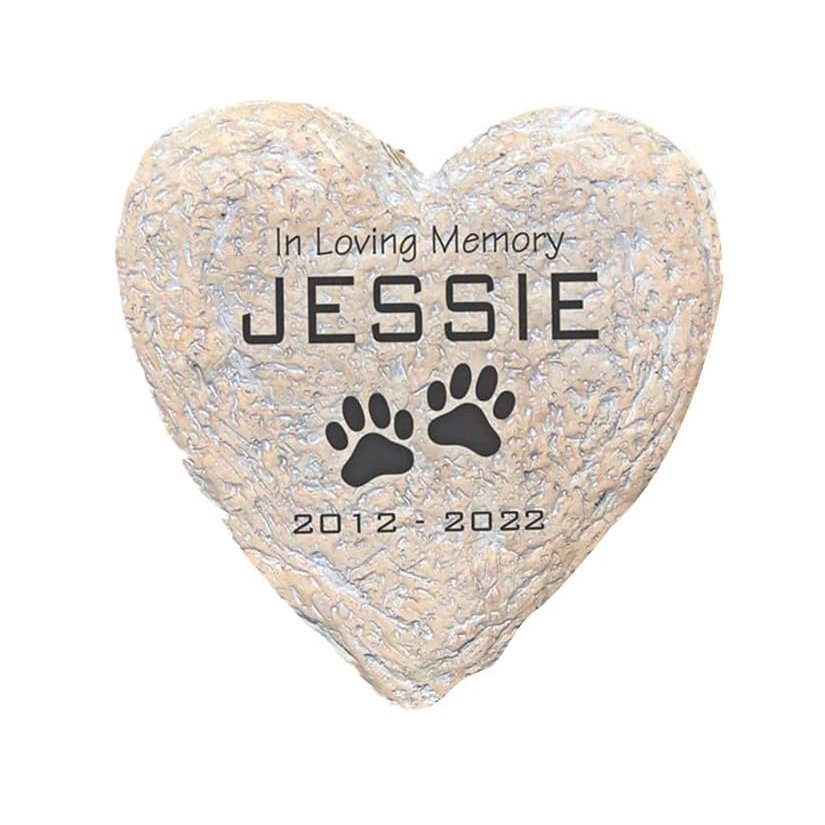
8.5″×8.5″ resin, weather-resistant, heart-shaped. The most reviewed option at this price point on Amazon.
Resin rather than natural stone — will show wear over several years outdoors.
View on Amazon →
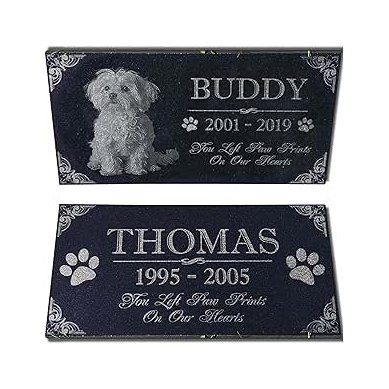
12″×6″ granite, photo + text customization, genuine stone thickness. The most durable option in this burial options category.
Higher price and longer production time.
View on Amazon →
To Keep Close — Ashes Jewelry
Some people want their pet with them, not only at home. Pet cremation jewelry allows a small amount of ash to be sealed inside a wearable piece. More on the full category on our pet memorial jewelry page.

10 styles, stainless steel, engravable, ashes-compatible. The most accessible entry point in this category.
At this price, the finish is functional rather than fine-jewelry quality.
Shop at Eternal Keepsake →
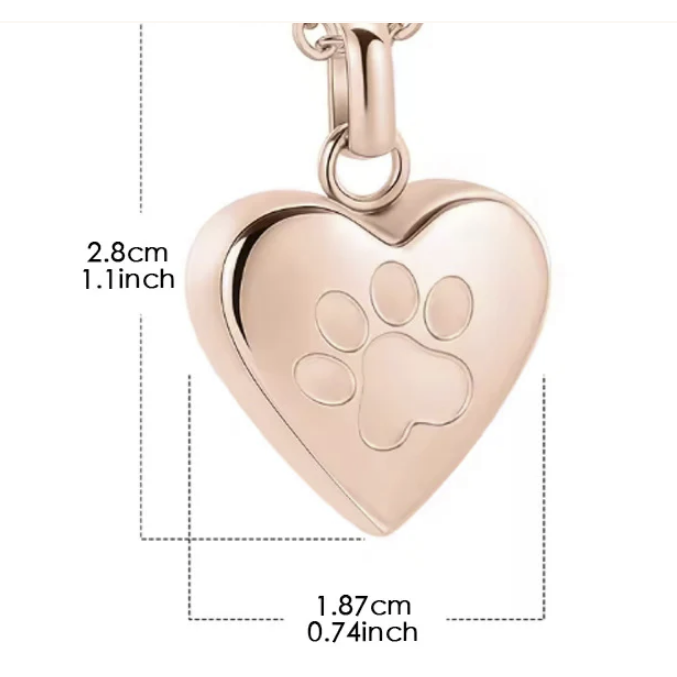
Heart + paw + ashes in a DIY-set format. Five styles, engravable. You assemble it yourself — which some people find meaningful, as an act of making something for their pet.
Not ready-to-wear immediately; if you need something now, choose the necklace.
Shop at Lovenary →
Home Remembrance
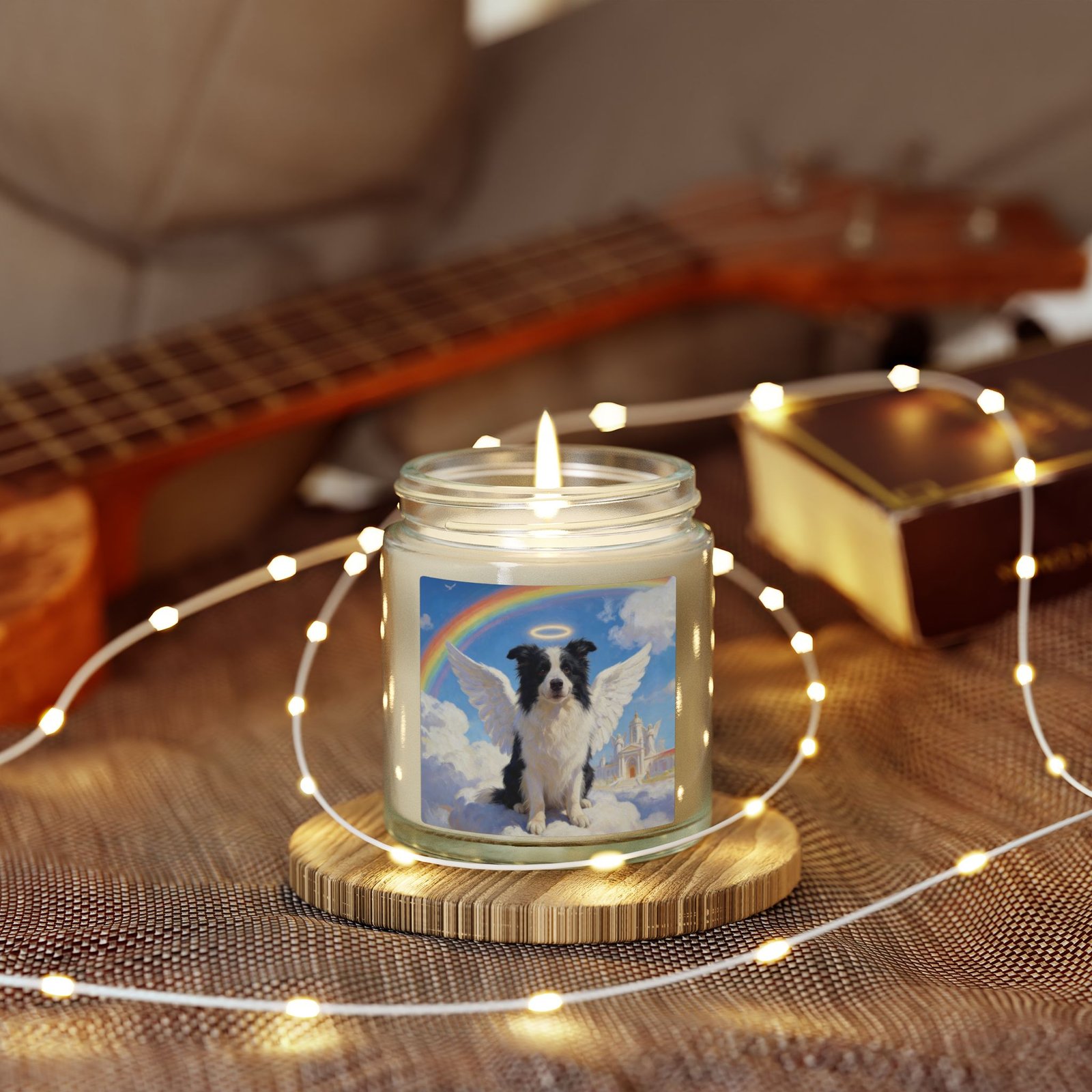
Personalized Pet Memorial Candle
$28–$32 · Free Shipping
4oz (20-hr burn) or 9oz (50-hr burn), natural coconut apricot wax. Customize with your pet’s photo, name, and date. Four scents: Lavender, Mango Coconut, Vanilla Bean, Cinnamon Chai. The 9oz is worth it for daily use; the 4oz is better as a gift for someone else in grief.
Best for: owners who want a daily, sensory reminder that doesn’t feel like a shrine.
3-week production time — plan ahead if timing is important.
Shop Memorial Candles →

Memorial Pillow
$38–$48 · Free Shipping
Double-sided, full-color print on 100% spun polyester. Your pet’s photo is rendered as an AI angel portrait — more interpretive than a standard photo pillow. Two sizes: 14″×14″ and 16″×16″. Machine washable.
Best for: people who want something they can actually hold.
AI portrait style leans illustrative, not photorealistic — it won’t suit everyone.
Shop Memorial Pillows →
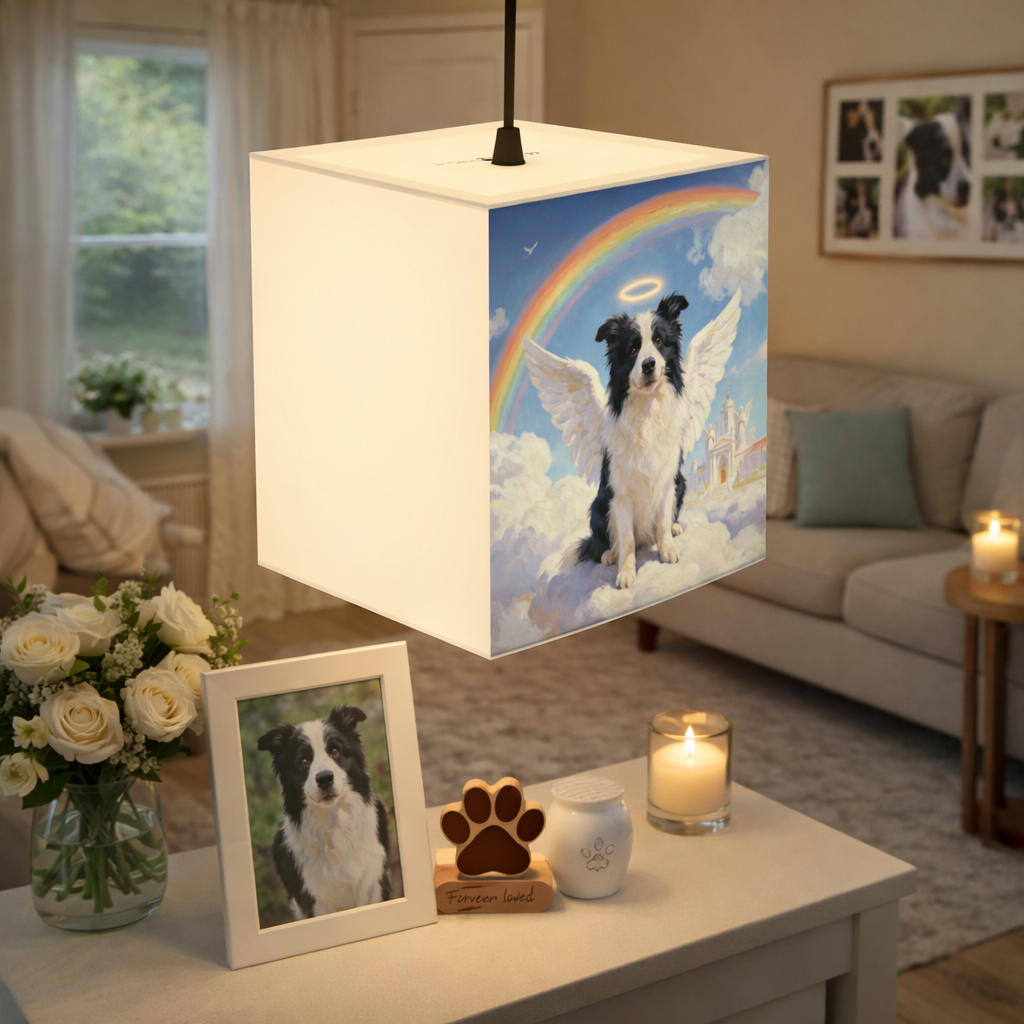
Memory Cube Lamp
$145–$210 · Free Shipping
Matte-finish cube lampshade printed with your pet’s AI angel portrait. Two sizes (7.7″ and 11.7″), plug-in or pendant cord. The diffused light is genuinely calming — this is the piece we’d recommend for a dedicated memorial corner.
Best for: owners creating a permanent space at home.
Bulb not included; you’ll need a 6W (small) or 10W (large) LED separately.
Shop Memory Lamps →

Memorial Ornament
$23 $45 · Free Shipping
Currently discounted from $45. Small (2.5″×3″), high-color-accuracy printing, satin ribbon pre-attached. Works year-round — bedside table, car, memorial corner, not just seasonal.
Best for: a first purchase with low commitment, or an add-on gift.
Smallest physical presence of the group — if you want something substantial, the pillow or lamp is a better fit.
Shop Memorial Ornaments →

Custom Pet Portrait
$28–$40 · Free Shipping
Canvas-mounted, waterproof-coated, three sizes (8″×8″, 12″×12″, 16″×16″). Mounting hardware included — arrives ready to hang. Solvent-free ink, suitable for bedrooms.
Best for: owners who want something displayed on a wall long-term.
Synthetic canvas reads more as a quality print than a hand-painted piece.
Shop Pet Portraits →
You Don’t Have to Figure This Out Alone
Here’s what this guide has covered — and what you can return to as you’re ready:
- Confirm your pet has passed, and give yourself time before making any decisions
- Choose the body care option that feels right — cremation, communal, or burial
- Tell the people who need to know, in whatever way feels manageable right now
- Let yourself grieve — what you’re feeling is proportionate to what you’ve lost
The grief doesn’t follow a schedule. Some days will feel manageable; others will catch you off guard in the middle of something ordinary. That’s not a setback — that’s how loss works when the bond was real.
When you’re ready, the Rainbow Bridge memorial page is a place to leave a memory, read others’ stories, and know that you’re not the only one who has loved a pet this much.