
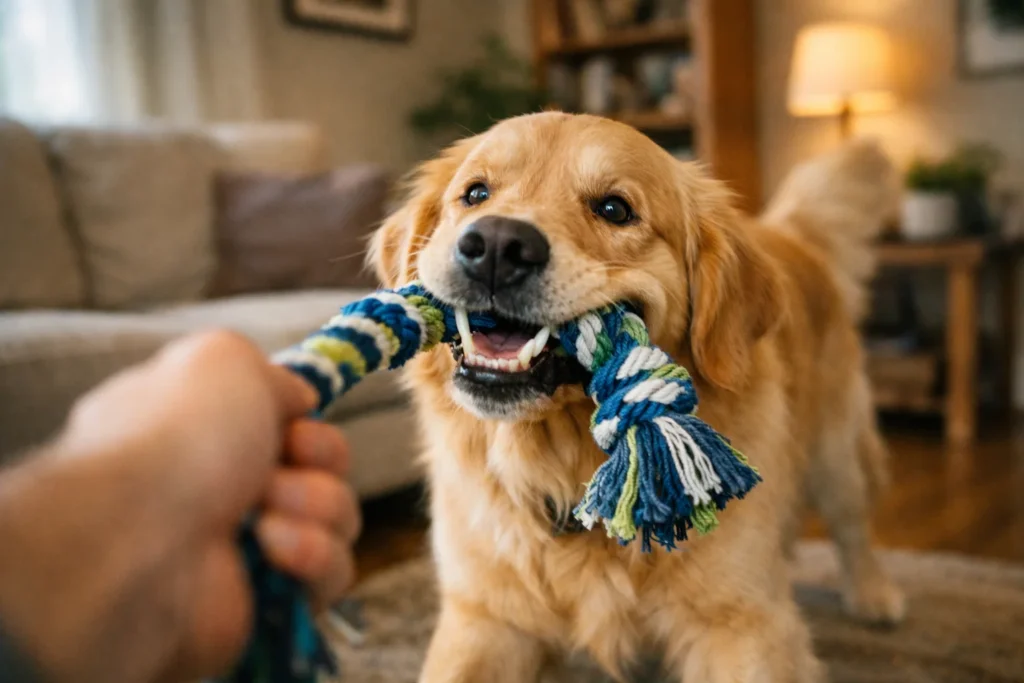
If you’ve ever played tug-of-war with your dog, you probably noticed how excited they get the moment a rope toy appears. The tail starts wagging, the paws get bouncy, and suddenly your calm dog turns into a determined little competitor.
That reaction isn’t random. Tug games tap into a dog’s natural instincts. In the wild, dogs use similar motions when catching and shaking prey. When we play tug with them, we’re simply turning that instinct into a safe and fun activity.
A well-chosen dog tug toy can do much more than entertain your dog. It can burn off energy, reduce boredom, and strengthen the bond between you and your pet.
But here’s the problem: once you start searching for best dog tug toys, the number of choices can be overwhelming. Rope toys, soft plush tug toys, heavy-duty tug toys for strong chewers, and special toys designed for puppies all appear in the results.
Choosing the right one actually matters more than many dog owners realize. A toy that’s too small can be unsafe, while one that’s too weak may be destroyed in minutes. In this guide, we’ll walk through how to choose the right tug toys for dogs based on your dog’s size, age, and chewing strength.
Why Tug Toys Are So Good for Dogs
Many people worry that tug games might make dogs aggressive. In reality, the opposite is often true.
According to the American Kennel Club, interactive games like tug-of-war can help dogs release energy and improve their focus during training.
When played correctly, tug toys can provide several benefits:
-
Physical exercise that burns energy
-
Mental stimulation and problem-solving
-
Stronger bonding between dog and owner
-
A safe outlet for natural chewing instincts
For dogs that tend to get bored easily, a good dog tug toy can even help reduce destructive behaviors like chewing furniture or shoes.
Different Types of Dog Tug Toys
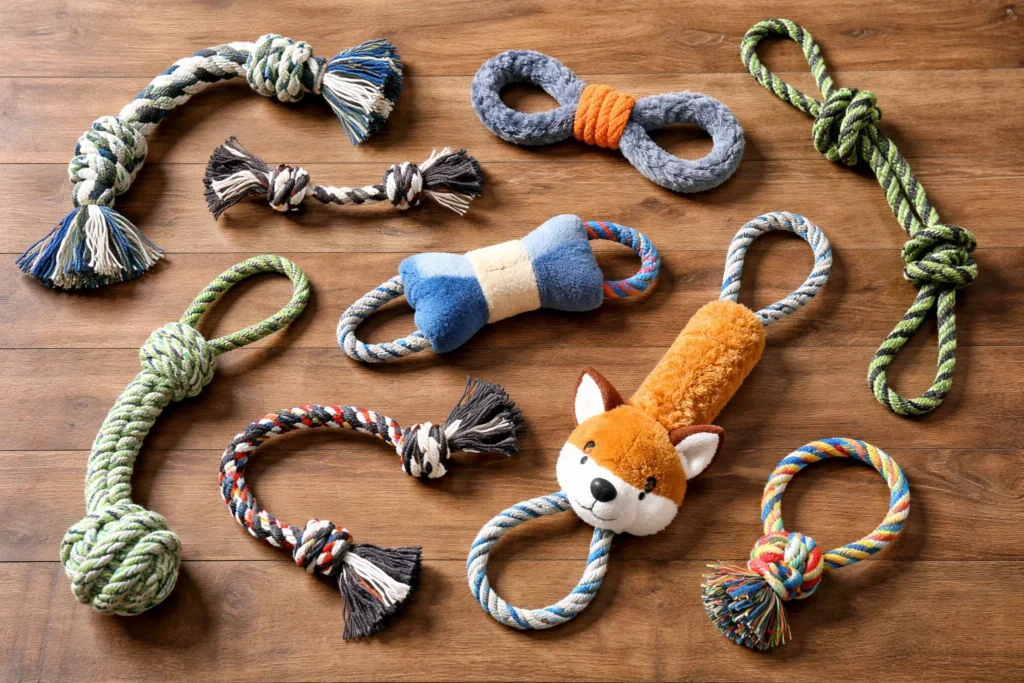
Not all tug toys are designed the same way. Some are soft and gentle for puppies, while others are built specifically for powerful chewers.
Here’s a quick comparison of common types of best dog tug toys.
| Tug Toy Type | Best For | Key Benefits | Things to Consider |
|---|---|---|---|
| Rope Tug Toys | Most dogs | Durable and easy to grip | Replace when fibers fray |
| Soft Tug Toys for Dogs | Small dogs or indoor play | Gentle on teeth | Not for strong chewers |
| Dog Rope Toys for Aggressive Chewers | Power chewers | Extra durability | Choose thicker rope |
| Puppy Rope Toy | Young dogs | Helps during teething | Must be puppy-safe size |
| Tug Toys for Large Dogs | Large breeds | Longer and stronger | Requires strong handles |
Understanding these categories can make it much easier to narrow down your options.
How to Choose the Best Dog Tug Toys
Selecting the right tug toy isn’t only about durability. It’s really about matching the toy to your dog’s personality and physical characteristics.
Let’s break down the most important factors.
1. Consider Your Dog’s Chewing Strength
Dogs chew very differently depending on their breed and personality.
Some dogs gently hold toys, while others seem determined to destroy everything within minutes.
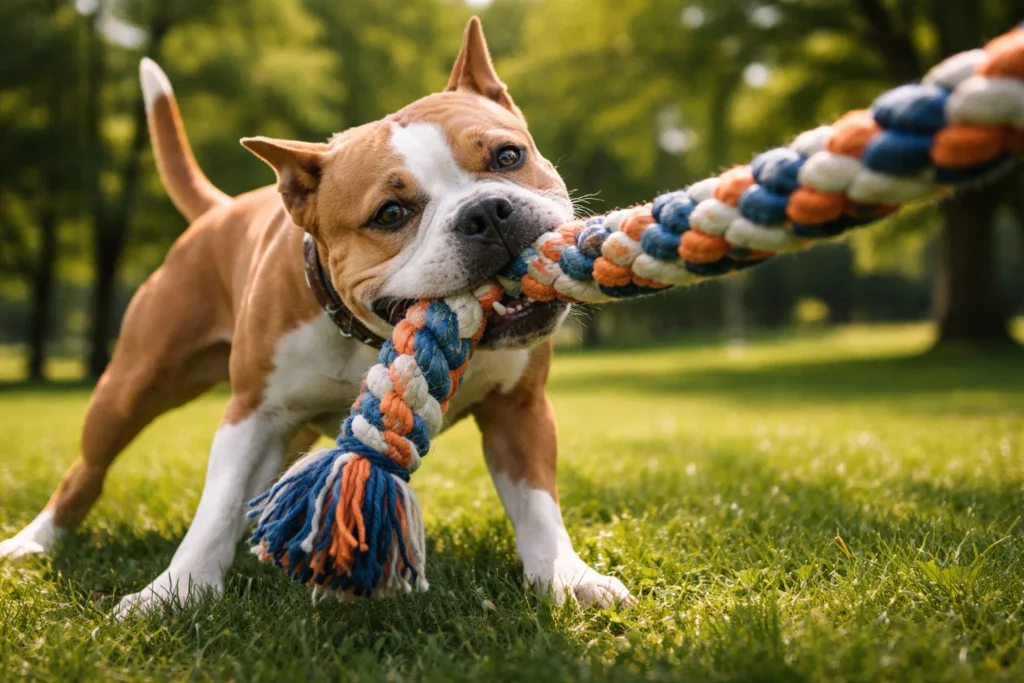
Breeds such as Pit Bulls, German Shepherds, and Belgian Malinois are known for their powerful jaws. For these dogs, dog rope toys for aggressive chewers are usually the best option.
These toys typically feature:
-
thicker cotton ropes
-
reinforced knots
-
multi-strand braiding
For smaller or less aggressive chewers, softer toys often work better. Soft tug toys for dogs can protect delicate teeth while still providing interactive play.
2. Choose the Right Toy for Your Dog’s Age
Age also plays an important role when selecting a tug toy.
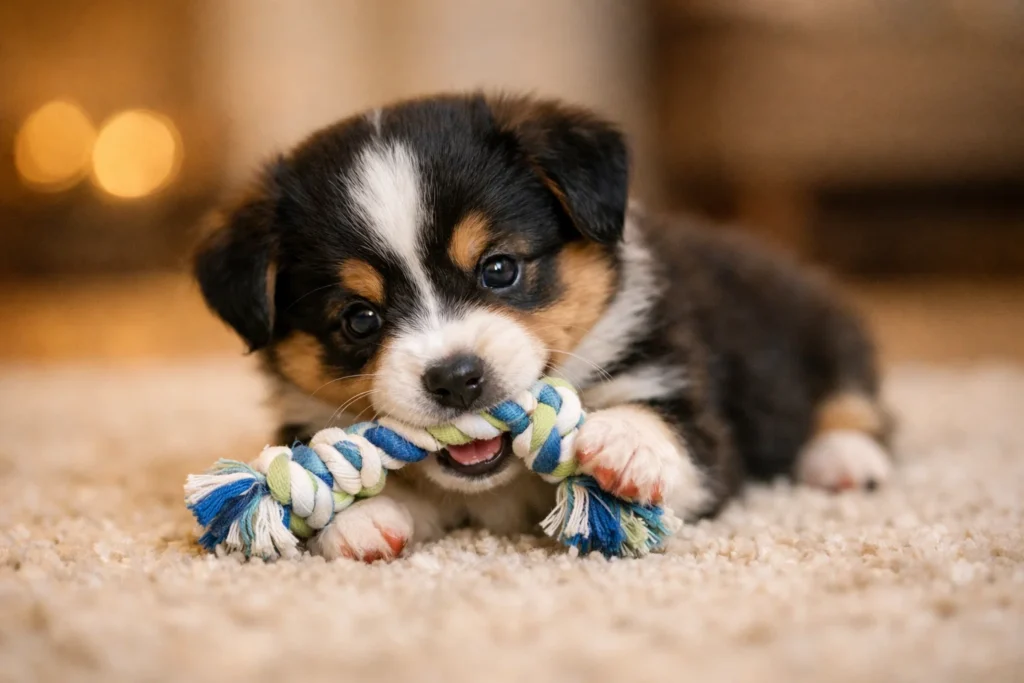
Puppies, for example, go through a teething stage where their gums may be sensitive. During this time, softer toys are usually more comfortable.
| Dog Age | Recommended Toy Type |
|---|---|
| 2–6 months | puppy rope toy |
| 6–12 months | soft tug toys |
| Adult dogs | standard dog tug toy |
| Strong chewers | heavy-duty rope toys |
A puppy rope toy can help relieve teething discomfort while encouraging healthy chewing habits.
3. Size Matters More Than You Think
One mistake many dog owners make is buying toys that are too small.
A tug toy should be long enough that your hands remain safely away from your dog’s mouth during play.
Here’s a simple rule of thumb:
| Dog Size | Recommended Tug Toy Length |
|---|---|
| Small dogs | 20–30 cm |
| Medium dogs | 30–40 cm |
| Large dogs | 40–60 cm |
This is why tug toys for large dogs are often designed with longer ropes or dual handles.
4. Look for Safe and Durable Materials
Safety should always be a top priority when choosing dog toys.
High-quality best dog tug toys typically include:
- non-toxic materials
- reinforced stitching
- tightly woven cotton rope
The American Veterinary Medical Association recommends choosing toys that match your dog’s size to reduce choking risks.
It’s also a good idea to regularly inspect rope toys and replace them if the fibers begin to unravel.
Choosing the Right Tug Toy for Different Dogs
Every dog is different, so the best toy depends on their size and chewing habits.
| Dog Type | Recommended Tug Toy |
|---|---|
| Puppies | puppy rope toy |
| Small dogs | soft tug toys for dogs |
| Medium dogs | standard dog tug toy |
| Large breeds | tug toys for large dogs |
| Power chewers | dog rope toys for aggressive chewers |
If you want a deeper breakdown of materials and durability, you can also explore our complete guide to dog tug toys.
How to Play Tug-of-War Safely
Tug-of-war can be a fantastic training game when played correctly.
A few simple rules make the game safer and more beneficial:
-
Ask your dog to sit before the game starts
-
Use a command to begin and end the game
-
Train your dog to release the toy on command
This helps your dog understand that the game is controlled and cooperative.
Over time, tug can become a great tool for improving obedience and focus.
FAQ
1.Are tug toys safe for dogs?
Yes, as long as the toy is appropriately sized and used under supervision.
2.Can puppies play tug games?
Yes. Just choose puppy rope toys or soft tug toys for dogs that are gentle on developing teeth.
3.Which dogs need durable tug toys?
Strong chewers such as Pit Bulls, German Shepherds, and similar breeds often need dog rope toys for aggressive chewers.
5.When should I replace a tug toy?
Replace it if:
- rope strands start coming loose
- knots become damaged
- pieces break off