
How to Choose the Right Tug Toy Material for Your Dog?
If you live with a dog, you have probably experienced this moment.
Your dog grabs a toy, backs up a few steps, and starts pulling—almost like inviting you to a friendly tug-of-war match.
This is exactly how dog tug toy play begins.
For many dogs, tugging and pulling are natural instincts that come from their ancestral hunting behaviors.
A good tug toy can do much more than just entertain your dog. It can help:
-
release excess energy
-
strengthen the bond between dog and owner
-
provide mental stimulation
However, many dog owners notice something interesting when buying tug toys.
Some toys last for months, while others fall apart very quickly.
In many cases, the difference comes down to material.
Different tug toy materials offer different levels of durability, softness, and play experience. Choosing the right material makes a huge difference for both safety and longevity.
Let’s take a closer look at the most common dog tug toy materials and when they work best.
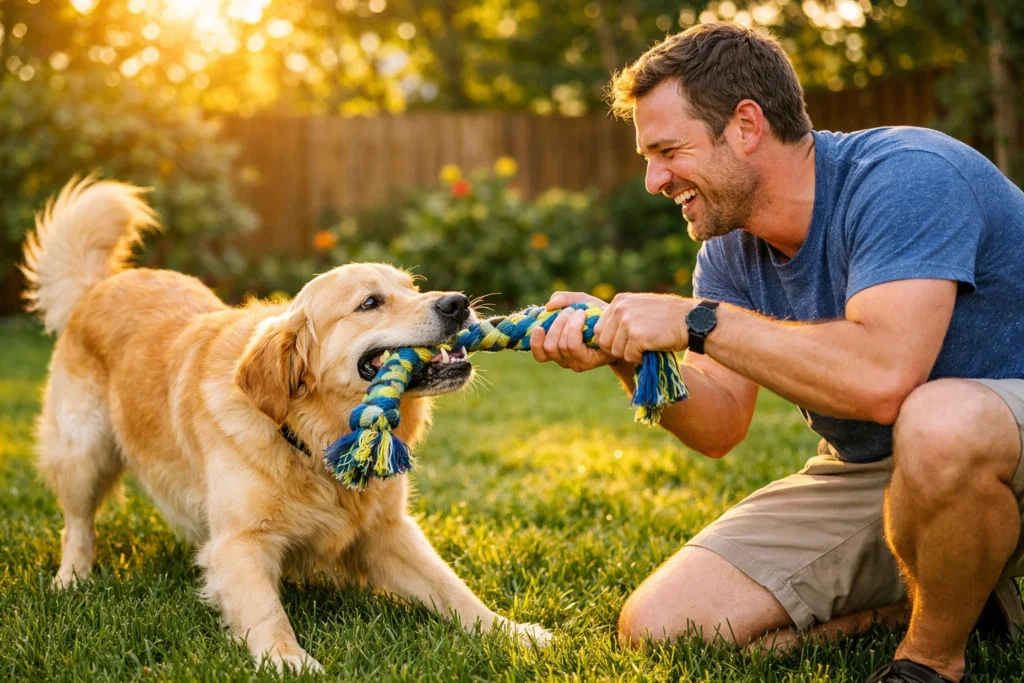
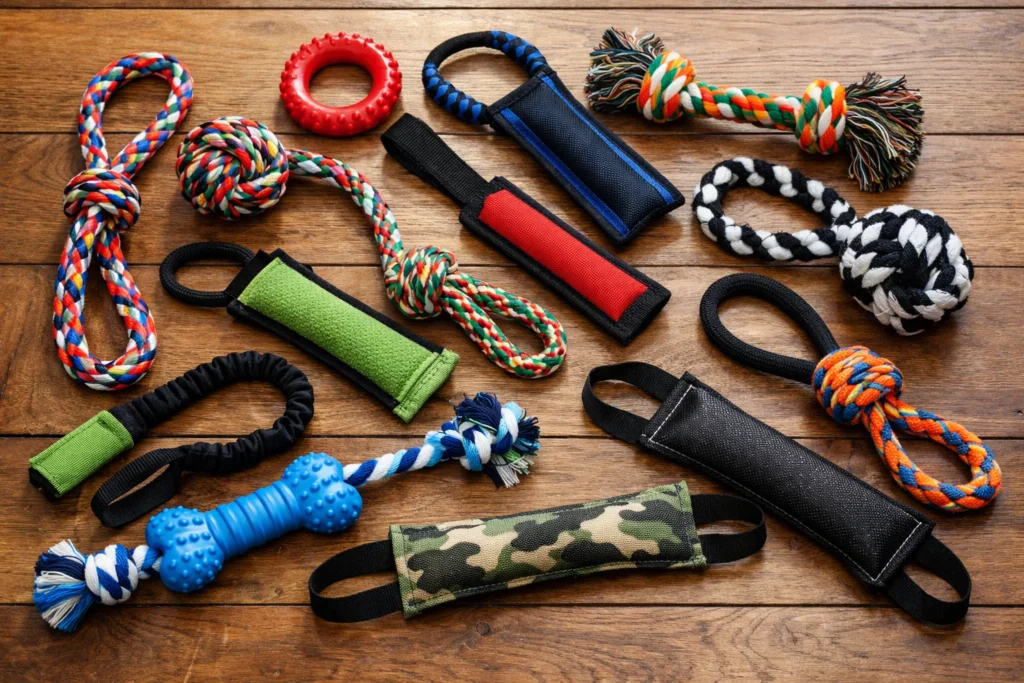
Common Dog Tug Toy Materials
| Material | Best For | Advantages | Notes |
|---|---|---|---|
| Rope | Medium & large dogs | Durable, classic tug toy | Replace when frayed |
| Fabric | Puppies & small dogs | Soft and gentle | Not for heavy chewers |
| Rubber | Active dogs | Elastic and engaging | Choose safe rubber |
| Nylon | Large strong dogs | Extremely durable | Best for supervised play |
According to the American Kennel Club (AKC), dog toys should always be chosen based on the dog’s size, chewing strength, and age.
Rope Tug Toys: The Classic Dog Tug Toy
Among all tug toys, rope toys remain one of the most widely used options.
A well-made rope dog tug toy is strong enough for pulling games while still flexible enough for dogs to grip comfortably.
Many dog rope toys for aggressive chewers use thicker braided rope to increase durability.
Another small benefit is dental hygiene.
When dogs chew on rope fibers, the friction can help remove mild plaque buildup on the surface of teeth.
However, rope toys should be replaced once they become heavily frayed to avoid accidental ingestion.
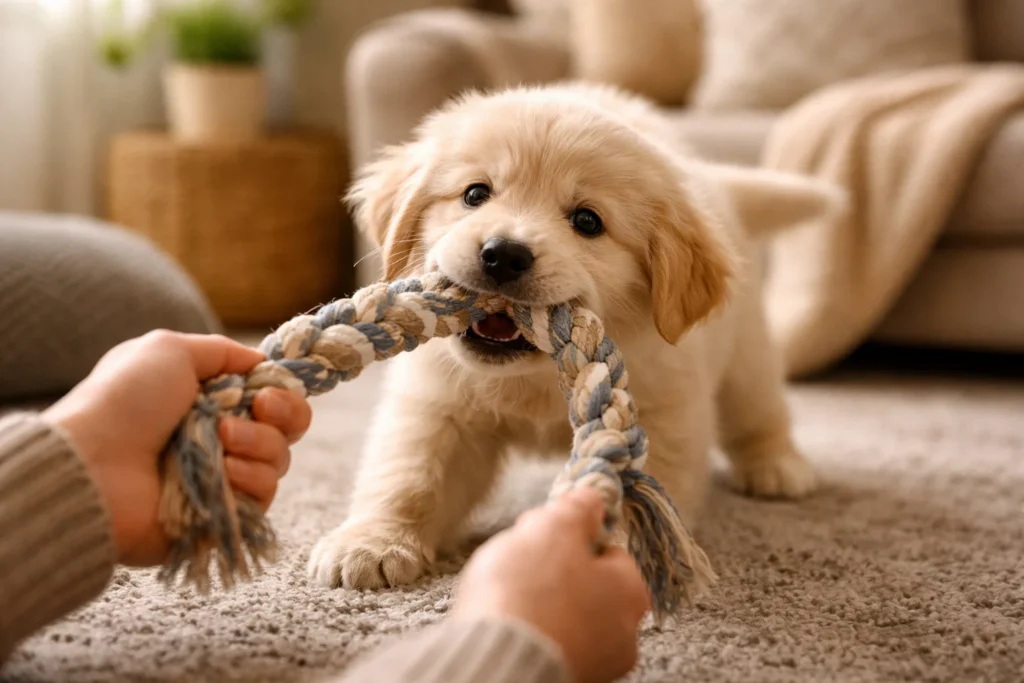
Soft Tug Toys for Puppies
Not every dog needs an ultra-durable tug toy.
For young dogs, soft tug toys for dogs are often the better choice.
Many puppy rope toy designs use fleece or soft fabric materials, which make the toy lighter and more comfortable for puppies to bite.
This is particularly helpful during the teething stage.
According to the American Veterinary Medical Association (AVMA), puppies often experience gum discomfort while their teeth develop, and softer chewable toys can help relieve irritation.
Soft tug toys are ideal because they are:
-
gentle on teeth
-
lightweight
-
great for training
However, they may not last long with aggressive chewers.
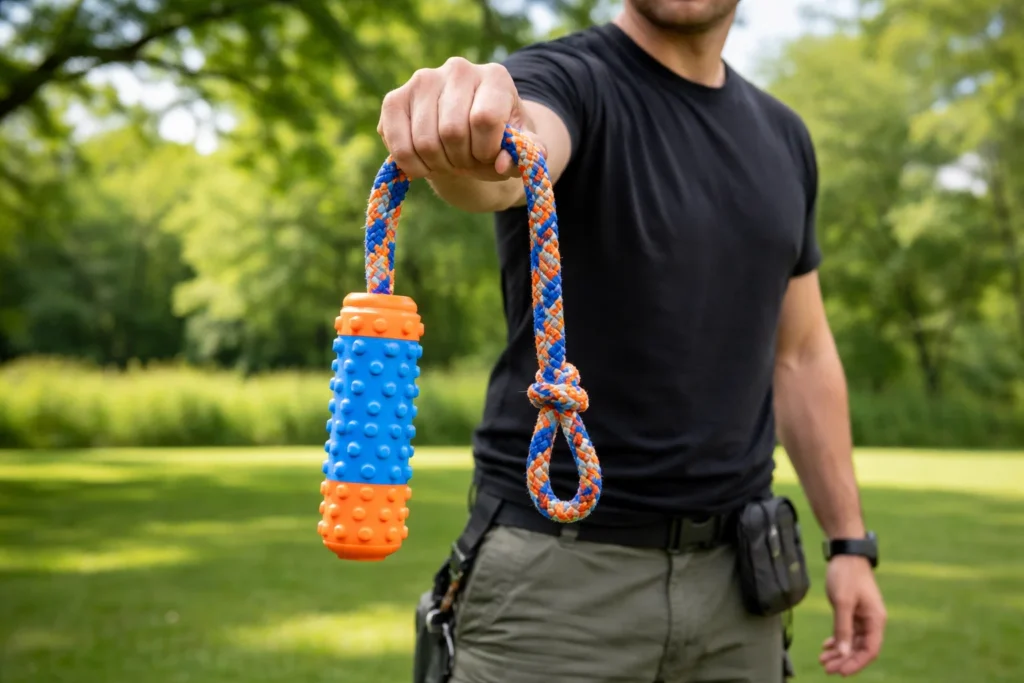
Rubber Tug Toys: More Interactive Play
Modern dog toys often combine rubber and rope to create more engaging tug toys.
Rubber materials add flexibility and resistance, which makes tug games feel more dynamic.
Many trainers use rubber tug toys during obedience training because the bounce and elasticity help capture a dog’s attention.
When choosing rubber toys, it is best to look for natural or food-grade rubber materials.
Nylon Tug Toys for Strong Chewers
If your dog has a strong bite—such as:
-
German Shepherd
-
Pit Bull
-
Labrador Retriever
-
Rottweiler
then a standard tug toy may not last very long.
In these cases, reinforced nylon tug toys for large dogs are often a better option.
These toys offer:
-
higher durability
-
stronger tensile strength
-
better resistance for outdoor play
However, nylon toys are best used for interactive play rather than long unsupervised chewing sessions.
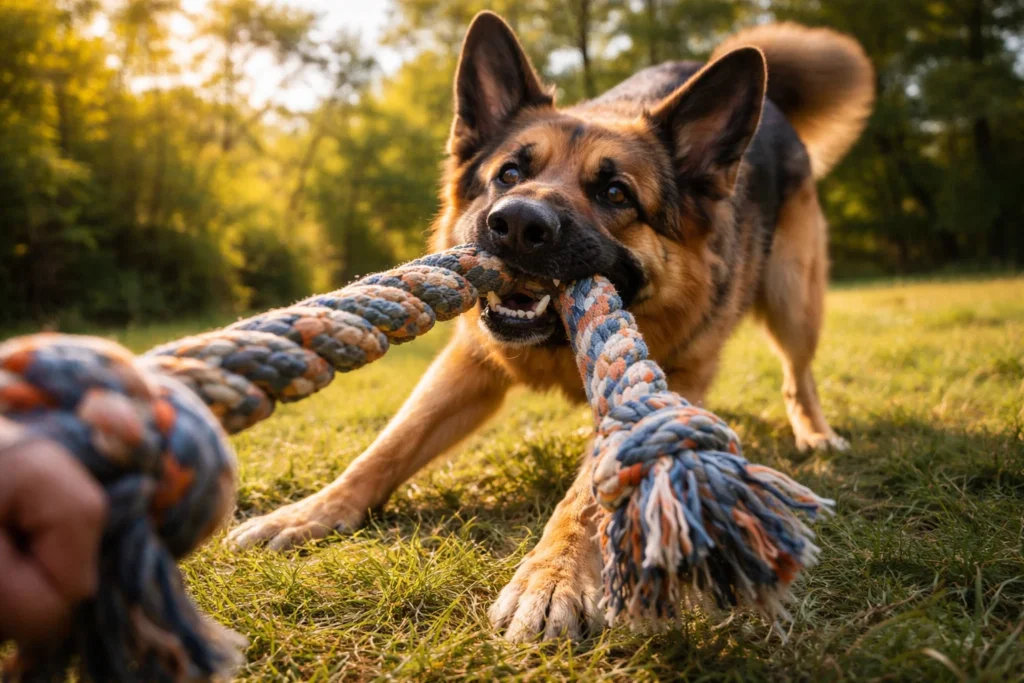
Best Tug Toys by Dog Type
| Dog Type | Recommended Tug Toy |
|---|---|
| Puppies | Puppy rope toy / soft tug toys |
| Small dogs | Fabric tug toys |
| Medium dogs | Rope tug toys |
| Large dogs | Tug toys for large dogs |
| Aggressive chewers | Dog rope toys for aggressive chewers |
Choosing Tug Toys Based on Play Style
The right dog tug toy also depends on how you plan to use it.
For everyday indoor play, soft or rope tug toys work well.
For training sessions, rubber tug toys often create stronger engagement.
For outdoor play, more durable rope or reinforced tug toys are usually better.
Safety Tips
To keep tug games safe:
-
check toys regularly for wear
-
avoid toys that are too small
-
keep tug games controlled
-
store toys after play
The ASPCA recommends supervising dogs during interactive play to reduce the risk of swallowing damaged toy pieces.
FAQ
Are rope tug toys safe for dogs’ teeth?
Yes, cotton rope toys are generally safe but should be replaced when worn.
Can puppies play tug of war?
Yes, but they should use soft tug toys or a puppy rope toy.
What tug toys are best for large dogs?
Look for tug toys for large dogs made from thick rope or reinforced materials.
What is best for aggressive chewers?
Dog rope toys for aggressive chewers are typically the best option.
Is tug of war good for dogs?
Yes. When played correctly, tug games can strengthen the bond between dogs and owners.
The Best Tug Toy Is the One That Fits Your Dog
Today, there are many different types of dog tug toy designs available, from soft fabric toys to durable rope, rubber, and reinforced nylon options.
Each material has its own advantages, but the “best” tug toy is not the same for every dog.
What really matters is finding a toy that matches your dog’s size, chewing strength, and play style.
For example:
-
Puppies usually benefit from soft tug toys for dogs or a puppy rope toy
-
Energetic large breeds often need tug toys for large dogs
-
Strong chewers may require dog rope toys for aggressive chewers
When the material, dog type, and play style are well matched, a simple tug toy can become more than just a toy. It becomes a way to release energy, strengthen the bond between you and your dog, and make everyday play more engaging.
If you’re choosing a tug toy for your dog, starting with the right material is always a good place to begin.