AI Pet Toys (2025 Guide): How Smart Interaction & Data Boost Cat and Dog Well-Being
AI pet toys are no longer futuristic novelties—they’ve become intelligent companions that learn, adapt, and emotionally respond to every pet’s behavior.
The global smart pet device market is expected to reach $15 billion by 2033, fueled by the rise of pet humanization and increased investment in tech-driven animal care. Using motion sensors, machine learning (ML), and adaptive behavior tracking, these toys transform play into data-rich, emotionally attuned care. They keep pets active, mentally stimulated, and emotionally balanced—without ever replacing the warmth of human connection.
Can AI Pet Toys Recognize Different Play Styles and Adjust Automatically?
Yes. The newest generation of AI pet toys can recognize and respond to each animal’s individual play style.
- Through microphones, accelerometers, and behavioral algorithms, these toys detect whether a pet enjoys fast chasing, soft pouncing, or slow, playful nudges—and then adjust automatically.
- Take the WickedBone Smart Bone, which shifts its speed and motion pattern based on a dog’s reactions. When Charlie, a young Corgi, began to slow down, the toy switched into a “tease” mode to match his energy. Over time, it “learned” his rhythm, creating a personalized pattern of engagement.
These toys don’t just move—they remember, turning mechanical motion into responsive companionship.
How Do Smart Pet Toys Prevent Boredom? Are They Effective for Separation Anxiety?
Absolutely—and often better than traditional toys. AI toys play a major role in reducing pet boredom, anxiety, and destructive habits—especially for indoor animals or those left home alone.
- Lack of stimulation can lead to over-grooming, chewing, or restlessness.
- Smart devices like the Pebby Smart Ball and Cheerble Board Game counteract this through randomized movement, touch response, and sound cues that stimulate curiosity.
- When Daisy, an indoor cat, was introduced to an AI toy that rolled, chirped, and dispensed treats, her stress faded into calm curiosity.
AI play became more than entertainment—it became emotional enrichment.
What’s the Difference Between AI Cat Toys and AI Dog Toys?
**Cats and dogs interact with AI toys in completely different ways—**and smart design reflects that distinction.
- Dogs thrive on chasing and fetching. Devices like the Varram Pet Fitness Robot create motion patterns that mirror social play and encourage movement.
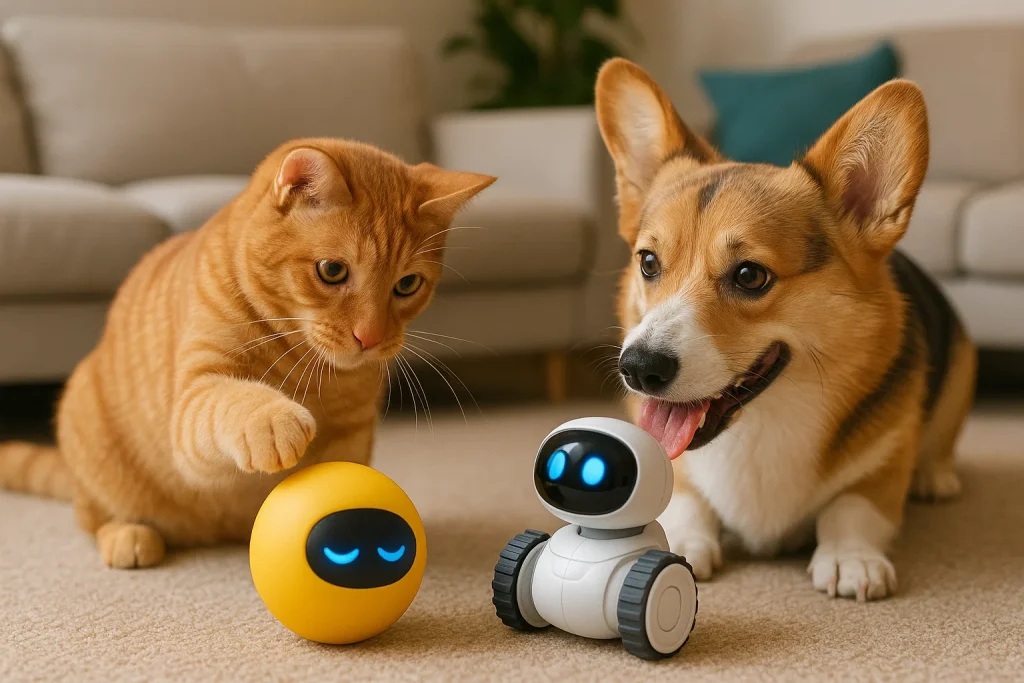
- Cats crave stalking and hunting sequences. Toys such as the PetDroid Boltz mimic prey by darting under furniture, pausing, and hiding—just long enough to trigger the perfect pounce.
When Max the Labrador and Luna the tabby shared one AI toy, each invented their own game. Luna stalked it with precision; Max waited patiently, tail wagging, for it to reappear. Same device, different instinct. Smart tech simply adapts.
How Do AI Pet Toys Track and Record Pet Health or Behavior Data?
Most smart pet toys now include activity tracking via companion apps. They log how long pets play, rest, and interact—turning fun into health insights.
- The Cheerble Wicked Ball SE, for example, measures motion time, rest intervals, and engagement frequency.
- When Bella, an older Pug, started playing less, her owner saw the drop-off in the app data and scheduled a vet visit—catching early fatigue before it worsened.
These devices quietly provide behavioral analytics, helping owners and veterinarians monitor emotional and physical well-being with real data.
Can AI Toys Replace Human Interaction?
No—and that’s what makes them valuable.
AI toys complement, not replace, genuine companionship. They fill quiet hours, promote independence, and reduce anxiety—but affection and presence remain irreplaceable.
- When Lily returned from a week-long trip, her dog sprinted past his AI toy to jump into her arms. The device had done its job: keeping him active and comforted, ready for reunion.
Technology can simulate engagement, but love isn’t programmable. Smart play is a bridge—not a substitute.
The Future of AI Pet Play (2025 and Beyond)
AI pet toys mark the shift toward responsive, adaptive wellness—where every bark, chase, and nap informs better care.
The next wave, powered by multimodal AI systems like ChatGPT-4o, will blur the line between interaction and empathy. Devices such as the Loona Robot Dog already combine vision, motion, and voice recognition to sense emotion and respond intuitively, pushing the boundary of Embodied AI.
The goal isn’t smarter machines—it’s stronger bonds. In the future, technology won’t just play with pets; it will help us understand them on a deeper level.