
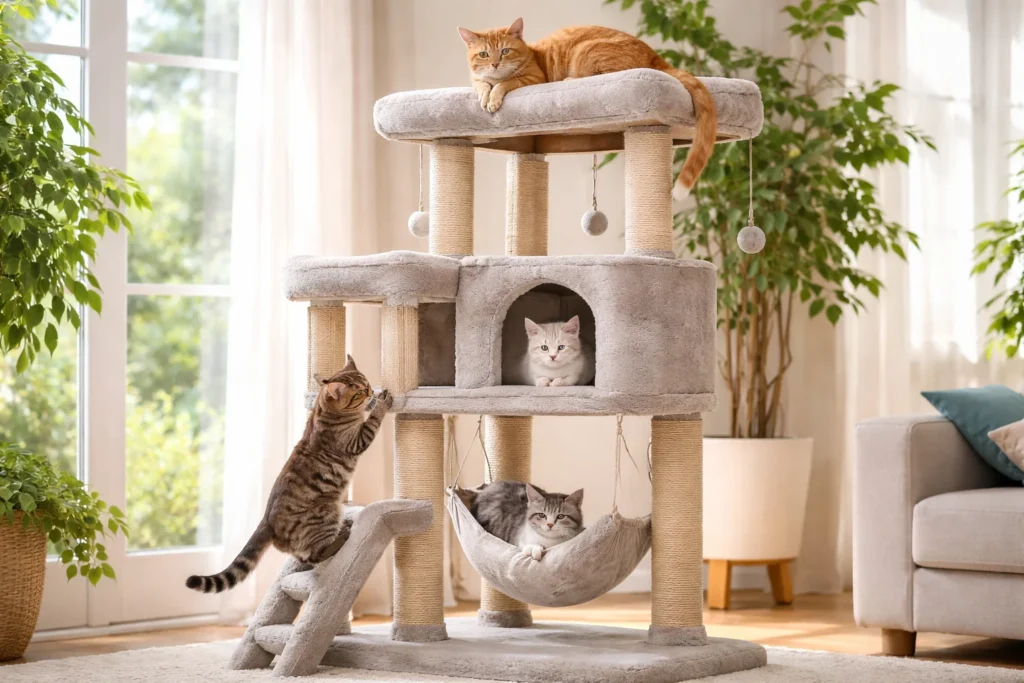
Why Cleaning Your Cat Tree Really Matters
Let’s be honest — cat trees don’t look dirty at first glance. But if you run your hand across one, you’ll probably feel loose fur, dust, and maybe even a faint odor.
Your cat sleeps there. Scratches there. Sometimes even throws up there. Over time, bacteria and smells build up quietly.
If your cat suddenly avoids the tree, or the room smells “slightly off,” that’s usually your sign.
How Often Should You Clean a Cat Tree?
There isn’t one perfect rule — it depends on your home.
-
One cat, low shedding → Light cleaning weekly, deep cleaning every 1–2 months
-
Multiple cats → Light cleaning 2–3 times per week, deep cleaning monthly
-
Heavy shedding or allergy-sensitive home → Quick clean every few days
Think of it like your couch. You wouldn’t ignore it for months — your cat’s tree deserves the same care.
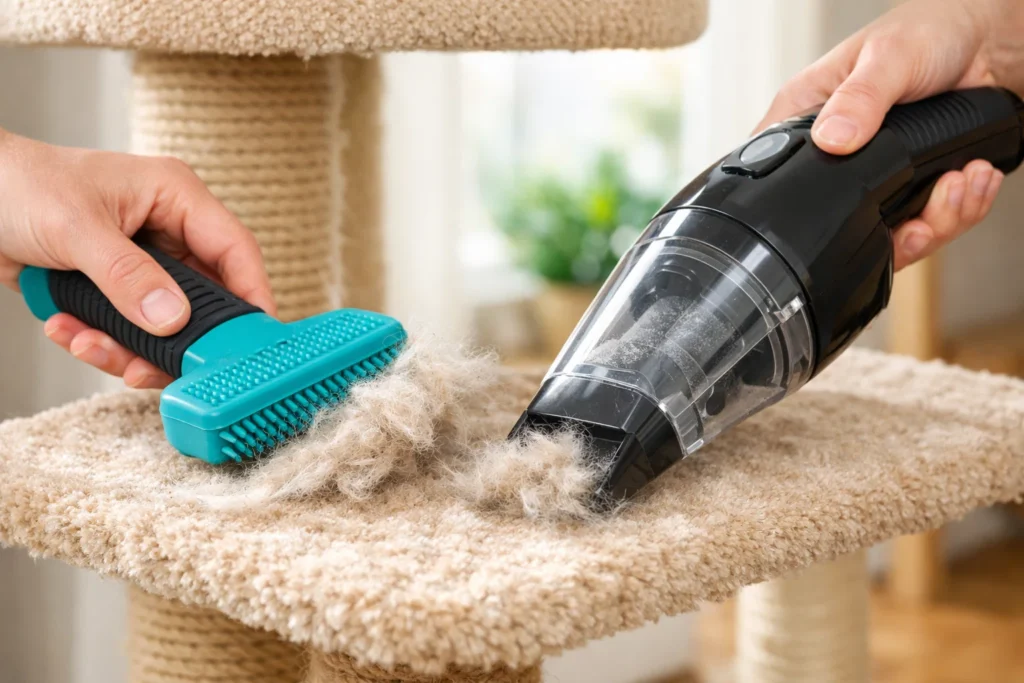
Daily Cleaning Routine (Quick Maintenance)
This is the “keep things under control” routine. It prevents fur, odor, and grime from building up.
| Step | Action | Recommended Tools | Why It Matters |
|---|---|---|---|
| 1 | Remove surface fur | Lint roller / rubber brush / handheld vacuum | Stops buildup before it embeds |
| 2 | Check for visible stains | Paper towel + mild cleaner | Prevents odor from setting in |
| 3 | Wipe hard platforms | Pet-safe spray + cloth | Removes oils and bacteria |
| 4 | Quick odor check | Baking soda (optional) | Keeps it smelling fresh |
⏱ Time needed: 5–10 minutes
Doing this regularly makes deep cleaning much easier later.
Deep Cleaning Routine (Full Reset)
Deep cleaning is for when you notice odor, sticky spots, or heavy fur buildup.
| Step | Action | Recommended Tools | Important Notes |
|---|---|---|---|
| 1 | Disassemble removable parts | — | Remove cushions, hammocks if possible |
| 2 | Thorough vacuum | Pet hair vacuum with brush attachment | Go in multiple directions |
| 3 | Treat stains | Enzyme cleaner | Let sit as instructed |
| 4 | Clean fabric areas | Warm water + pet-safe cleaner | Avoid oversaturating |
| 5 | Scrub sisal posts | Stiff dry brush | Do not soak rope |
| 6 | Disinfect lightly | Pet-safe disinfectant spray | No bleach or harsh chemicals |
| 7 | Air dry completely | Good ventilation | Never reassemble while damp |
⏱ Time needed: 45–90 minutes
💡 Most important step: complete drying. Moisture = mold risk.
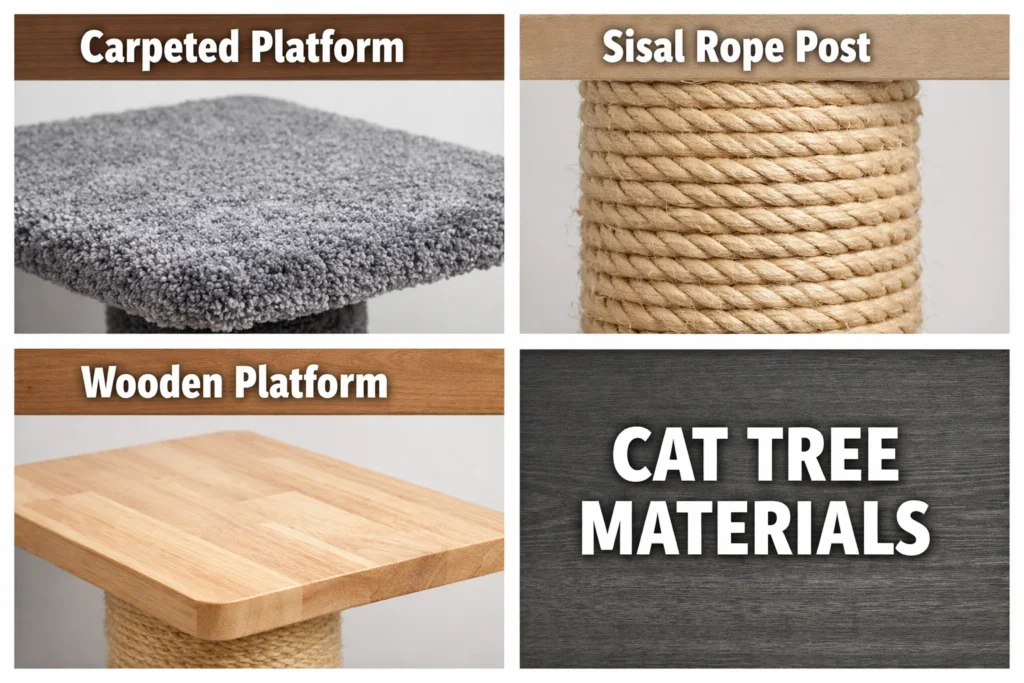
Cleaning Different Materials (Without Damaging Them)
Different surfaces need different care.
-
Carpeted surfaces: Vacuum first, then spot treat with enzyme cleaner.
-
Sisal rope posts: Use a dry brush. Water weakens the rope.
-
Wood or MDF platforms: Slightly damp cloth only — never soak.
If you’re unsure, always test cleaner on a small hidden area first.
How to Remove Odor Completely
If the smell keeps coming back, try this:
-
Sprinkle baking soda generously
-
Leave for 30 minutes
-
Vacuum thoroughly
-
Follow with an enzyme-based deodorizer
Persistent odor often means urine has penetrated deeper layers — enzyme cleaners are essential in that case.
Common Cleaning Mistakes to Avoid
-
Hosing down the entire structure
-
Using bleach or strong chemicals
-
Not allowing full drying time
-
Reassembling while damp
These mistakes can shorten the life of your cat tree significantly.
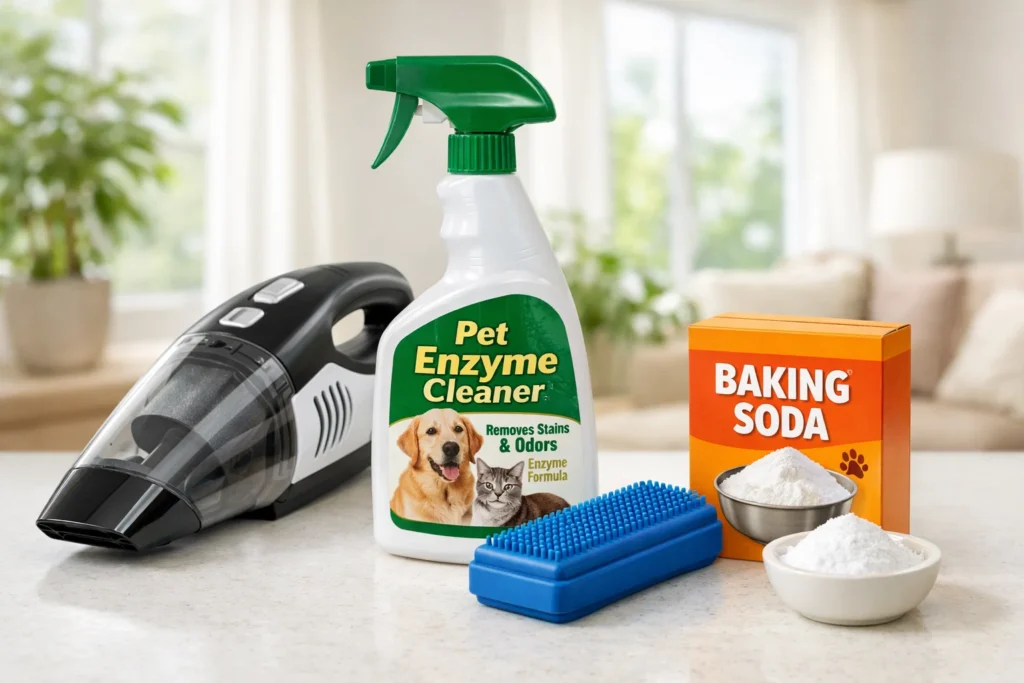
Recommended Cleaning Product Types
To make cleaning easier and safer, consider:
-
Strong-suction pet hair vacuum
-
Enzyme-based urine cleaner
-
Pet-safe disinfectant spray
-
Rubber pet hair remover brush
-
Baking soda deodorizer
Using the right tools turns cleaning from a chore into a manageable routine.