
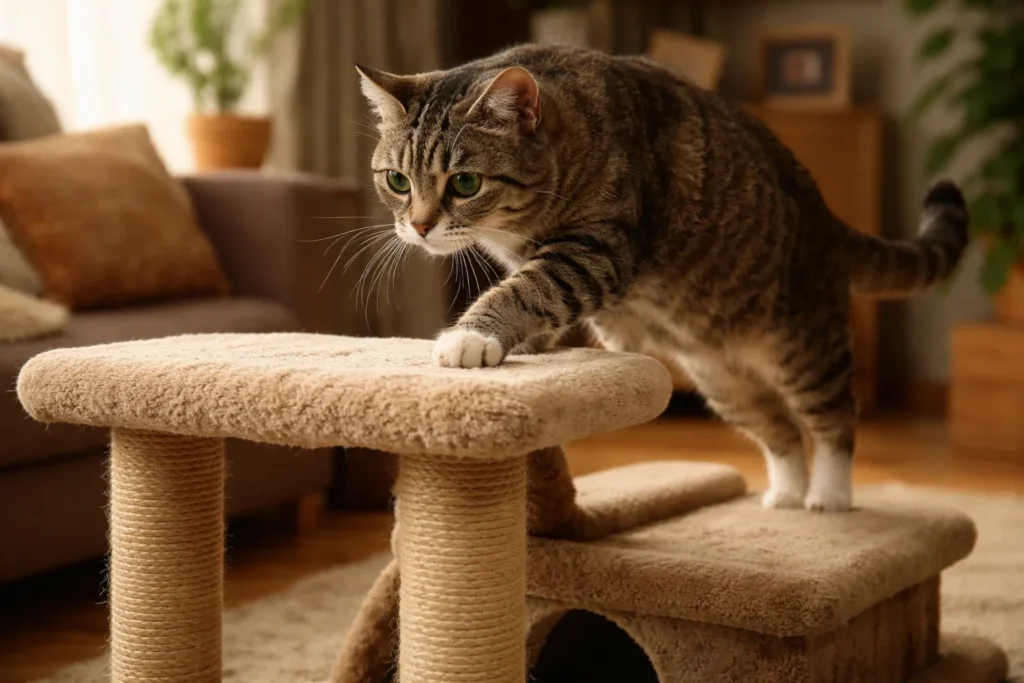
Is Your Cat Considered a Senior?
Many cat owners don’t realize how early cats enter their senior years.
Most cats are considered seniors between 7 and 10 years old, depending on breed and health.
Common signs include:
-
Jumping less frequently
-
Hesitation before climbing furniture
-
Longer sleeping hours
-
Slower movements
-
Increased caution around unstable surfaces
These changes are a natural part of aging.
How Aging Changes Your Cat — and Why Cat Trees Still Matter
As cats grow older, several changes become noticeable:
-
Reduced joint flexibility and jumping ability
-
Decreased balance and confidence
-
Greater need for comfort and security
Because of this, many senior cats stop using their old cat trees.
But this doesn’t mean they no longer need one.
They simply outgrow cat trees designed for younger cats.
A well-designed senior cat tree focuses on safety rather than height:
-
Low, accessible platforms
-
Stable, non-wobbly structures
-
Easy access without jumping
-
Comfortable resting areas
Removing vertical options entirely can reduce activity even further.
The right cat tree for senior cats encourages gentle movement without stress.
Senior cats don’t outgrow cat trees — they outgrow unsafe ones.
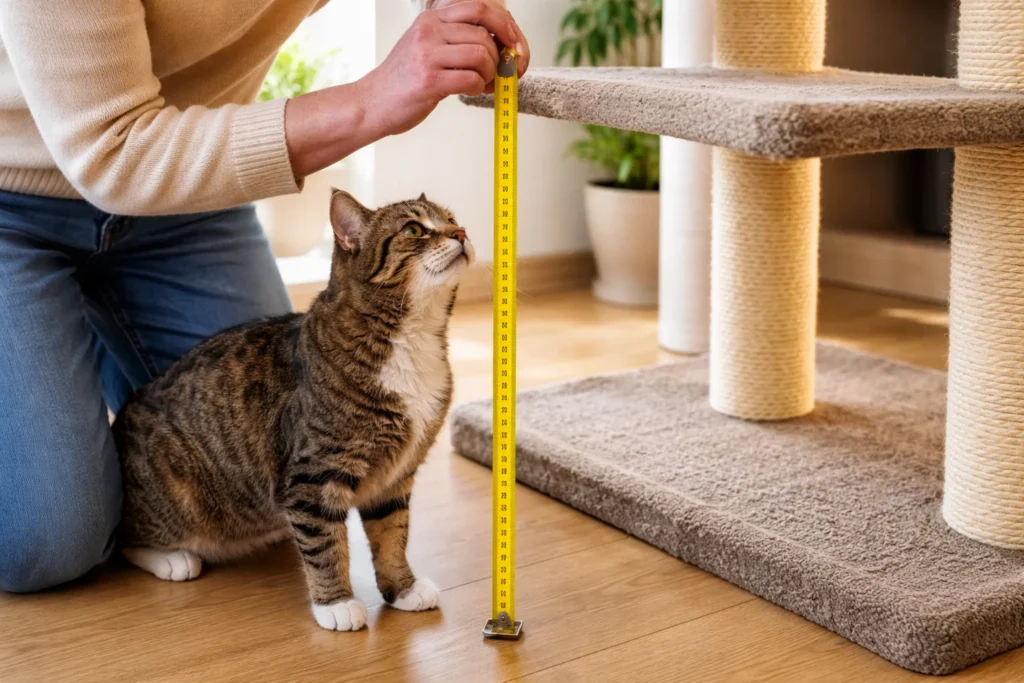
What Makes a Cat Tree Senior-Friendly?
When choosing a cat tree for older cats, look for:
-
Low to medium overall height
-
Small gaps between platforms
-
Ramps or steps instead of vertical jumps
-
Heavy, stable bases
-
Non-slip surfaces
-
Easy-to-access resting spots
These features improve confidence and daily use.
Types of Cat Trees Suitable for Senior Cats
Common cat trees for senior cats include:
-
Low-profile cat trees
-
Ramp-style cat trees
-
Wide-platform designs
-
Sofa-height cat trees
Matching the design to your cat’s mobility matters more than choosing the tallest tree.
How to Choose the Right Cat Tree for Your Senior Cat
Before buying the best cat tree for senior cats, consider:
-
Can your cat still jump onto the sofa comfortably?
-
What height does your cat use most often?
-
Choose the lowest height that meets those needs
-
Prioritize stability over appearance
-
Place the tree against a wall for added support
If a tree looks stylish but feels unstable, it’s usually not senior-friendly.
Frequently Asked Questions (FAQ)
1️⃣ When should I switch to a senior cat tree?
Usually between 7 and 10 years old, based on behavior.
2️⃣ Are cat trees safe for senior cats?
Yes, when designed with low height and strong stability.
3️⃣ Why did my senior cat stop using its old tree?
Most often due to height, large gaps, or instability.
4️⃣ Can cat steps replace a cat tree?
Steps help, but cat trees also provide resting and security.