
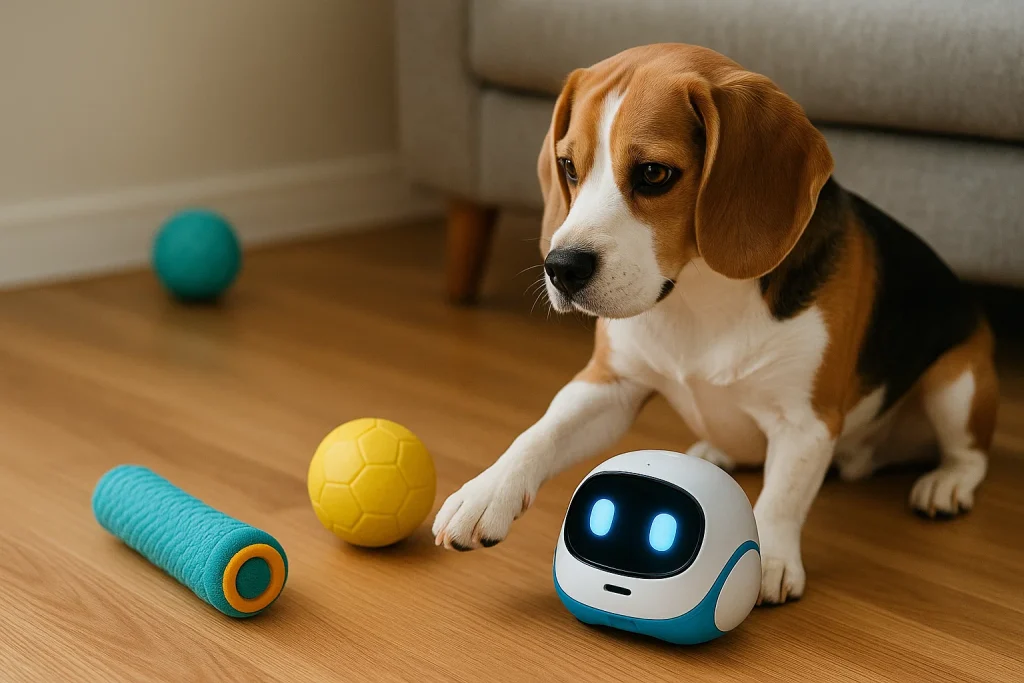
🛡️ AI Pet Toy Safety Standards: Materials, Heat Control, and Smart Supervision (2026) 💡
AI pet toys are no longer simple novelties—they are electronic appliances disguised as playthings. Ensuring their safety means paying attention to what they’re made of, how they regulate heat, and whether they comply with official safety standards. In 2026, safety is the product of engineering integrity and mindful use.
Are materials non-toxic and chew-resistant?
Short Answer: Yes. Premium AI toys use BPA-free, food-grade polymers specifically engineered for dental comfort and structural durability.
Safety begins where play begins—at the point of contact.
The WickedBone AI Toy, for example, uses TPU (Thermoplastic Polyurethane), a high-elasticity material valued for tear strength and impact resistance. It bends under bite pressure yet resists punctures, protecting teeth and preventing sharp-edge splintering.
The best AI toys pair mechanical resilience with tactile softness, making play safe without losing realism.
Do toys overheat during long play?
Short Answer: Rarely, thanks to modern thermal sensors and low-heat motor systems.
Overheating issues that plagued early models have largely disappeared. Most 2026 designs, like the Pawbot PlayMate, feature auto-cooling protocols that reduce motor speed or pause operation when internal temperatures climb.
The bigger risk is environmental—direct sunlight can raise the surface temperature of even the safest toy. As one owner in Texas discovered, giving the toy a short break in the shade can make all the difference.
Even smart toys need cool air.
Are there sharp parts or small pieces?
Short Answer: Not in well-built models. Reputable AI toys have sealed casings with no detachable screws or glued joints that can come loose.
They must meet small-parts safety standards similar to those applied to children’s electronics, preventing ingestion hazards. Avoid bargain-brand devices that expose internal ports or batteries; fractured lithium cells are a genuine veterinary emergency.
A quick weekly inspection—checking seams, charging ports, and casing integrity—keeps peace of mind intact.
Can I leave AI toys on while I’m away?
Short Answer: Sometimes, if designed for autonomous play.**
Most 2026 AI toys include auto-standby or proximity detection, slowing or pausing when your pet rests. Cordless models like the Furbo 360 Pro Ball resume activity only when motion is detected.
Cordless is key: battery-powered toys are safest for unsupervised use. Never leave a charging dock or live cable within reach.
Automation adds comfort—but supervision remains the final layer of safety.
How to check if AI toys meet CE/FCC standards?
Short Answer: Verify certification before purchase. It’s your only guarantee of tested safety.
Look for CE (European Conformity), FCC (U.S. Federal Communications Commission), or RoHS marks on packaging or product listings. Genuine brands like Petcube and Varram display QR codes or downloadable compliance reports.
If a toy hides its credentials, it hasn’t earned your trust. Real safety is traceable.
🌿 Final Insight: Manage Technology Like an Appliance
An AI pet toy isn’t just for play—it’s a connected device in your home ecosystem.
Treat it like any small appliance:
- Verify Compliance: Only buy models with clear CE/FCC certification.
- Monitor Power: Never leave cords or chargers plugged in while away.
- Inspect Integrity: Check the casing for cracks or heat warping weekly.
When technology meets care, safety becomes instinctive—for both human and pet.