
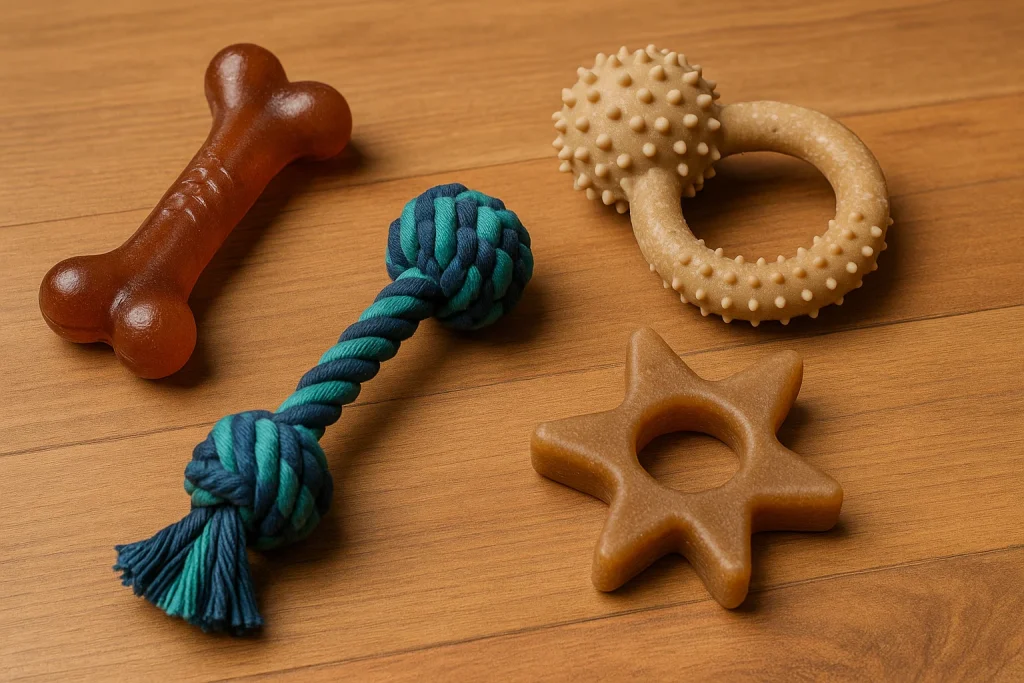
🦴 Chew Toy Safety Guide: Oral Biomechanics and Dental Protection 🛡️
Chewing isn’t just a pastime—it’s a biological need that supports calm focus, jaw strength, and emotional balance.
But when the wrong toy meets the wrong bite, comfort turns into risk.
A safe chew toy protects teeth, channels instinct, and endures daily pressure—without pain or damage.
What Materials Are Safest for Heavy Chewers? 🦴
Short Answer: The safest chew toys have controlled flexibility—firm enough to satisfy strong jaws, yet soft enough to protect teeth.
Recommended Materials:
- Natural Rubber: Exceptional elasticity and long life.
- Reinforced Nylon: Built for extreme power chewers.
- Thermoplastic Elastomer (TPE): Balanced comfort and strength.
The “Nail Test” (Flexibility Check): Press your thumbnail into the toy. A small dent = safe flexibility. If it’s rock-hard (like antlers or bones), it risks cracking enamel.
When Jason’s Rottweiler, Bear, swapped his rigid bones for a KONG Extreme, his gum abrasions healed—and the daily chew ritual became joy, not pain.
Can Dogs Break Their Teeth on Hard Toys? 🦷
Short Answer: Yes—tooth fractures from hard toys are among the most common dental injuries vets see.
The “Knee Rule” (Hardness Check): If you wouldn’t hit your own knee with it, don’t let your dog chew it.
Hard, non-yielding toys can cause slab fractures, especially in upper premolars. Even before visible damage, they create micro-fractures that weaken enamel and risk pulp infection.
Switch Smart: Choose rubber-based dental chews that flex, clean, and massage—building strength instead of breaking it.
Are Bacon- or Peanut-Flavored Toys Safe? 🍖🥜
Short Answer: Sometimes, but hygiene matters more than flavor.
Hygiene Risk: Sticky, artificial coatings collect saliva, bacteria, and plaque, making toys smell—and potentially unsafe over time.
Better Option: Use unflavored refillable toys (like KONG) and add your own organic peanut butter, pumpkin, or sweet potato purée.
This way, you control ingredients, reduce preservatives, and make cleaning easier.
As Sarah, a Beagle owner, shared: “Now Max gets the flavor he loves, and I get the peace of mind I need.”
How to Size Chew Toys Based on Your Dog’s Mouth Width 🦴
Short Answer: Size defines safety.
The Rule:
- The toy should be too big to slip behind the molars.
- Light enough to carry comfortably.
- Never small enough to fit fully inside the mouth.
If unsure—always size up. Tom learned that lesson after his Husky, Luna, nearly swallowed a “medium” toy whole. Now he checks dimensions before every purchase.
Right sizing means safe play, proper jaw alignment, and lasting fun.
What Are the Risks of Swallowing Strings or Fibers? 🧶
Short Answer: Very high. Rope, plush, or fabric toys that fray are among the leading causes of intestinal blockages in dogs.
Medical Risk: Ingested fibers can twist through the intestines, creating a linear foreign body obstruction that often needs emergency surgery.
Safe Alternatives: Use solid-core rubber rings or braided rubber toys for tug games. Soft doesn’t have to mean unsafe—just durable and supervised.
🌿 Final Insight: Chew Smart, Not Hard
A safe chew toy honors your dog’s instinct, strength, and dental limits.
Turn this into a simple daily check:
- Flexibility First – Use the Nail Test: bend, don’t break.
- Dental Protection – Follow the Knee Rule: if it hurts you, it hurts them.
- Size Up – Prevent swallowing hazards before they start.
The goal isn’t indestructibility—it’s trust through comfort.
Every safe chew is an act of care: calm focus, clean teeth, and pain-free joy that lasts.