
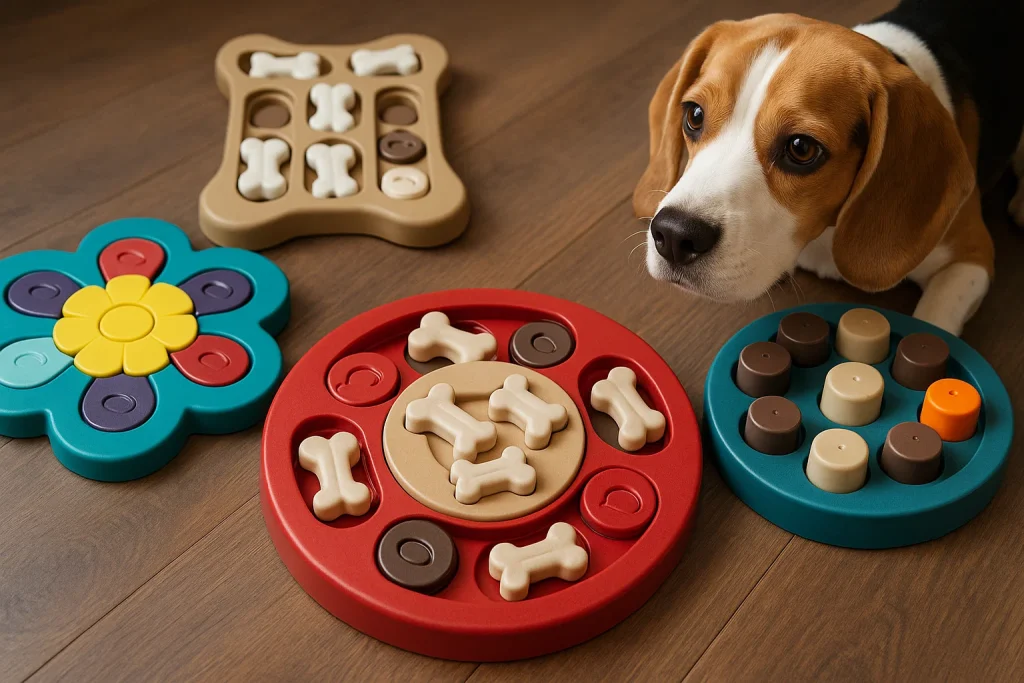
🧩 Puzzle Toys: Material Compliance, Safety, and Life Stage Suitability 🛡️
Every reputable puzzle toy is built as a safe ritual of mental stimulation. The best designs combine non-toxic materials with the right difficulty level, creating enrichment that nurtures curiosity without risk.
🧪 Are They Made from Non-Toxic, Food-Safe Materials?
Short Answer: Yes. Leading brands use BPA-free, food-grade plastic, silicone, or natural rubber to ensure compliance with safety standards.
Safety Standard: Because puzzle play involves licking and food contact, materials must resist chemical leaching when exposed to saliva, moisture, or heat. Certified toys meet the same food-contact safety benchmarks as baby dishes.
Warning Sign: A strong chemical odor—especially after washing—is a clear indicator of unsafe materials. Discard immediately to avoid skin irritation or digestive upset. If it wouldn’t touch a child’s mouth, it shouldn’t touch your dog’s.
🐶 Can Puppies or Senior Dogs Use Them?
Short Answer: Absolutely. Puzzle toys can be tailored to any life stage for adaptive cognitive enrichment.
- Puppies (Early Development): Use soft silicone or easy plastic puzzles with wide openings. They promote coordination and early confidence while protecting baby teeth.
- Seniors (Gentle Engagement): Choose low-resistance puzzles or snuffle mats that reward scent work without strain.
Philosophy: Enrichment is not about challenge—it’s about kind engagement that honors ability at every age.
⚠️ Can Dogs Choke on Puzzle Pieces?
Short Answer: Rare but possible if the toy is poorly constructed or the wrong size.
Ingestion Risk Protocol:
- Size: Avoid detachable parts smaller than a walnut to prevent choking or obstruction.
- Fit: Match the toy to your dog’s weight and jaw strength.
- Supervision: Always supervise early sessions until gentle solving behavior is learned.
Design Insight: One-piece molded puzzles minimize risk. Safety isn’t about indestructibility—it’s about compatibility.
💪 Do Puzzle Toys Break Easily with Strong Chewers?
Short Answer: Durability depends on material integrity and design intention.
- Heavy Chewers (Rottweilers, Pit Bulls): Opt for reinforced rubber, nylon, or composite puzzles labeled “chew-resistant.” Models like KONG Genius or West Paw Qwizl flex without splintering.
- Gentle Players (Terriers, Shih Tzus): Standard plastic or silicone puzzles suffice for moderate use.
A tough toy is more than resistance—it’s sustainability. Buying strong once means buying responsibly.
🧼 How to Clean Puzzle Toys Safely?
Short Answer: Regular cleaning maintains both hygiene and mechanical integrity.
- Dishwasher: Plastic or silicone models—top rack only, no heated drying.
- Hand Wash: Rubber or wood puzzles—mild soap and warm water.
- Natural Disinfection: A 50/50 vinegar-water mix removes odors and kills bacteria naturally.
- Never Use: Bleach or strong disinfectants; residue can cause chemical burns or digestive upset.
Always dry thoroughly before refilling. Clean puzzles last longer and speak care in quiet ways.
🌿 Final Insight: Safety, Strength, and Care
Every puzzle toy is a small act of trust—built through certified materials, proper fit, and consistent care.
Check for wear before every session. Rotate, clean, and observe.
True enrichment protects both body and mind—one puzzle, one mindful ritual at a time.