
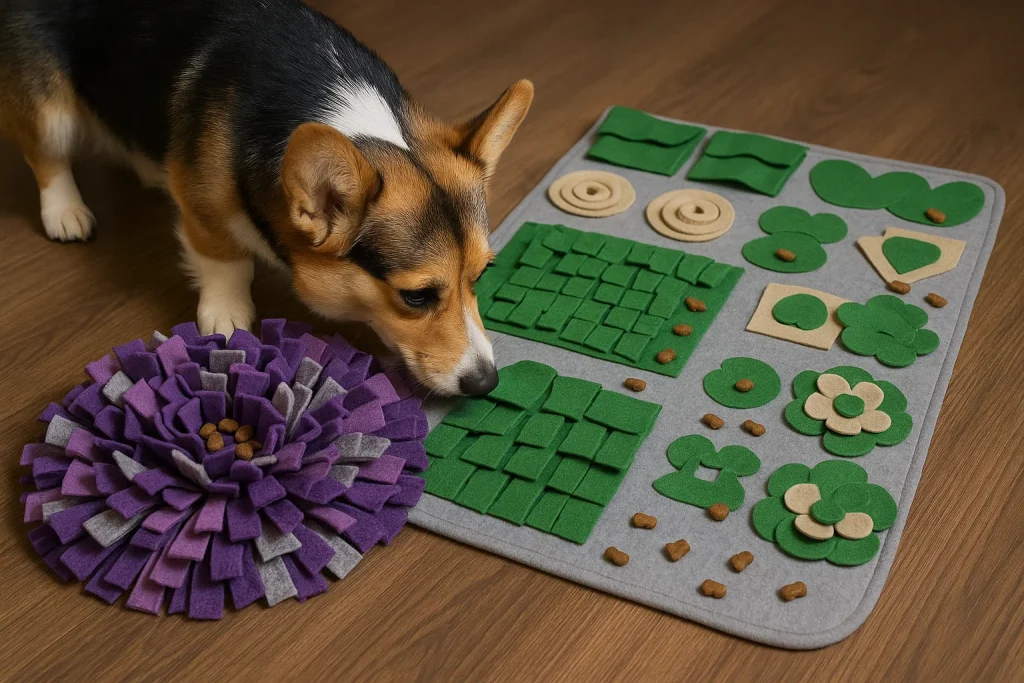
The 2026 Certified Safety Guide to Snuffle Mats: Material Integrity, Bite Control, and Cognitive Longevity
How thoughtful design protects focus, trust, and a lifetime of safe enrichment.
Snuffle mats offer comfort and concentration through scent—but safety is the unshakable foundation beneath every fold. A responsible mat nurtures curiosity while safeguarding health, turning daily play into a lifetime ritual of trust.
🧵 Material Safety: Non-Toxic and Certified
Short Answer: Choose certified, non-toxic, and securely stitched materials—never glued.
| Safety Feature | Recommended Standard | Risk of Poor Alternatives |
|---|---|---|
| Material Composition | BPA-free fleece or organic felt | Chemical residue, irritants |
| Dye Safety | OEKO-TEX® or SGS certified | Contact dermatitis, digestion issues |
| Construction | Reinforced stitching, no adhesives | Volatile organic compounds (VOCs) released when wet |
Case Insight: When Lucy’s Labrador developed mild skin irritation, her vet traced it to an uncertified mat with poor dye quality. Switching to certified organic fleece resolved it overnight.
Softness means little without safety.
💡 Care Note: Always wash in cold water—high heat can break down safe dyes and weaken fabric fibers, reducing the mat’s safety over time.
🐶 The Lifespan Benefit: From Puppies to Seniors
Snuffle mats are rare tools that nurture cognitive health across every stage of a dog’s life.
-
Puppies: Build patience, impulse control, and curiosity through guided scent work.
-
Senior Dogs: Maintain sensory acuity and cognitive resilience without strain. Scent-based enrichment stimulates the hippocampus, supporting memory and focus into later years.
When Tom’s 12-year-old Beagle, Daisy, lost interest in walks, he began hiding treats in a fleece mat. “Her tail wagged like she was a puppy again,” he said. “It gave her something to live for.”
Gentle enrichment revives both scent and spirit.
⚠️ Bite Resistance and Ingestion Risk Mitigation
Short Answer: Match design to temperament—and intervene through redirection, not punishment.
Design Choices:
- Use polar fleece or reinforced felt with shorter strands for strong chewers.
- Avoid loosely woven mats that fray easily.
Behavioral Strategy:
- Stop Play Immediately – remove the mat if chewing begins.
- Redirect Attention – offer a chew toy or lick mat as a healthy outlet.
- Resume Later – reintroduce the mat with supervision and simple, shallow hides.
🧠 Trainer’s Note: Chewing is often a displacement behavior, not defiance. Redirecting the need keeps trust intact while teaching boundaries.
If ingestion risk persists, replace the mat with a solid rubber puzzle feeder.
🧘 Anchorage and Stability for Calm Focus
Stability creates confidence. A steady surface promotes calm, focused sniffing—transforming chaos into concentration.
Built-In Features: Non-slip rubber bases, silicone grips, or corner ties.
At Home Fix: Place a yoga mat or rug pad beneath for friction control on smooth floors.
Predictability is the soil where calm focus grows.
🧼 Longevity Through Consistent Care
Safety and endurance go hand in hand.
- Shake out debris daily.
- Machine wash weekly (cold, gentle cycle, in a laundry bag).
- Air dry fully—avoid heat dryers.
- Trim frayed threads before each session.
Grace, who rotates two mats—one for play, one for wash—calls it “laundry for happiness.”
A durable mat is more than fabric—it’s the quiet record of shared joy.
🌿 Final Insight: Safety as a Trust Contract
Caring for a snuffle mat is more than maintenance—it’s a behavioral contract of safety.
Every check, every wash, every small act of attention says: I see you. I protect you.
Every clean stitch is a promise kept—and trust, once earned, is enrichment’s truest reward.