
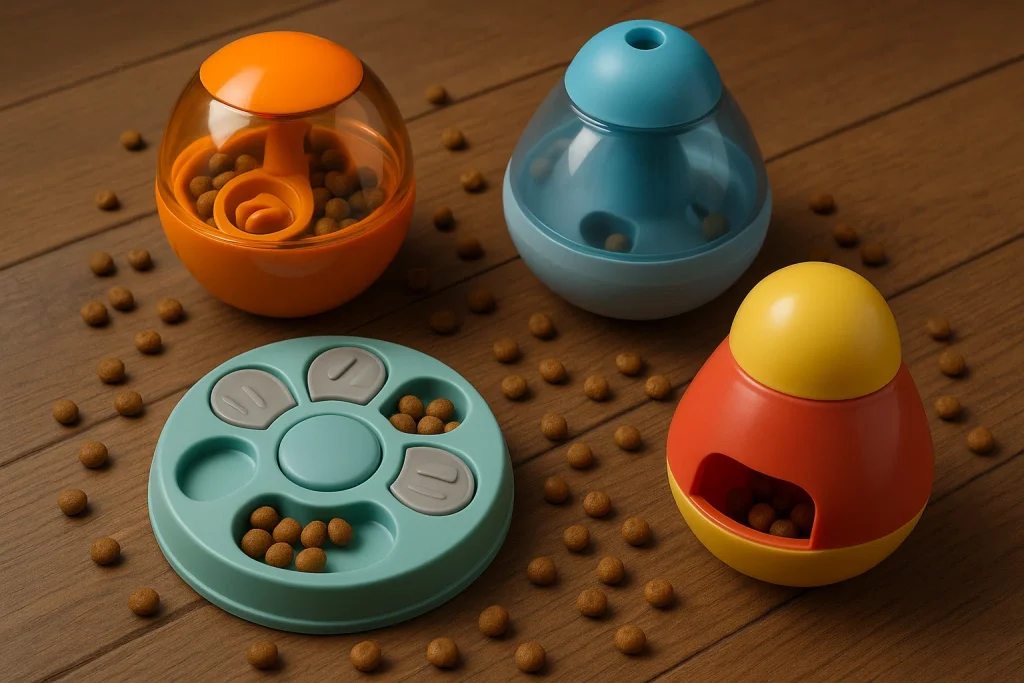
🦴 Treat Dispenser Safety Guide: Toxicological Safety and Handling Noise Sensitivity 🛡️
The safety of a treat dispenser lies not just in its fun factor but in what it’s made of, how it fits your dog’s age, and how it sounds in motion. Proper selection and maintenance turn this small object into a long-term tool for safe enrichment.
🔬 Are Materials BPA-Free and Chew-Resistant?
Short Answer: Yes—reliable models use food-grade polymers engineered for toxicological safety.
Toxicological Safety: Choose dispensers made from BPA-free plastic, food-grade silicone, or certified natural rubber. The material should be non-porous and resistant to polymer degradation over time.
The Label Rule: Look for terms like “FDA-approved,” “Food-Contact Grade,” or “CE Certified.” Avoid cheap imports with bright dyes or overly soft plastics—they may contain phthalates or additives that irritate gums and can leach under heat or saliva exposure.
🐾 Can Puppies and Senior Dogs Use Them?
Short Answer: Absolutely—when matched to their developmental and physical needs.
Puppies (Teething Phase): Flexible silicone and soft rubber models protect erupting teeth while rewarding gentle curiosity. Larger openings prevent frustration and encourage exploration.
Seniors (Joint Health): Opt for lightweight toys with high stress absorption to avoid strain on jaws or arthritic joints. A soft dispenser can reawaken curiosity without pain—mental stimulation without physical strain.
🔇 Do Toys Make Loud Sounds That Scare Pets?
Short Answer: Some do, especially those made from hard-shell plastic that clatter on tile or wood floors.
Behavioral Sensitivity: Sudden impact noise can interrupt the dopamine reward loop, turning enrichment into avoidance.
Quiet Alternatives: Look for fabric-coated, foam-cored, or silicone-shell dispensers designed for sound dampening and impact absorption. Observe your dog’s first session carefully—comfort is often as simple as silence.
💪 How Durable Are They for Heavy Chewers?
Short Answer: True durability comes from material density and structural reinforcement.
Material Selection: Power chewers (Pit Bulls, Shepherds) do best with reinforced rubber or dual-layer silicone models labeled for “extreme” chew levels.
Safety Check: No dispenser is indestructible. Inspect weekly for cracks, fraying, or signs of polymer fatigue that indicate micro-tearing. Replacing a toy before failure prevents ingestion of fragments and avoids emergency vet visits.
🧼 Are Treat Dispensers Dishwasher-Safe?
Short Answer: Most high-grade models are, but verify the dishwasher-safe icon before use.
Hygiene Protocol: Clean after every use to prevent bacteria and mold accumulation inside crevices. Top-rack washing with mild detergent preserves structure and color. Skip high-heat drying cycles that can warp plastics and accelerate polymer aging.
A clean dispenser is more than hygiene—it’s a signal of care your dog can feel.
🌿 Final Insight: Safety Is a Habit
A safe toy isn’t defined by price—it’s maintained by awareness.
Make these steps part of your daily play ritual:
- Inspect for cracks, wear, or discoloration.
- Confirm labels: BPA-free, food-grade, and appropriate chew level.
- Match texture and weight to your dog’s age and energy.
These two minutes of mindfulness turn every treat dispenser from a toy into a tool for healthy, secure enrichment.