
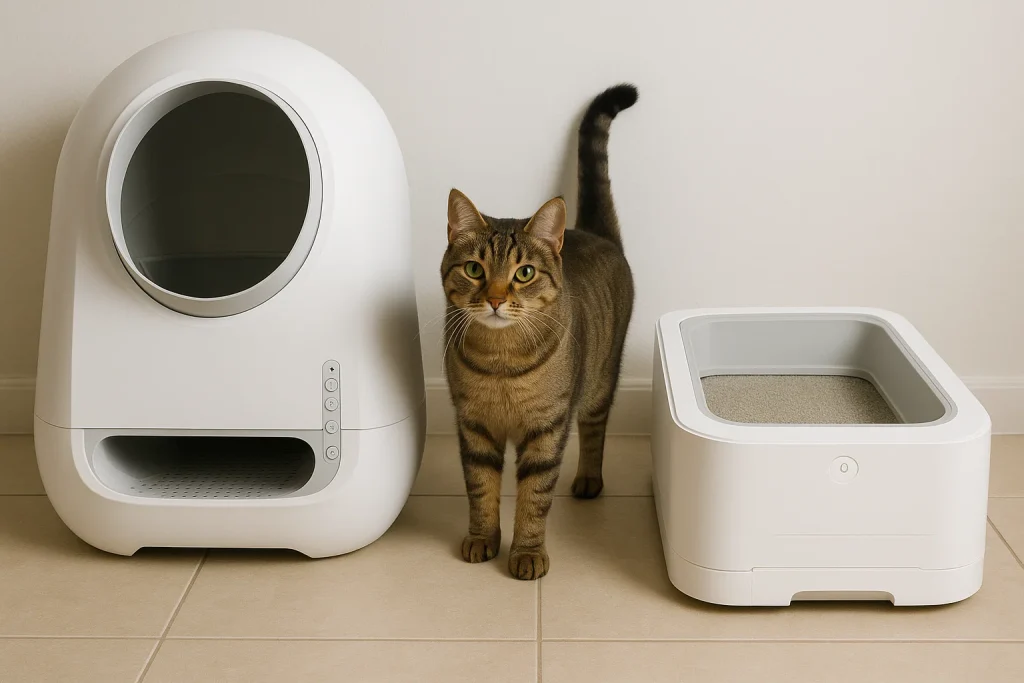
Automatic litter boxes promise convenience — a cleaner box, fewer scooping sessions, and a tidier home.
But beneath that convenience is something more important: your cat’s safety. 🧡
A litter box is a private space, a place your cat visits when they’re at their most vulnerable.
Choosing an automatic litter box with proper safety certifications ensures they are protected every time they step inside. 🏠🛡️
This guide breaks down what each certification means, how it protects your cat, and what features truly matter. 🌟
🐾⚠️1. Why Safety Certifications Matter
Automatic litter boxes use motors, sensors, rotating drums, and electrical components. Without proper testing, risks include:
- unexpected drum movement
- paw or tail injuries
- motor overheating
- chemical exposure from poor materials
- electrical failures or sparks
A certification isn’t just a label — it’s a tested safety promise.
🔌🔥2. UL Certification(Underwriters Laboratories)
One of the most recognized global standards for electronic safety.
UL Ensures:
- stable wiring & heat control
- proper motor protection
- reduced electrical hazards
- safer operation in long-term use
If the litter box plugs in, UL is a must-have. ✔️
📶📡3. FCC Certification(Wireless & Smart Models)
For smart litter boxes that use Wi-Fi, Bluetooth, or sensors.
FCC Certifies:
- safe wireless signal levels
- no harmful electromagnetic interference
- reliable communication between sensors and app
Any auto-cleaning box with “smart features” should carry FCC approval.
🛠️🌍4. CE Marking(European Safety Standards)
The CE mark means the product meets EU health, safety, and environmental standards.
CE Covers:
- electrical safety
- material quality & chemical limits
- structural strength
- eco-compliance
For international models, CE indicates higher regulatory oversight.
♻️🔬 5. RoHS Certification(Safe Materials)
RoHS focuses on material safety — crucial for products your cat touches daily.
RoHS Ensures:
- no heavy metals 🧲
- reduced toxic chemicals ☣️
- safer plastics & internal components 🧱
Look for RoHS-compliant litter boxes to minimize chemical exposure.
🧪✨ 6. SGS / Intertek Testing(Independent Lab Testing)
Trusted global labs that validate durability & mechanical reliability.
They Test:
- long-term mechanical wear
- plastic impact resistance
- heat & temperature tolerance
- structural stability
Brands that use SGS/Intertek usually aim for higher quality control. 🏅
🐾📡 7. Smart Sensors & Pet Detection Safety
Even with certifications, a litter box needs real safety features built in.
Essential Features:
- infrared pet detection
- weight sensors for multi-cat homes
- auto-stop when movement is detected
- delayed cleaning cycles
- manual override for emergencies
These features protect paws, tails, and your cat’s peace of mind. 🧡
🧴🔍 8. Material Safety: What to Look For
Plastic quality affects odor, hygiene, and long-term durability.
Choose:
- BPA-free plastics
- ABS / PP high-grade materials
- smooth, non-porous surfaces
Avoid:
- unclear recycled materials
- plastics that warp with heat
Better materials = safer daily use.
💜🐈 9. Final Thoughts: Safety First, Convenience Second
A good automatic litter box should feel predictable, quiet, and safe — never rushed or overwhelming. 🌙
With the right certifications, you ensure:
- fewer mechanical risks 💡
- safer electrical operation 🔌
- non-toxic materials 🧴
- reliable sensor response 🤖
- a calmer, more confident cat 🧡🐾
Certifications aren’t extra.
They’re the silent promise that your cat’s daily routine is protected — every single time. 🛡️✨