
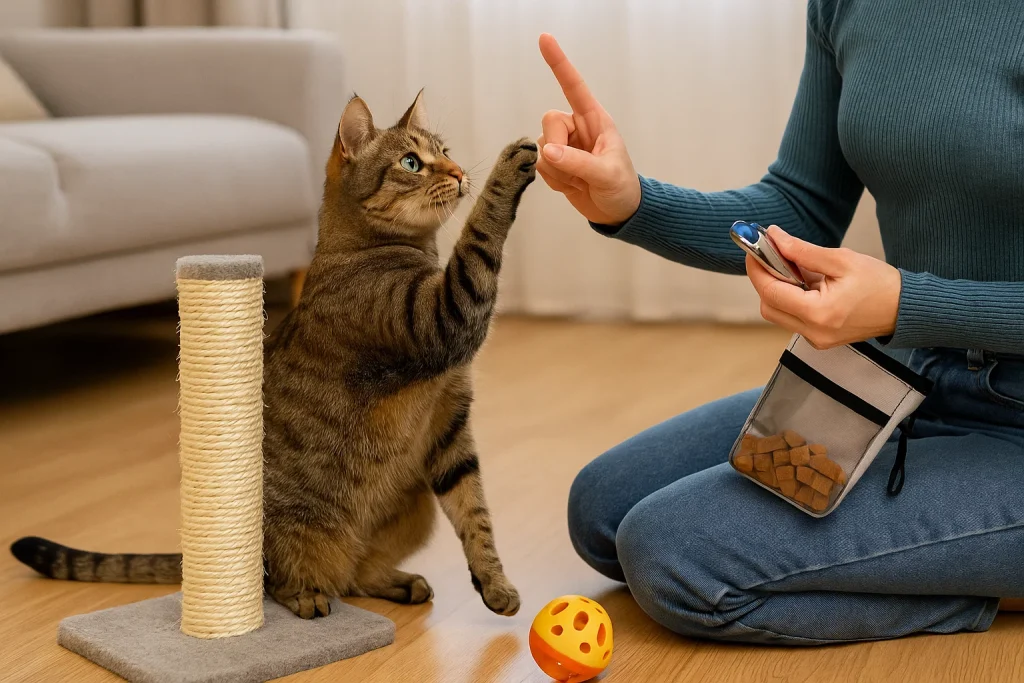
Training a cat isn’t about control.
It’s about communication — a calm, steady conversation built through repetition, safety, and small shared victories. 🌿
The right training tools aren’t shortcuts.
They are bridges — ways to help your cat feel seen, safe, and understood. ✨
They help your cat understand the world more clearly, and they help you guide them with patience instead of pressure.
Below is a gentle, practical guide to the tools that make cat training easier, safer, and more enjoyable for both of you. 💛
💜 1. Why Cat Training Tools Matter
Cats learn best through choice, not force.
A good training tool creates clarity and confidence. 🌼
Where tools truly help:
- Redirecting unwanted scratching 🪵
- Reducing stress during grooming 🧴
- Encouraging calm behavior 💤
- Supporting shy or anxious cats 🫶
When your cat succeeds — even briefly — their world feels safer.
And your connection deepens. 💗
🎯 2. Clickers: Clear, Kind Communication
A clicker gives your cat a simple, reliable signal: “Yes, that’s it.”
It removes emotion and replaces it with clear timing. 🎛️
Clickers help with:
- Basic behaviors 🐾
- Shy cats building trust 🌙
- Reward-based training 🍤
- Marking positive moments 🎉
Tips:
Keep sessions short, stay patient, and always follow a click with a reward. 🍪
🍤 3. Treat Pouches & High-Value Rewards
Consistency depends on timing.
A treat pouch keeps your hands free and your timing sharp. ⏱️
High-value treats = better focus
Soft, tiny, easy-to-eat snacks help your cat stay engaged without getting overwhelmed. 😺💕
🎯 4. Target Sticks: Guiding Without Touching
A target stick lets your cat choose movement rather than being pushed or pulled.
This builds confidence — especially for cautious cats. 🌱
Great for:
- Learning “touch” or “follow” 🐾
- Carrier introduction 🚚
- Reducing fear during nail trims ✂️
- Helping shy cats warm up slowly 🌧️→🌤️
🪵 5. Scratching Posts: Tools for Natural Behavior
Scratching isn’t misbehavior.
It’s self-care for cats — stretching, scent marking, emotional release. 🌲
Useful tools:
- vertical scratching posts 🗼
- horizontal scratch pads 📦
- cardboard ramps 📐
- catnip spray for attraction ✨🌿
Place scratchers near the spots they currently choose.
Reward immediately when they use them. 🧡
🎣 6. Interactive Toys That Support Training
Cats learn best when their physical and mental needs are met first.
Helpful options:
- Wand toys (build focus + confidence) 🎣
- Puzzle feeders 🧩
- Motion toys ⚡
- Daily playtime to reset mood 🎀
A satisfied cat is a teachable cat. 😌
🧳 7. Carrier Training Tools
Carrier fear is one of the most common stress points in a cat’s life.
The right tools help soften that experience. 🌤️
Useful aids:
- soft fleece pads 🛏️
- carrier covers 🕊️
- cat-safe calming sprays 🌸
- treat trails into the carrier 🍗
Training isn’t always about “tricks.”
Sometimes it’s about restoring comfort. 💛
🪮 8. Grooming Helpers: Making Tough Moments Easier
Grooming can be overwhelming for many cats.
Gentle tools help make the process predictable and safe. 🫧
Helpful tools:
- soft-bristle brushes 🪮
- grooming gloves 🧤
- cat-safe nail clippers ✂️
- lick mats for distraction 🍯
Gentle cooperation always works better than restraint. 🌿
💗 9. Final Thoughts: Training as a Quiet Conversation
Training is less about correcting behaviors…
and more about strengthening trust. 🤍
Tools won’t replace patience.
But they make communication smoother, clearer, kinder.
Choose tools that fit your cat’s personality.
Support their choices.
Celebrate small wins.
And let the conversation between you grow — one quiet yes at a time. 🐾✨