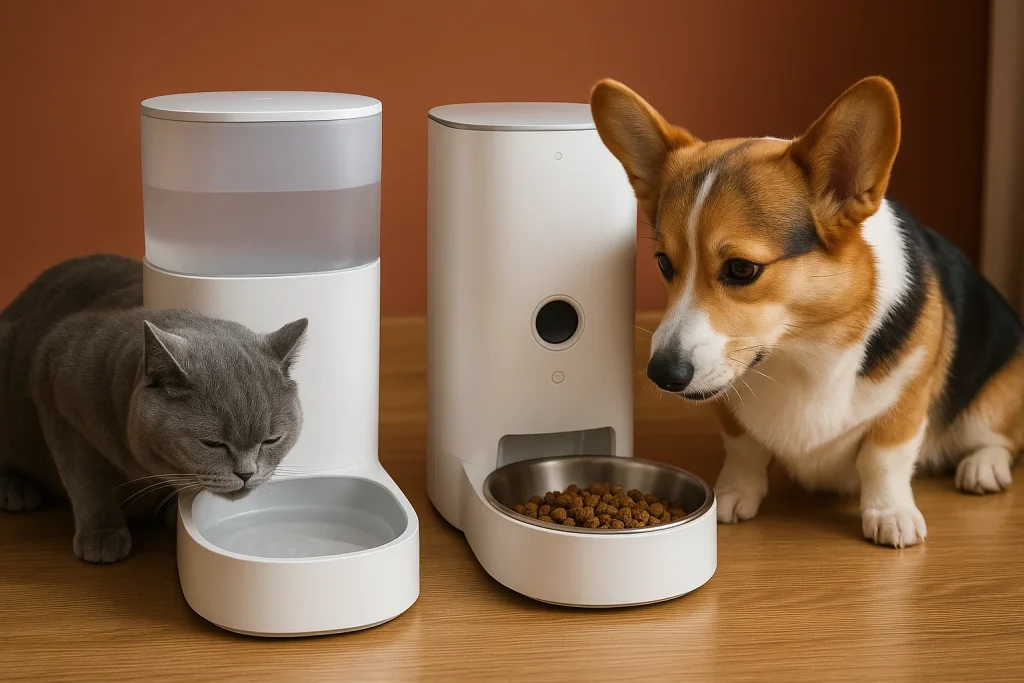
🌿 When Leaving Home Feels Hard
It’s a quiet morning. You’re grabbing your bag, glancing at the clock, and your dog’s eyes follow you.
For some pets, those few minutes—or even seconds—can be stressful. Separation anxiety is more than missing you; it’s a genuine emotional and physiological response.
Many pet parents wonder: Can a simple camera help? Beyond watching, could it actually soothe anxiety?
Let’s explore what science and behavior experts say.
🐾 Understanding Separation Anxiety in Dogs
Separation anxiety isn’t “bad behavior.” According to the American Veterinary Society of Animal Behavior (AVSAB), dogs experiencing this often show pacing, barking, chewing, or even self-soothing behaviors because of stress hormones.
A pet camera doesn’t magically erase these feelings. What it does is provide information and reassurance for both owner and pet.
With a camera, you can see:
- When anxiety peaks during the day
- Which triggers intensify the behavior
- How long your dog calms down after initial stress
Seeing this reality helps you respond more calmly and appropriately.
🎥 How Pet Cameras Can Help Calm Pets
While cameras themselves aren’t therapy, they become part of a supportive routine:
- Visual and Audio Contact
Some cameras allow owners to speak or play familiar sounds. Even a few seconds of hearing your voice can reduce tension. - Understanding Patterns
Noticing recurring moments of stress helps you structure predictable routines. Feeding, playtime, and walks timed around these moments can ease anxiety. - Environment Adjustments
If you notice your dog reacts strongly to outside noises, you can plan soft background sounds or place comfort items where your pet spends most time.
According to AVSAB’s behavior model, recognizing stress and providing gentle reassurance—without overreacting—is often more effective than trying to “correct” the anxiety.
🌸 Practical Scenarios
- Morning departures: Some dogs bark the instant the owner leaves. Using a camera, you might see the barking stops after a few minutes. This insight allows for gradual desensitization routines.
- Evening triggers: Certain TV sounds or street noise may startle your dog. Cameras show when these occur and allow you to provide a calm, preemptive response.
- Alone time adjustments: You may learn your dog settles if a familiar blanket or chew toy is available, rather than constant vocal reassurance.
The key is observation, not control. A camera creates the space to understand what your dog truly needs.
🧩 Tips for Using Pet Cameras for Anxiety Relief
- Speak calmly through two-way audio only when appropriate—avoid over-responding.
- Note behavior patterns instead of reacting to every instance.
- Pair camera insights with environmental support: toys, bedding, or soft music.
- Consult a professional if anxiety is severe; cameras supplement, not replace, expert guidance.
By blending careful observation and structured routines, pet cameras can gently support dogs in feeling more secure while alone.
❓ FAQ
Q: Can a pet camera cure separation anxiety?
A: No, it can’t cure it. Cameras help you see and understand anxiety, which informs more effective support.
Q: Should I use two-way audio to talk to my dog constantly?
A: Only occasionally. Overuse may increase dependence rather than calm.
Q: Are cameras stressful for dogs?
A: Most dogs adjust quickly, especially if the camera blends into their environment unobtrusively.
Q: When should I seek professional help?
A: If anxiety leads to destructive behaviors, self-harm, or prolonged distress. Certified trainers (CDBC, CPDT-KA) can provide tailored guidance.
🌙 Understanding, Not Controlling
The most important insight is simple: pet cameras are not a replacement for presence, love, or training.
They are a window—a gentle way to see, understand, and respond to a pet’s emotional world.
For dogs struggling with separation, being observed thoughtfully can be the first step toward calmer, more confident days.