
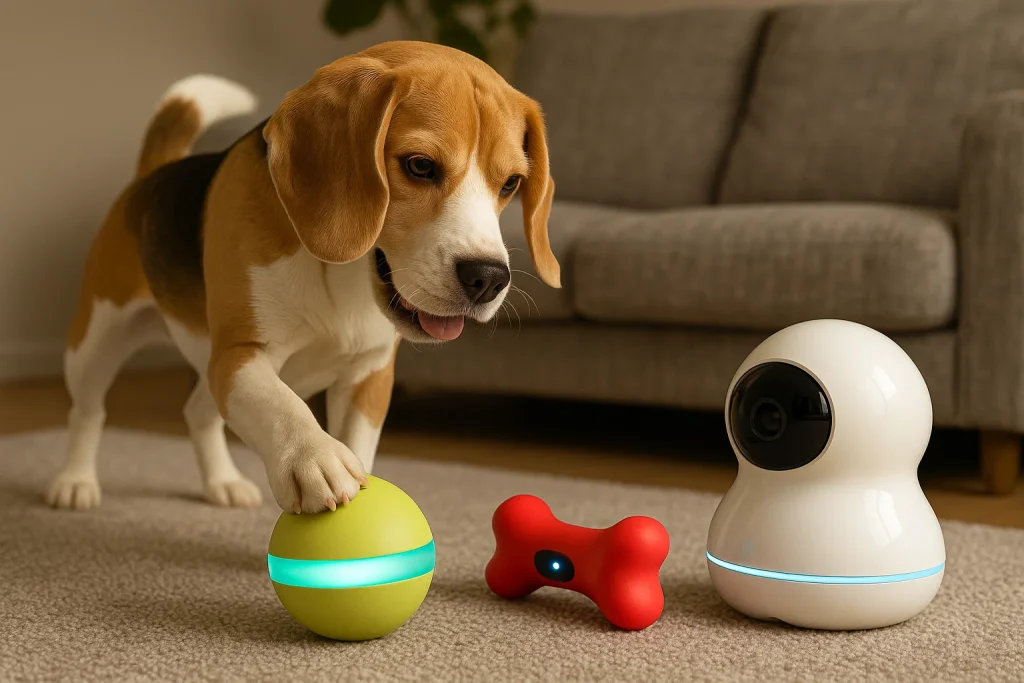
🧠 Behavioral Benefits of AI Pet Toys: Focus, Calm, and Adaptive Play (2026) ✨
AI pet toys have evolved into powerful environmental enrichment systems that manage a pet’s cognitive load and emotional balance. Their true value lies in offering structured, responsive engagement in the quiet spaces between human interaction.
Can AI toys prevent destructive behavior?
Short Answer: Yes—AI toys redirect restless energy and reduce destructive habits by engaging natural instincts.
Behaviors like chewing furniture or excessive barking often stem from boredom and anxiety. Toys such as the WickedBone X Pro use unpredictable motion and real-time responsiveness to impose a manageable cognitive challenge. This focused task converts chaos into curiosity.
As Max’s owner observed, “He still gets bursts of energy—but now he takes it out on the robot instead of the couch.” In essence, AI toys don’t suppress behavior—they rechannel it.
Can AI toys replace human playtime?
Short Answer: No, and they should not. AI toys act as digital co-caretakers, complementing—not substituting—human presence.
While features like motion response or voice playback simulate companionship, they cannot replicate physical warmth, eye contact, or the shared rituals that form trust. Dogs thrive on both interaction and independence.
AI’s role is to fill the in-between moments—to keep curiosity alive until you return, never to stand in your place.
Do AI toys help pets with separation anxiety?
Short Answer: Yes, particularly when integrated into a predictable routine of voice and reward.
Anxiety often arises from the unpredictability of absence. Tools like the Furbo Play Cam create reinforcement loops: a calm voice cue (“Be right back, good girl”) followed by an automatic treat release. Over time, the dog learns that solitude predicts comfort, not loss.
AI can’t replace you—but it can soften the silence.
Can cats benefit from AI play too?
Short Answer: Absolutely. AI play rekindles hunting instincts and sharpens focus in indoor cats.
Devices such as the Cheerble Ball 2.0 use motion prediction and erratic speed changes to mimic prey. This activates the natural hunt sequence—stalk, pounce, capture—providing both physical exercise and mental engagement.
For senior or sedentary cats, it’s less about novelty and more about restoring instinctive purpose.
Can AI toys adjust activity based on a pet’s energy level?
Short Answer: Yes. Advanced models apply adaptive learning to sync play intensity with each animal’s rhythm.
By reading motion frequency, collar-linked biometrics, or time-of-day patterns, systems like the AICompanion Pet Orb learn circadian cycles—morning bursts, afternoon rests—and calibrate movement accordingly.
This results in therapeutic play: stimulation without stress. For aging or recovering pets, adaptive AI becomes not just entertainment, but gentle physiotherapy.
🌿 Final Insight: Guidance Through Motion
AI toys are not replacements—they are behavioral guides.
They meet instinct with intelligent motion, turning restlessness into rhythm and solitude into structure.
Used intentionally, they can ease anxiety, restore focus, and make alone time a period of calm learning rather than loss. The goal isn’t obedience—it’s balance.