
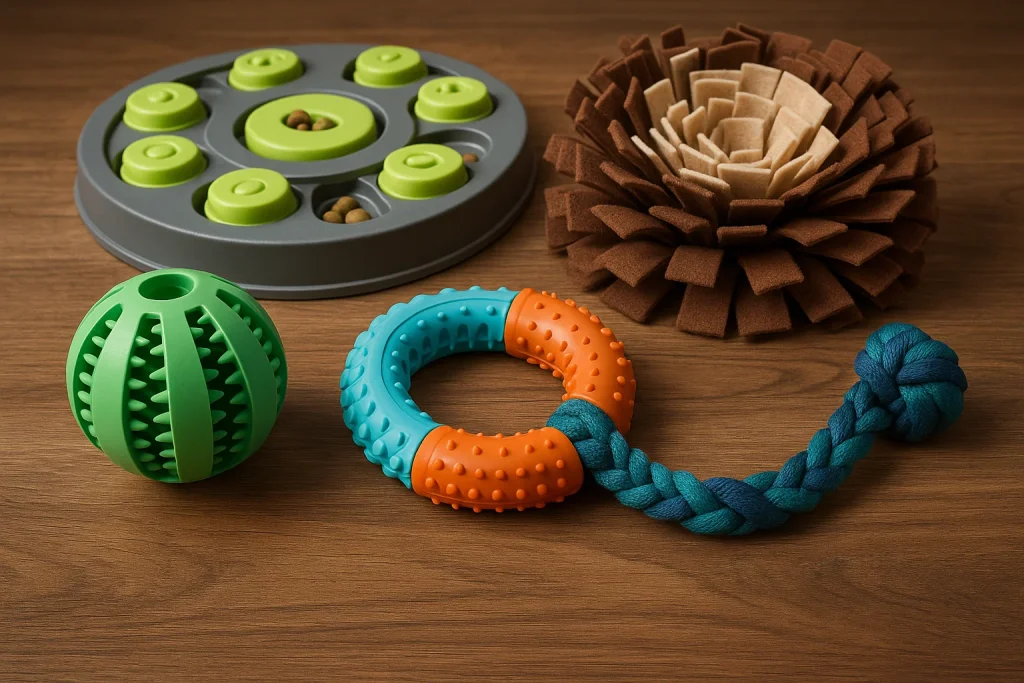
The Next Frontier in Pet Tech: Sensor-Driven Training Toys for Calm, Focused, and Connected Companionship
Sensor-driven training toys are quietly reshaping how pets learn, adapt, and thrive. These AI-powered interactive devices respond to motion, touch, and timing—offering dogs (and even cats) a structured way to manage anxiety, release energy, and build concentration through predictable play.
For a restless pet, that rhythm becomes something deeper than stimulation—it becomes stability.
Can Sensor Feedback Create Calm in Hyper-Anxious Dogs?
Yes. Predictability soothes.
Sensor-based pet toys use fine-tuned vibration, light, and sound feedback to create structure. When a dog learns that one action always leads to the same reaction, it replaces chaos with rhythm—and rhythm builds calm.
The CalmiPlay Sensor Disc, for instance, hums softly when touched, rewarding measured contact over frantic energy.
Rachel’s Border Collie, Finn, once paced for hours; after two weeks of short, guided sessions with the disc, his pacing eased, and barking fell away.
It wasn’t magic—it was trust built through repetition.
Can Repetitive Sensor Play Improve Focus and Cognitive Engagement?
Absolutely. Structured repetition trains both mind and body.
Smart training toys like the TrainMind Pro Cube respond progressively—tap once, it lights up; repeat three times, it plays a tone.
Each feedback layer deepens understanding and extends attention span.
Owners report that dogs who once lost interest after minutes now stay engaged for full sessions.
This is mindfulness in motion—a quiet conversation between instinct and patience.
Do Smart Training Toys Help Home-Alone or Bored Dogs?
Yes. Interactive sensor toys fill emotional silence with purpose.
They offer comfort through motion and response, transforming solitude into connection.
Ben’s Labrador, Toby, began chewing furniture when left alone. After introducing the PawSense Motion Orb, which lights and rolls gently when it detects movement, his behavior changed.
Within a week, he was calmer—and the furniture untouched.
Smart toys can’t replace companionship, but they soften the edges of loneliness.
Can Smart Toys Replace Professional Training?
Not fully—but they extend it beautifully.
AI-enabled training devices reinforce behavior between lessons, providing clear, emotion-free feedback dogs instinctively understand.
Professional trainers now use adaptive toys like the FurMind Adaptive Trainer, which adjusts response speed to match a dog’s stress level.
Used thoughtfully, these toys enhance—not replace—the human bond.
Technology gives precision; you provide love.
Do Sensor-Based Training Toys Work for Multiple Pets?
Yes, especially with multi-profile or AI recognition features.
The FitFetch Dual Trainer, for example, adapts to different energy levels automatically—slower feedback for older pets, quicker for younger ones.
Emma’s Beagle and Shepherd now share one seamlessly; what used to be competition became quiet teamwork.
Her living room feels less like a battlefield, more like balance.
The Heart of Sensor-Based Training
Sensor-driven pet toys are more than gadgets—they are bridges between instinct and empathy.
They teach that calm can be learned, not imposed, and that play can be both structure and solace.
In the hands of a loving owner, AI pet training becomes emotional intelligence in motion—proof that the smartest technology is still guided by the softest heart.