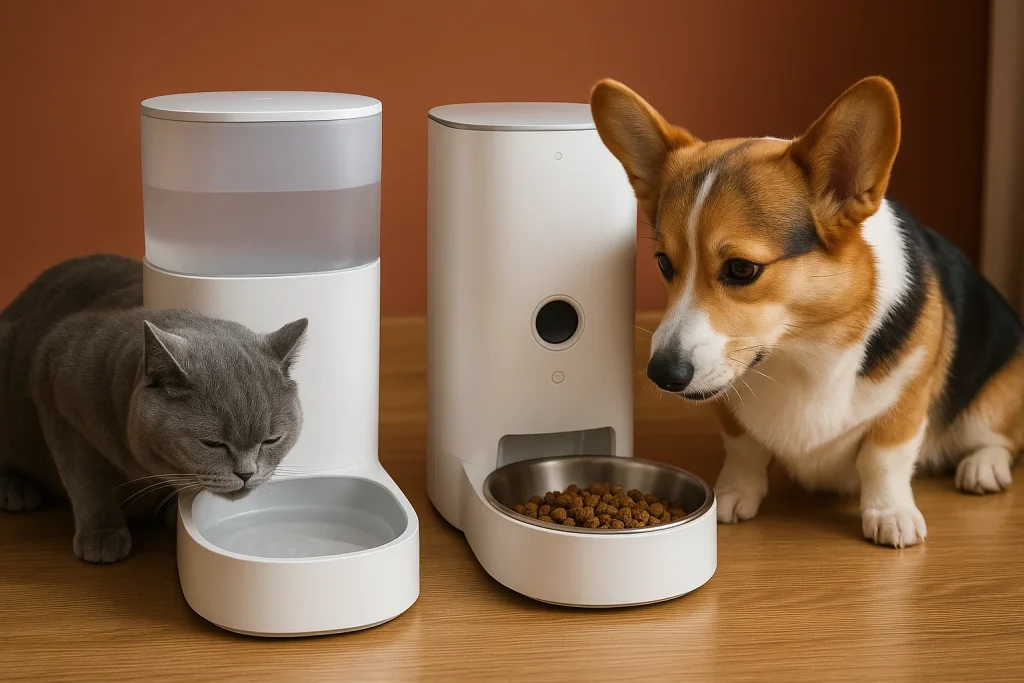
Eco-Friendly Pet Tech 2025: Smart, Sustainable, and Kind to the Planet
As pet care technology grows smarter, it’s also becoming greener.
Eco-friendly pet comfort devices allow owners to care for their companions while reducing waste, energy use, and environmental impact. From solar-powered pet houses to biodegradable filters, sustainability has quietly entered the pet tech world—and it’s here to stay.
Are There Energy-Saving Pet Heaters or Coolers?
Yes. Modern energy-efficient pet heaters and cooling mats use low-voltage systems or thermoelectric technology to maintain stable temperatures with minimal power use—often less than half that of traditional models.
When Sasha, a rescued greyhound with arthritis, used a smart heater pad with an auto shutoff feature, it kept her bed at 35°C without raising energy bills or carbon output.
“It’s warmth without guilt,” her owner said—a small act that made a big difference over an entire winter.
Are Biodegradable Filters Available for Air Purifiers or Fountains?
Yes. Several eco-conscious brands now offer biodegradable or recyclable filters made from bamboo fiber, coconut shell carbon, or plant-based mesh.
These eco filters replace plastic-heavy cartridges and naturally break down after disposal, keeping both water and conscience clean.
Theo, a long-haired cat with sensitive skin, switched to a biodegradable charcoal water filter. His water stayed cleaner, and his owner noticed a smaller trash footprint.
It’s a simple upgrade that makes environmental care part of everyday hydration.
Do Solar-Powered Pet Houses Exist?
They do—and they’re brilliant.
Solar-powered pet houses collect sunlight by day to power fans, heaters, or lights at night—ideal for outdoor pets or rural shelters.
In Arizona, Mark built a solar-cooled kennel for his husky Nova. Two roof panels powered a small fan and lamp for eight hours nightly, keeping Nova cool through summer.
Sustainability, in this case, came from one small panel of sunlight.
Are There Smart Timers to Reduce Energy Use?
Definitely. Smart plugs and timers let owners control feeders, heaters, or purifiers remotely, turning them on only when needed.
They can integrate with voice assistants or apps for precise scheduling and real-time monitoring.
Lena, a night-shift worker, connected her cat’s warmer to a smart timer—cutting power use by nearly 40%.
Energy savings, she said, “feel like another form of love.”
How to Choose Durable, Long-Lasting Pet Tech
Durability is sustainability. Look for devices made from recyclable aluminum, BPA-free plastics, or replaceable components.
Longer-lasting products reduce both waste and cost—and provide emotional consistency for pets used to familiar comfort.
A well-built device isn’t just eco-friendly—it’s a promise of stability, warmth, and care that lasts.
Key Benefits of Eco-Friendly Pet Tech
- Reduces carbon footprint through low-voltage or solar power systems
- Uses biodegradable or recyclable materials
- Saves energy and costs with smart timers and auto shutoff features
- Encourages sustainable manufacturing and longer product life
- Promotes eco-conscious pet parenting for future generations
Final Thoughts: Green Care, Lasting Comfort
Sustainable pet tech doesn’t ask us to give up warmth or safety—it asks us to care smarter.
Every eco-conscious device, multiplied across millions of homes, becomes a quiet kind of activism—for the planet and the pets we love.
Green innovation isn’t just about technology; it’s about compassion measured in watts, waste, and wagging tails.
FAQ – Quick Answers
- Do eco-friendly pet heaters really save energy?
Yes. They use low-voltage or thermoelectric systems that reduce energy use by up to 50%. - What are biodegradable pet filters made of?
Materials like bamboo fiber, coconut shell carbon, or plant-based mesh replace plastic cartridges. - Are solar-powered pet houses practical?
Yes. They can power fans, heaters, or lights for several hours daily, especially in sunny regions. - Can smart plugs help reduce pet tech energy use?
Absolutely. They enable timers and app control to ensure devices run only when needed. - Why does durability matter for sustainability?
Longer-lasting devices reduce waste, resource use, and provide consistent comfort for pets.