
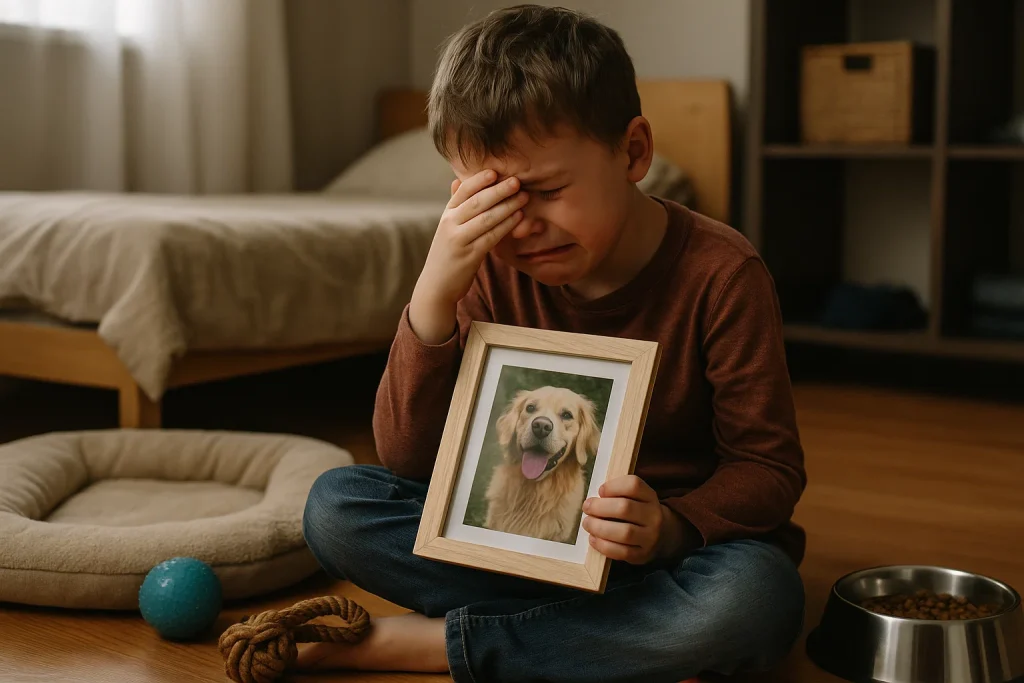
Guiding Young Hearts: How to Explain Pet Death to Children with Compassion
Losing a pet is often a child’s first encounter with deep sorrow. Because children are deeply perceptive, yet think in very literal ways, the words we choose carry great weight.
Speaking with honesty, love, and gentleness helps them process their feelings and begin to heal from pet loss grief.
What Clear Words Should I Use with My Child?
Clarity is paramount. Avoid confusing euphemisms like “went to sleep” or “ran away,” as they can create genuine fear of sleeping or abandonment. Instead, speak simply and directly:
“Our dear dog, Bella, died. That means her body stopped working, and she won’t wake up again.”
One mother, Lisa, told her 5-year-old son, “Milo’s heart isn’t beating anymore, and he doesn’t feel pain now.” This honest but gentle exchange gave her child room to ask questions, while reassuring him that Milo was free from suffering.
Gentle Reminder: Say the word “died” clearly, then immediately offer comfort by emphasizing that the pet no longer feels pain.
Are There Children’s Books About Pet Loss?
Yes, books are powerful tools that give children a safe doorway into grief, allowing them to see their feelings reflected in a story. They provide necessary language for big emotions.
Titles like The Rainbow Bridge: A Pet Loss Story for Children by Niki Behr or The Goodbye Book by Todd Parr offer age-appropriate comfort. When Emma’s family lost their Labrador, they read I’ll Always Love You by Hans Wilhelm together. Emma’s son later drew pictures of their dog and taped them to the pages, turning the book into his own heartfelt memorial.
Book Tip: Look for stories that validate sadness while keeping explanations simple and loving, aiding in grief support for children.
Should I Tell My Child About Euthanasia?
If euthanasia was the compassionate choice, honesty still matters. Use gentle but straightforward words that focus on kindness:
“The vet helped Daisy die because she was very sick, and her body couldn’t get better. It was the kindest way we could stop her pain.”
One father shared how his 8-year-old daughter placed a blanket in her hamster’s cage before the appointment, whispering, “So he can be cozy when he goes.” Her family’s honesty allowed her to show love without fear, framing the decision as an ultimate act of compassion.
Important Note: Frame euthanasia as an act of love—a selfless choice made to end suffering, a valuable lesson in empathy.
How to Help a Child Create a Pet Memorial?
Children often process deep grief through action. Encourage them to create rituals that give them something tangible to hold onto and help shift their focus from loss to legacy:
- A Memory Box: Filled with the pet’s collar, tags, or favorite toy.
- Drawings or Letters: Written directly to their pet, placed in the box or buried.
- Planting a Living Tribute: A flower or tree that grows as a symbol of their enduring bond.
A family in Texas once invited their children to paint stones with their dog’s name and favorite colors. They placed the stones beneath a tree in the yard, creating a loving, accessible place of remembrance.
Should Children Be Present at a Pet Burial?
If the family chooses burial, children can be included if they clearly wish to be present. Being there gives them a crucial sense of closure and helps them accept the finality. Give them small, meaningful roles—placing a favorite toy, saying a personalized goodbye, or reading a short poem.
Nine-year-old Jake attended his cat’s backyard burial. He placed a toy mouse beside the box and whispered, “You can play forever now.” His parents later said that moment helped him accept the finality with love rather than prolonged confusion.
Important Note: Prepare your child beforehand—explain exactly what they’ll see (the box, the digging) so nothing feels frightening or unexpected.