
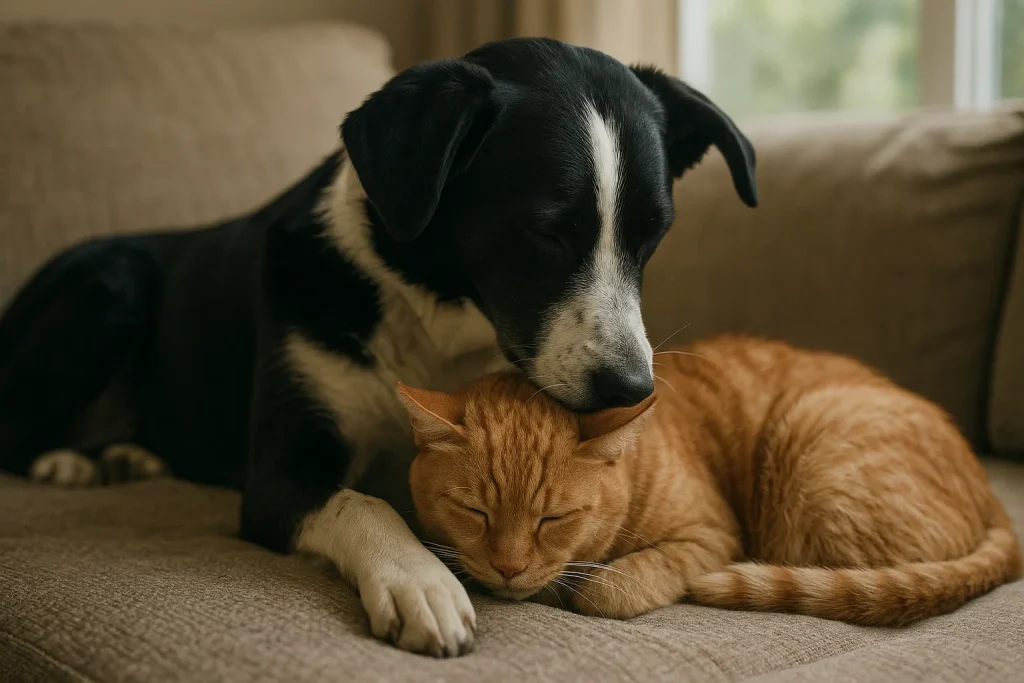
The Empty Leash: How to Help Your Surviving Pet Cope with Loss
Losing a dog or cat is a profound family tragedy, and the remaining pets are often the silent mourners. Your surviving dog is likely confused, searching, and deeply sad about the sudden void left by their friend. Their grief is real and heart-breaking to witness. Understanding how they process this major change is the first step in helping them navigate the loneliness and loss of their companion pet.
Do Dogs Know When Another Dog Has Died?
Yes, they absolutely sense the loss, even if they don’t understand the human concept of “death.” Dogs are deeply tuned into routine, social bonds, and—most powerfully—scent. When a companion is permanently gone, they recognize the absence immediately.
When Maria’s Beagle, Max, passed away, her other dog, Luna, sniffed Max’s bed repeatedly before curling up beside it. Luna didn’t know the word “death,” but she clearly knew that a core part of her world had fundamentally shifted. Pets also feel the tension in the family’s emotional tone and the disruption of their daily rhythm.
Why Is My Surviving Dog Depressed After Loss?
Surviving pets often show classic, visible signs of grief—withdrawal, sadness, or even anxiety. You might notice:
- Lethargy or excessive sleeping
- Refusal of food or favorite treats
- Avoidance of play or usual walks
- Searching behavior or increased restlessness
Dogs not only miss their companions, but they also mirror the sadness of their human family. Grief is emotionally contagious in a household. Maria noticed Luna stopped wagging her tail for weeks—a visible reflection of the emotional heaviness everyone felt. If symptoms are severe or prolonged, consulting a vet to rule out medical issues is wise.
Should I Let Pets See the Deceased Dog?
Many veterinarians and behavior specialists encourage it. Allowing a surviving pet to see and sniff the body, if possible, helps them register the loss through scent, which is their strongest sense. Without this crucial closure, some dogs continue searching for weeks, prolonging their anxiety.
When Max died, Maria let Luna approach his body. Luna sniffed him, whimpered softly, and then walked away calmly. Afterward, she rarely paced the house in confusion. That quiet moment seemed to give her peace and acceptance of the final change.
How to Comfort a Grieving Pet?
Gentle consistency is the best medicine for a grieving pet. Stability and extra affection are vital.
- Keep Routines Steady: Stick rigidly to regular meals, walks, and bedtime rituals. Predictability provides immense security.
- Offer Extra Affection: Longer cuddles, grooming sessions, or just being close can help ease loneliness and reinforce their bond with you.
- Encourage Activity: Gently coax them into short games, new walking routes, or puzzle toys to stimulate their mind and relieve stress.
- Scent Comfort (Temporarily): Maria placed a blanket carrying Max’s scent in Luna’s bed. This familiar smell offered temporary comfort before it was eventually removed to aid the final adjustment.
Some families also involve surviving pets in memorial rituals—like placing a toy beside an urn or joining the family in a quiet moment of reflection.
When Might It Be Time to Welcome Another Pet?
There is no set timeline. The decision should be based on the healing status of both the pet and the human. Rushing adoption may overwhelm a grieving pet, while waiting too long might deepen their loneliness.
Maria waited six months before bringing home a rescue puppy. By then, Luna had regained her playful spirit and was ready to welcome a friend—not as a replacement for Max, but as a new bond. The goal is to ensure the new pet is welcomed by a stable, adjusted household.