Complete Buyer’s Guide to Real-Time Precision & Safety
An expert guide to understanding pet GPS tracker accuracy, reliability, and peace of mind in 2025.
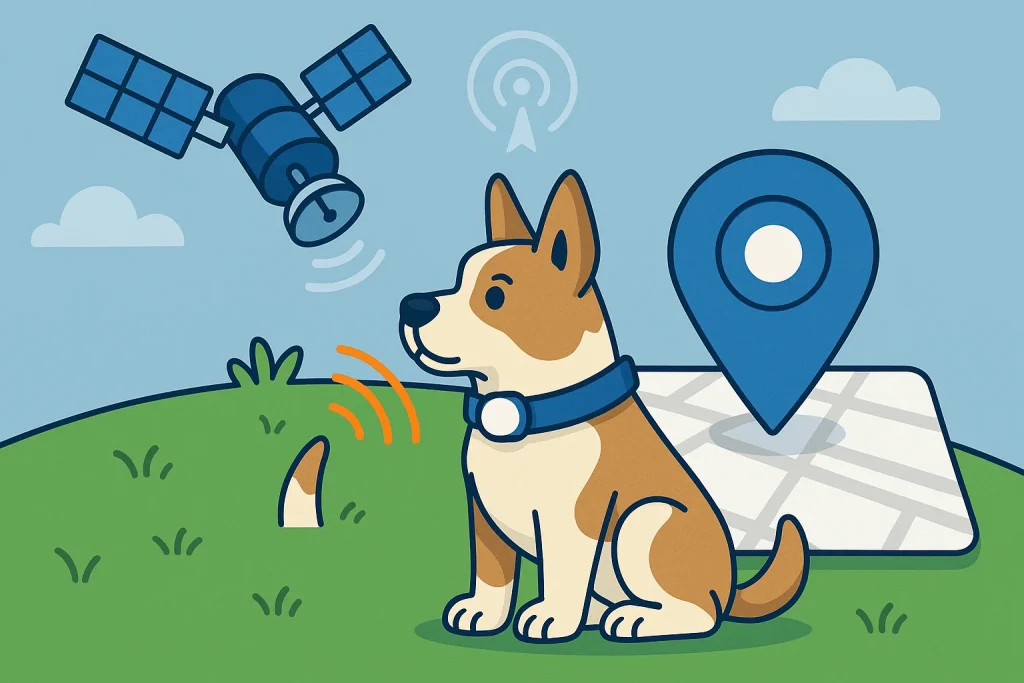
Modern pet GPS trackers in 2025 have become a trusted lifeline for pet owners seeking real-time tracking accuracy and safety. But how precise are today’s GPS collars for pets in real-world conditions? The answer depends on satellite connectivity, environment, and intelligent software optimization.
1. GPS vs. Bluetooth: Understanding the Core Tracking Technology
To measure pet GPS tracker accuracy, you first need to distinguish between GPS and Bluetooth trackers.
| Tracker Type | Technology Base | Typical Range | Accuracy | Best Use Case |
|---|---|---|---|---|
| GPS Tracker | Satellites + Cellular Network | Unlimited (with signal) | 5–10 meters | Long-distance tracking, outdoor walks, emergencies |
| Bluetooth Tag | Short-range radio + Nearby devices | 10–30 meters (30–100 feet) | Variable, depends on nearby phones | Indoor tracking, finding items at home |
Real-World Example: When Lisa’s Beagle, Milo, bolted after a rabbit, her Bluetooth tag lost connection instantly. Switching to a GPS collar changed everything—she tracked Milo’s route live through her phone, finding him two miles away, splashing safely in a creek.
2. What Factors Affect Pet GPS Tracker Accuracy in 2025?
GPS signals work best in open spaces. Modern trackers now integrate hybrid positioning technology to overcome common challenges.
| Factor | Effect on Signal | Accuracy Solution | Example Technology |
|---|---|---|---|
| Indoor/Underground | Walls or dense structures block satellites | Wi-Fi fallback mode using nearby router signals | Whistle GPS + Wi-Fi |
| Urban Environment | Tall buildings cause signal reflection (“drift”) | Multi-constellation support (GPS, GLONASS, Galileo) | Fi Series 3 |
| Weather/Terrain | Rain, snow, or thick foliage weakens signal | Assisted GPS (A-GPS) using cell towers for faster lock | Tractive LTE 2 |
Pro Tip: If your pet’s dot “wanders” slightly on the map while indoors or near tall buildings, that’s normal signal bounce—not a lost connection.
3. Update Speed vs. Battery Life: Balancing Real-Time Accuracy
The tracking frequency directly affects both accuracy and battery duration.
- Live Mode (High Accuracy): Updates every 5–30 seconds for real-time precision. Ideal for emergencies but lasts 1–3 days on a charge.
- Eco Mode (Extended Endurance): Updates every 1–5 minutes, ideal for daily monitoring with 5–7 days of battery life.
Brands like Fi and Tractive let owners switch between these modes, balancing tracking accuracy with long-lasting endurance.
4. Geofencing: Turning Accuracy into Instant Protection
Geofencing answers one of the most-searched pet owner questions: “How can I prevent my pet from running away?”
It creates a digital safe zone on your app. When your pet crosses the boundary, the tracker sends an alert within 15–60 seconds, depending on the GPS refresh rate and network speed.
Example: Maria’s cat, Luna, loves sunbathing in the backyard. When Luna wanders beyond the fence, Maria’s phone pings instantly—giving her the exact location and time to act before Luna gets too far.
5. Do Pet GPS Trackers Require a Monthly Subscription?
Yes—nearly all long-range pet GPS trackers require a data plan. Unlike Bluetooth tags, GPS collars use cellular networks (e.g., AT&T, Verizon) to transmit satellite coordinates to your phone. The subscription fee covers this data connection, ensuring real-time updates and unlimited range—the foundation of their accuracy and reliability.
If you prefer a no-subscription option, consider Findster Duo+ or Petfon, but note that their range is limited and they rely on short-distance radio communication.
6. The Real Precision Range of Modern Pet GPS Trackers
Even the best GPS collars don’t deliver centimeter-level precision, but 2025 models now achieve consistent 5–10 meter accuracy—enough to locate your pet quickly in almost any environment.
Thanks to multi-constellation networks, hybrid tracking, and A-GPS, these devices have evolved from simple gadgets into dependable digital guardians.
Final Insight:
Even with a small margin of error, the best pet GPS trackers in 2025 provide something technology can’t quantify—trust, safety, and peace of mind. Whether it’s finding a lost dog in the rain or spotting a curious cat’s next adventure, these devices keep hearts and homes connected.
FAQ – Quick Answers About Pet GPS Tracker Accuracy
- Do Pet GPS Trackers Work Without Internet?
Partially. GPS satellites locate your pet, but a mobile or Wi-Fi connection is required to send data to your phone. - How Often Should I Charge a Pet GPS Tracker?
Most collars last 3–10 days, depending on update mode. For consistent accuracy, charge weekly. - Is Bluetooth Tracking Enough for Outdoor Pets?
No. Bluetooth tags work within 100 feet, while GPS trackers use cellular networks to provide unlimited range and live updates.