
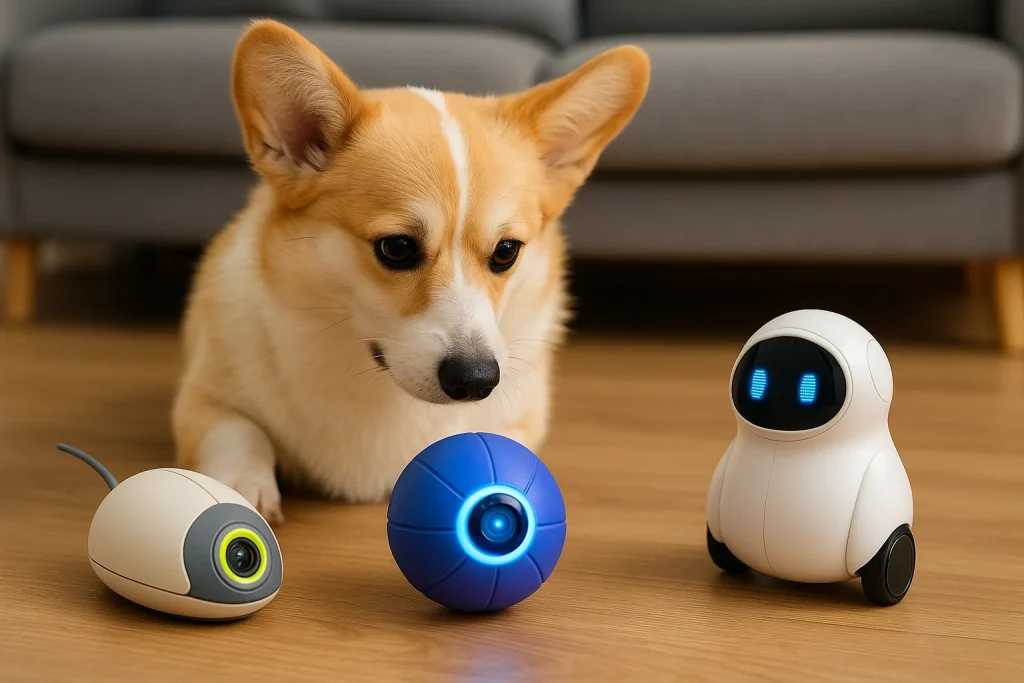
🤖 The 2026 Guide to AI Pet Toys: Motion, Mood, and Behavioral Adaptation 🧠
AI pet toys mark a shift from simple automation to interactive companionship. These devices use sensors, cameras, and machine learning to read movement, adapt play rhythms, and quietly monitor well-being—extending care through intelligent design.
Do AI toys use sensors or cameras to detect movement?
Short Answer: Yes. AI pet toys rely on gyroscopes, motion sensors, HD cameras, and microphones to read subtle cues and respond in real time.
They perform basic kinematics analysis, interpreting a tilt of the head or the tap of a paw. The WickedBone X, for instance, uses integrated gyroscopes to instantly shift between chasing and dodging, tuning its pace to your dog’s current energy level.
What looks like play is actually reactive learning—the toy mapping movement into dialogue.
Can AI toys recognize my dog’s mood or behavior?
Short Answer: To a degree. Modern AI toys interpret posture, sound, and activity patterns to approximate emotion.
With onboard algorithms, they read tail angle, bark tone, and pacing speed to gauge whether a dog is excited, bored, or restless. The Varram Pet Fitness Robot demonstrates this “behavioral mimicry,” adjusting its motion when it senses dwindling attention—speeding up to reignite curiosity.
It’s not true empathy, but a form of responsive understanding—technology designed to meet instinct halfway.
Do AI toys learn over time?
Short Answer: That’s the core of their intelligence. Through machine learning, these toys record session data—duration, excitement triggers, rest periods—and refine behavior accordingly.
Over repeated play cycles, the algorithm develops a personal rhythm. A senior dog’s smart ball might stop rolling during naps and resume when motion resumes—an adaptive awareness that static timers can’t replicate.
Why it matters: learning keeps interaction from becoming noise; it makes technology feel like attention.
Can AI toys connect with feeders or cameras?
Short Answer: Yes. Most 2026 models link into smart pet ecosystems via Wi-Fi and cloud services.
A toy can signal a feeder to release a treat after a successful fetch, or trigger a home camera to record play. Systems such as Furbo 360 Pro and Petcube Play Bites Mini even connect with voice assistants, creating real-time reward loops that bridge distance with presence.
These integrations transform absence into participation—remote empathy, engineered.
Do they record or store play data?
Short Answer: Yes. Most AI toys collect behavioral and activity metrics that sync with mobile apps.
They track playtime, intensity, and consistency to identify changes in mood or health. The PAWSense Tracker Toy can send alerts if engagement suddenly drops, often signaling fatigue or early illness.
When data becomes insight, the toy evolves from entertainer to quiet guardian.
🌿 Final Insight: Technology That Learns to Care
AI pet toys don’t replace connection—they extend it through design.
By observing motion, mirroring energy, and learning patterns of rest and play, they provide both enrichment and early wellness awareness.
For dogs coping with separation anxiety or low stimulation, an adaptive AI toy can structure comfort where silence used to sit. It’s technology’s gentlest trick: teaching care through curiosity.