
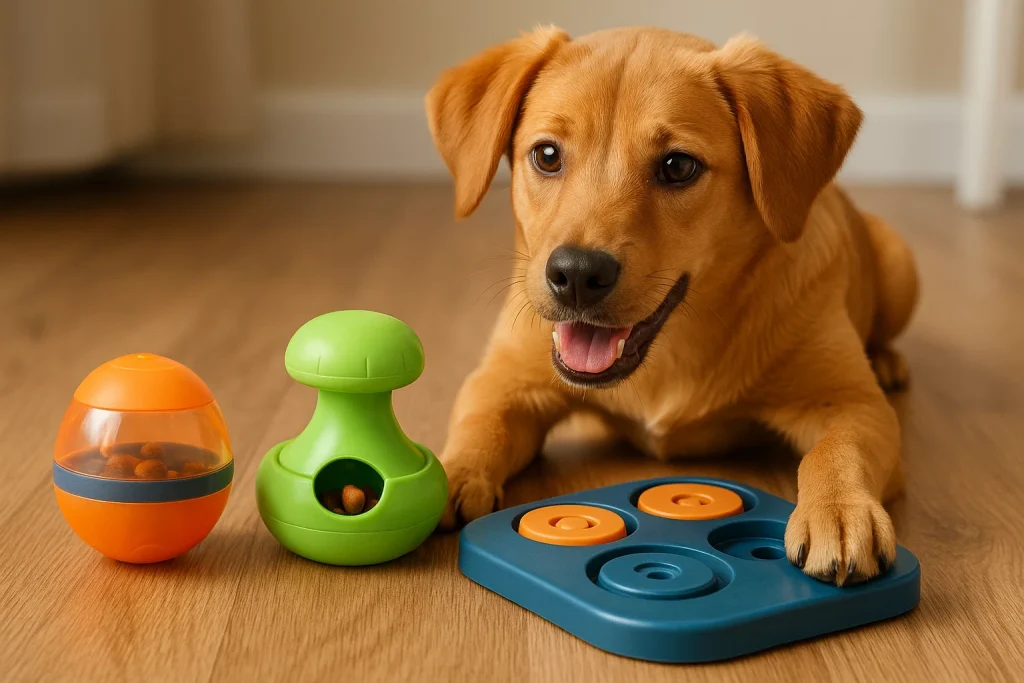
🧩 Choosing the Right Treat Dispenser: Anatomical Match, Function, and Connection 🐕
The perfect treat dispenser is not a gadget—it’s an instrument of understanding. When chosen correctly, it aligns with your dog’s anatomy, temperament, and lifestyle, offering stimulation that feels natural rather than forced.
🦴 What Size and Shape Fit My Dog’s Breed?
Short Answer: Choose a dispenser that aligns with jaw strength, mouth size, and play intensity to balance challenge and safety.
| Breed Size | Key Anatomical Need | Recommended Features |
|---|---|---|
| Small Breeds (e.g., Chihuahuas) | Low intimidation, easy rolling | Light, palm-sized, soft-edged toys with gentle resistance. |
| Medium Breeds (e.g., Spaniels, Collies) | Persistence and focus | Mid-sized puzzle shapes requiring nose and paw interaction. |
| Large / Strong-Jawed (e.g., Labs, Shepherds) | Sustained chewing, high durability | Reinforced rubber or dual-layer silicone for stress absorption. |
The Rule: Too large overwhelms and discourages. Too small under-challenges—and can become a choking risk. Louie the French Bulldog taught his owner this the hard way: once the toy fit, curiosity bloomed where frustration used to live.
📱 Should I Buy a Smart Automatic Dispenser?
Short Answer: Yes, if your lifestyle requires distance connection and structured engagement.
Smart Dispensers (Automatic): Designed for owners with long or irregular shifts. They use apps for scheduled or remote treat release, often with HD cameras and voice features. The result: predictable emotional continuity even when you’re miles away.
Manual Dispensers (Interactive): Best for those at home often. They encourage tactile play and self-directed focus without digital input—direct connection through shared presence.
Jason, a nurse, discovered his Golden Retriever, Sunny, wagged on cue every time he released a treat during lunch from work. Technology met affection halfway.
🏆 Which Brands Are Most Reliable in 2026?
Short Answer: Look for a track record of endurance, certifications, and clear customer support.
| Brand | Core Strength | Defining Features |
|---|---|---|
| KONG | Maximum Durability | Legendary chew resistance for power chewers. |
| West Paw | Sustainability / Safety | Recyclable, BPA-free, eco-certified. |
| Petcube / Furbo | Smart Connectivity | HD video, AI motion sensing, two-way audio. |
Reliable brands disclose material data, carry clear return terms, and back their claims with warranties. Durability is only half the story—trust completes it.
💰 Are Budget-Friendly Options Worth It?
Short Answer: Yes—when cost cuts features, not safety.
Affordable models may skip Wi-Fi or sensors but still provide enrichment if made from BPA-free, food-grade polymers. Avoid listings with vague materials or thin, soft shells that crack under bite pressure.
Leah, who fosters rescues, still uses a $12 silicone treat ball that’s soothed eight dogs. “It’s simple,” she says, “but it gives them purpose.” Engagement, not expense, defines value.
🍽️ Are Combo Toys That Feed and Play Effective?
Short Answer: Absolutely. Hybrid feeder-dispensers merge digestion control and mental focus.
Therapeutic Benefit: For fast eaters or anxious dogs, these toys slow intake while rewarding exploration. Toby, a Beagle prone to gulping and vomiting, now eats calmly from a feeder-ball that scatters food as he nudges it. Within a week, the pacing and nausea were gone.
Behavioral Loop: Motion releases reward, curiosity replaces anxiety. The dog learns mindfulness through play—a therapist disguised as a toy.
🌿 Final Insight: Fit Is More Than Size
The right dispenser is a conversation between instinct and design. It challenges without overwhelming, comforts without coddling.
When buying, remember:
- Match Anatomy: Proper size prevents frustration and risk.
- Verify Materials: Seek “food-grade” and “BPA-free.”
- Choose Connection: Smart or manual—align with your dog’s emotional needs.
A well-fitted dispenser isn’t just equipment; it’s a quiet promise of understanding, spoken every time a treat rolls free.