
🧩 Puzzle Toys: Difficulty, Durability, and the 2026 Brand Landscape 🧠
Puzzle toys aren’t one-size-fits-all—they’re graduated tools for cognitive growth. Choosing the right level, material, and brand determines whether play builds calm focus or slips into frustration.
🎯 What Difficulty Levels Do Puzzle Toys Have?
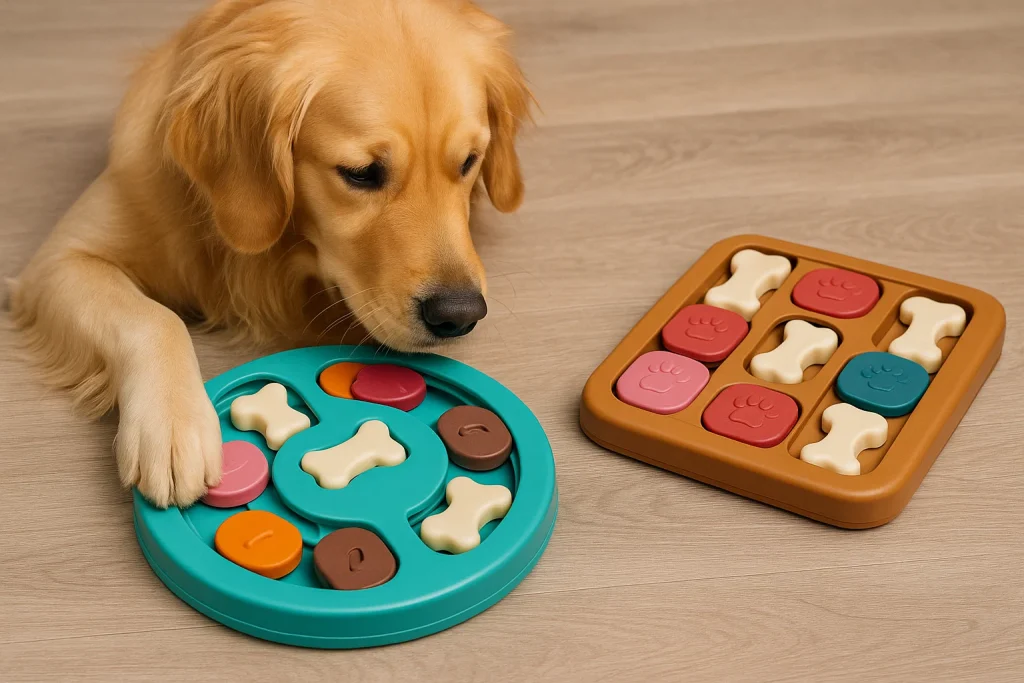
Puzzle toys are generally categorized into three tiers of cognitive challenge:
- Beginner: Open compartments or simple flips—ideal for puppies or first-timers learning that effort earns reward.
- Intermediate: Sliding panels and spinning tops—introducing multi-step logic and pattern recall.
- Advanced: Layered puzzles requiring sequential moves—testing persistence and working memory.
When Emily introduced her Border Collie, Jasper, to a Level 3 Nina Ottosson puzzle, he spent twenty absorbed minutes solving it, then strutted off like he’d earned a medal. The right difficulty turns play into progress—not pressure.
🧱 Which Materials Last the Longest?
Durability = Composition × Temperament.
- Food-Grade Plastic: Lightweight, BPA-free, and easy to clean—best for daily feeders.
- Reinforced Rubber / Composite: Withstands high bite pressure; ideal for strong chewers like Labradors or Rottweilers.
- Wooden Models: Visually beautiful and tactile but suited for gentle, methodical dogs.
Jake learned this the hard way—his Lab destroyed a wooden maze in an hour. A KONG Genius made of thermoplastic rubber survived three years of “enthusiastic testing.”
A good material outlasts excitement without dulling curiosity.
⚙️ Are Interactive Puzzle Feeders Better Than Static Ones?
Often, yes—interactive feeders engage both the body and the mind.
- Dynamic Feeders (e.g., Outward Hound Wobble Bowl, Cheerble Interactive Maze): Roll, tilt, or wobble, reinforcing motor coordination and focus through motion.
- Static Puzzles (e.g., Trixie Flip Board): Encourage slower, reflective problem-solving—ideal for seniors or low-energy breeds.
The choice depends on temperament: thinkers need puzzles; movers need motion. Both feed the same cognitive loop—curiosity leading to calm reward.
🏆 Which Brands Are Best in 2026?
2026’s leading puzzle toy innovators combine safety, sustainability, and intelligence:
- Nina Ottosson by Outward Hound: Durable construction with adjustable difficulty.
- West Paw: Sustainable rubber puzzles that double as feeders.
- Cheerble: Smart interactive feeders with motion sensors and app tracking.
- Planet Pup Tech: Eco-friendly bamboo and recycled plastic designs for conscious pet owners.
Each represents a philosophy—mental health, sustainability, or tech-driven enrichment. The best brand is the one that aligns with your dog’s mind and your values.
💰 Are Budget Puzzle Toys Worth Buying?
They can be, if simplicity and safety come first.
Affordable models under $25—like silicone lick mats or basic sliders—offer genuine enrichment when well-made. Avoid unbranded knockoffs with untested plastics or detachable parts.
Lauren learned this balance: her $10 puzzle cracked in two sessions, but an $18 silicone mat still calms her anxious Beagle years later.
Budget-friendly doesn’t mean low-quality—it means thoughtful minimalism with care built in.
🌿 Final Insight: Challenge with Compassion
The goal of puzzle play isn’t competition—it’s steady confidence through problem-solving.
Choose a level that nurtures curiosity, a material that endures joy, and a routine that rewards effort over speed.
When the challenge fits, play becomes growth.
Puzzle toys are less about complexity—and more about connection through focus.