
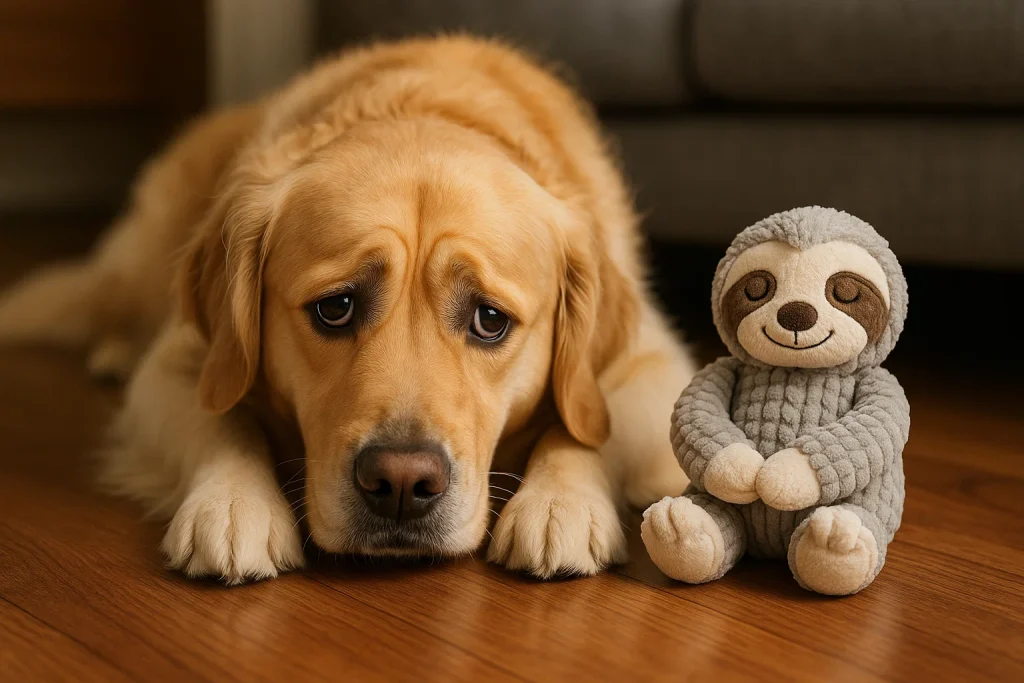
The Definitive 2026 Guide to Calming Toys for Dogs: Recognizing Stress & Relieving Anxiety Safely
Every dog experiences stress — a sudden thunderstorm, a long car ride, or the quiet ache of being left home alone.
But unlike us, they can’t explain it. Calming toys step in as soft, steady companions that ease anxiety through scent, texture, and rhythmic sound.
The first step toward calm, however, is knowing when your dog truly needs one.
🐾 What Are the Behavioral Cues of Stress or Anxiety in Dogs?
Short Answer: Dogs show anxiety through subtle displacement behaviors or high-intensity distress — often mistaken for misbehavior.
Subtle Signals: Pacing, yawning, lip-licking, pinned-back ears, panting (without heat), or clinginess.
Acute Distress: Hiding, trembling, excessive barking, destructive chewing, or restlessness when left alone.
Example: When Mark adopted Luna, a rescue mix, she chewed through two couch cushions the first week. It wasn’t disobedience—it was panic.
After recognizing her separation anxiety, he replaced discipline with empathy, introducing a heartbeat plush toy. Slowly, the chaos softened into calm.
🕊️ Optimal Timing: When Should I Introduce Calming Toys?
Short Answer: Introduce calming toys during calm moments so your dog associates them with safety and predictability.
Calming toys act as emotional training wheels, helping your dog self-regulate.
Start during naps or quiet play, allowing exploration without pressure.
-
Puppies: Early introduction builds lifelong positive associations.
-
New Adoptions: Let adult dogs settle for a few days before offering a toy, so the comfort object becomes a reinforcement, not a novelty.
💞 Do Calming Toys Help with Separation Anxiety?
Short Answer: Yes — heartbeat or owner-scent toys reduce cortisol and provide emotional continuity when you’re away.
Dogs with separation anxiety crave consistency. Toys that mimic heartbeat rhythms, soft breathing, or carry your scent provide that emotional bridge.
Case Example: Casey, a spaniel, howled each morning after her owner left for work. A warming plush infused with her scent turned anxiety into quiet rest. The toy didn’t replace love—it extended it.
🌙 Can Anxious Dogs Use Calming Toys Overnight?
Short Answer: Yes — as long as the toy is safe, intact, and free from detachable parts.
Many calming toys are designed for overnight comfort, with sealed heartbeat units or low-heat packs.
Place them beside your dog’s bed or crate to signal that it’s safe to rest.
⚠️ Safety Note: If your dog chews aggressively, choose reinforced models or remove electronics at night.
Calm should never come at a cost.
🐱 Can Calming Toys Be Used for Cats or Small Pets?
Short Answer: Absolutely — warmth and scent comfort help all small animals manage anxiety.
Cats, rabbits, and ferrets often benefit from plush toys that retain heat or carry familiar smells.
Heartbeat simulations are mostly canine-focused, but soft warmth and scent memory reduce hiding, over-grooming, and other anxiety-driven behaviors.
📋 Common Anxiety Symptoms and Targeted Support
| Symptom / Behavior | Possible Cause | Recommended Calming Feature | Example Toy Type |
|---|---|---|---|
| Pacing, yawning, panting | Mild separation anxiety | Weighted or owner-scented plush | Snuggle Puppy, scent pad |
| Hiding, shaking | Thunder / fireworks | Heartbeat or low-vibration toy | FurMind Heartbeat Pillow |
| Excessive barking | Loneliness / fear | Warmth + rhythmic sound | Heat Plush or Warming Pad |
| Nighttime restlessness | Aging or confusion | Gentle heartbeat + heat source | Calming Bed Companion |
💡 Pro Tip: “Charge” the toy with your scent — wear it against your skin for an hour before introducing it. It becomes a familiar anchor when you’re away.
🌤️ Final Insight: Comfort That Builds Emotional Resilience
Calming toys don’t fix behavior — they restore trust.
They help dogs build emotional resilience, teaching them that comfort exists even when life feels unpredictable.
The real gift isn’t the toy itself — it’s the message it carries:
You’re safe. You’re not alone. You can rest now.
Begin by observing, not fixing — comfort follows understanding.