
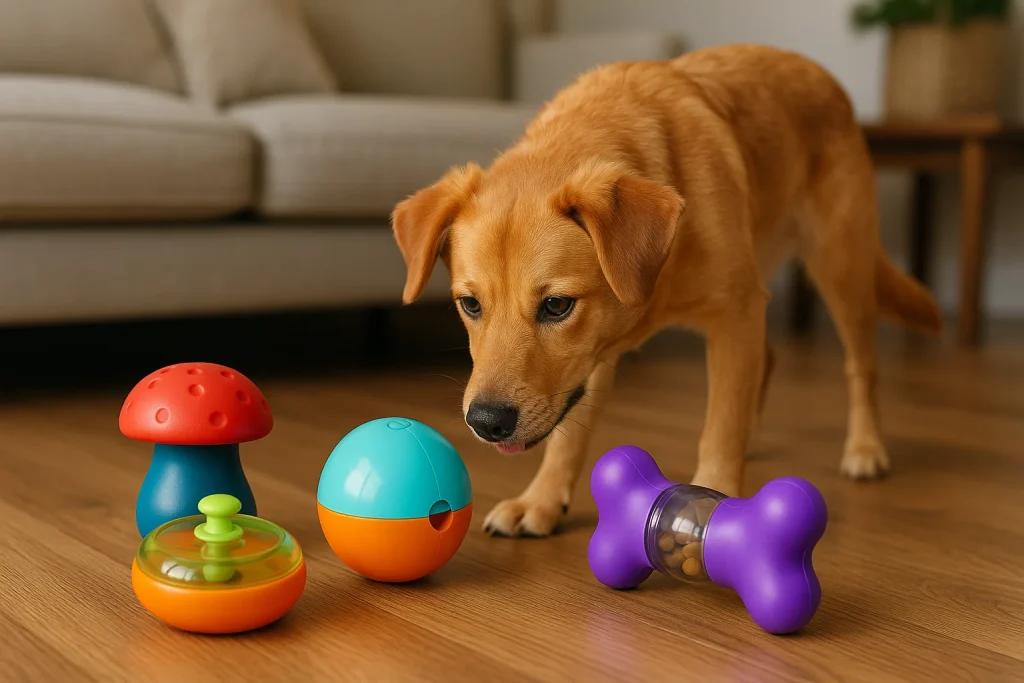
🧠 Behavioral Benefits of Treat Dispensers: Calm, Focus, and Behavioral Modification 🛡️
Interactive treat dispensers are more than distractions—they’re behavioral instruments. By channeling a dog’s foraging instinct through positive reinforcement, they nurture patience, focus, and emotional regulation. The result is not temporary diversion but structured calm.
💥 Can They Reduce Destructive Behavior?
Short Answer: Absolutely. They convert frustration into productive cognitive focus.
Energy Redirection: Dogs that chew, dig, or bark excessively often lack a purpose. A dispenser provides a task with clear logic—effort equals reward—forming a healthy feedback loop. Max, a young Labrador once obsessed with shredding furniture, learned instead to roll, paw, and “think” his toy into reward.
Chaos vs. Purpose: This redirection replaces chaos with goal-driven concentration. The sound of kibble rattling inside becomes its own metronome of calm.
🏠 Do They Help With Crate or Home-Alone Training?
Short Answer: Yes. They’re essential in separation anxiety management and crate desensitization.
Positive Association: When the crate or owner’s departure consistently predicts a dispenser releasing high-value treats, the emotional meaning shifts—from isolation to comfort.
Predictable Reinforcement: Timed or motion-activated dispensers reward calm moments, teaching dogs that patience brings good things. Luna, a rescue with severe separation anxiety, eventually replaced her pacing with quiet naps. Predictability built trust, one treat at a time.
🎓 Can I Use Treat Dispensers for Obedience Drills?
Short Answer: Definitely—they refine timing and elevate motivation.
Remote Reinforcement: Treat dispensers paired with clickers or smart apps allow near-perfect reward timing for “stay,” “come,” or “heel.” Precision anchors comprehension—obedience becomes joyful, not mechanical.
Accelerated Learning: This technique strengthens the stimulus-reward connection, making commands feel intuitive. Training becomes less about control, more about communication—a kind of affection measured in milliseconds.
🧠 Do Dispensers Improve Mental Stimulation?
Short Answer: Yes. They’re a form of cognitive enrichment for every age.
Brain Gym: Each roll or nudge activates memory, scent mapping, and motor coordination. For seniors like Bella, a twelve-year-old Golden Retriever, this simple game maintained alertness long after her walks shortened.
Preserving Vitality: Cognitive fatigue is as real as physical exhaustion—and just as healthy. A mentally tired dog sleeps soundly, secure in purpose.
🔄 How Often Should I Rotate Toys to Prevent Boredom?
Short Answer: Rotate regularly—novelty fuels motivation.
The Dopamine Spark: Even advanced puzzles lose appeal through repetition. Switch dispensers every few days, vary treats, or change locations. Each new challenge reawakens the dopamine loop that drives curiosity.
Enrichment Rhythm: True enrichment lives in rhythm—the alternation of expectation and surprise. Consistency builds confidence, but variation keeps joy alive.
🌿 Final Insight: Rhythm Over Routine
The secret isn’t in endless novelty but in balanced rhythm—moments of calm challenge woven into daily life.
Use the dispenser as a “Going-Away Ritual”: ten to fifteen minutes of focused enrichment before leaving home. The soft sound of treats rolling, the dog’s steady focus, the quiet room—it’s not just play. It’s trust taking shape.