
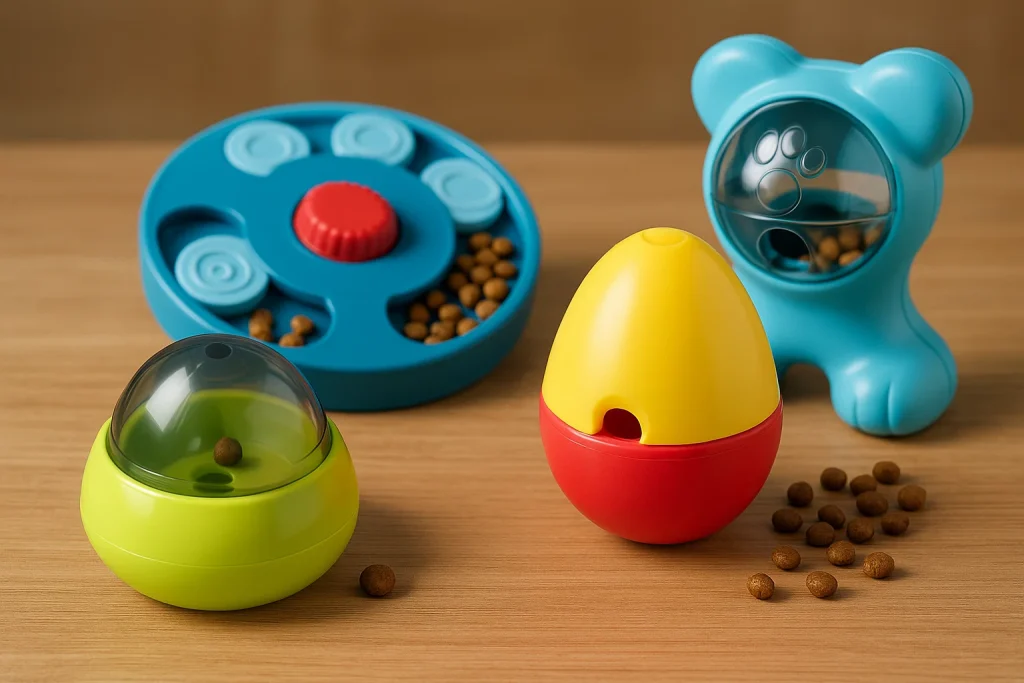
How Do Treat Dispensers Stimulate a Dog’s Mind? Enrichment Technology and Cognitive Load 🧩
Interactive treat dispensers are more than gadgets—they’re puzzles with purpose. They transform everyday feeding into an act of curiosity, enhancing problem-solving skills while soothing restless energy.
Short Answer: They engage a dog’s natural foraging instinct and activate the dopamine reward loop.
Cognitive Load: Each roll, push, or nudge builds understanding of cause and effect. This light, focused mental effort channels anxiety into calm concentration—a quiet way for dogs to “think their way out” of boredom.
Therapeutic Value: For high-drive or anxious dogs like Luna, a Border Collie, the dispenser becomes a self-directed therapy tool. What begins as a game ends as self-regulation. A simple toy teaches patience, focus, and satisfaction.
⚙️ Are Treat Dispensers Automatic or Manual?
Short Answer: They come in two primary styles, each serving different needs.
Manual/Interactive: Rolling balls and wobbling cones reward persistence. Ideal for independent thinkers who enjoy a tactile challenge.
Automatic/Smart: Models like Petcube Bites 2 Pro use timers or app control for remote interaction—perfect for dogs that crave connection and for owners who want structure while away. Both enrich the day, just in different rhythms.
📡 Do They Use Timers or Motion Sensors?
Short Answer: Yes. Many 2026 models blend smart triggers with behavioral science.
- Timers: Help build structured feeding patterns and maintain consistent caloric intake.
- Motion/Camera Sensors: Reward specific behaviors like approach or eye contact, ideal for confidence training.
When one Seattle family used a motion-activated dispenser to help their shy rescue, Nori, each step toward the device triggered a chime and a treat. Within weeks, she sought her humans on her own—the machine became her gentle coach.
⚖️ Can They Help With Weight Control?
Short Answer: Definitely. Treat dispensers are a cornerstone of the modern “slow-food” approach.
By extending mealtime into 15–20 minutes of play, they let the body catch up with the mind. Dogs feel full without excess calories, and the ritual turns feeding into low-impact exercise. For food-driven breeds like Beagles and Labradors, this shift can mean the difference between restlessness and balance.
🍪 What Kinds of Treats or Kibble Work Best?
Short Answer: Choose small, dry, low-fat pieces that flow easily.
Ideal size: 0.4–1 inch. Think crunchy biscuits, dehydrated meat bits, or training treats.
Avoid sticky or oily snacks—they clog mechanisms fast. Many smart dispensers now list compatible treat types in their companion apps, saving you trial and error.
🌿 Final Insight: Technology for Tranquility
A treat dispenser isn’t just a toy—it’s a bridge between instinct and calm.
Try giving your dog 10 minutes of focused dispenser play before leaving home or during a high-energy period. The click of a treat, the pause before discovery—it’s small science that builds peace.