Ultimate Pet Camera Guide 2025: How to Use Smart Cameras to Calm, Train, and Connect with Your Dog
Smart pet cameras have evolved far beyond surveillance. They’re emotional bridges—helping you manage anxiety, reinforce positive habits, and maintain a sense of presence even when you’re not home.
Should I Talk to My Dog Through the Microphone?
Yes—but with intention and calmness. Many dogs find comfort in hearing your voice, though some may become confused if they can’t see you.
When Leah’s rescue beagle, Max, began howling after she left, she started speaking softly through her Furbo Dog Camera. Over time, Max learned to associate her voice with reassurance instead of absence.
Actionable Tip: Use a calm, familiar tone—say “hello,” not “come.” Keep check-ins short and consistent.
Are Treat-Dispensing Cameras Useful for Training?
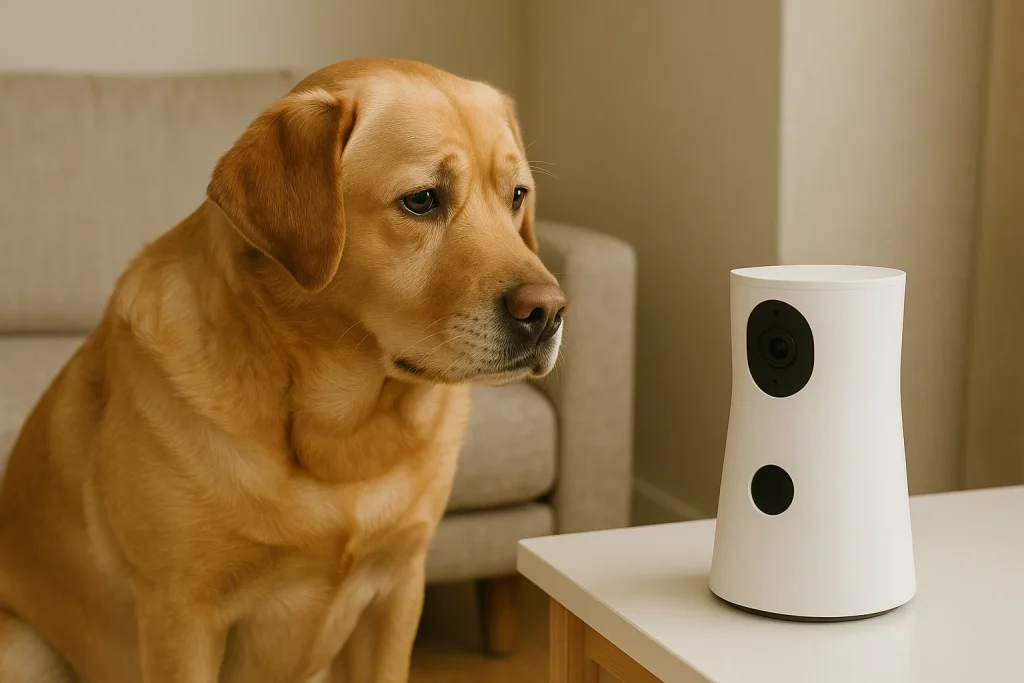
Absolutely. Treat-tossing cameras turn positive reinforcement into a remote routine. They help dogs link calm, independent behavior with instant reward.
When Emma’s golden retriever, Milo, faced separation anxiety, she tossed treats only when he stayed quiet. Within weeks, Milo learned that relaxing by the door earned rewards—turning restlessness into expectation.
Actionable Tip: Reward silence and calm behavior, not excitement or barking.
Can I Use AI Alerts to Decode Barking and Pacing?
Yes. AI isn’t just for alerts—it’s a window into your dog’s emotional patterns. Cameras like the Eufy Pet AI Camera detect barking, whining, or pacing, revealing when stress peaks.
James discovered his husky barked most about 20 minutes after he left, prompting him to add a play session before departure—dramatically reducing anxiety.
Actionable Insight: Use AI data to understand triggers and adapt your routine, not to punish.
What’s the Best Camera Placement for Calming Visibility?
Place the camera near where your dog naturally rests—a bed, crate, or sofa. Avoid facing doors or food bowls, which can heighten anticipation.
Carla moved her Petcube Bites 2 Lite from the doorway to the living room, and her pug stopped pacing at the door almost immediately.
Pro Tip: Aim the camera at your dog’s “safe zone” to reinforce calmness.
Can Long-Term Camera Use Reduce Stress?
Yes—especially with consistency. Dogs thrive on routine. Using a pet camera daily builds predictability and reduces anxiety.
After months of use, Leah noticed Max no longer needed voice check-ins; routine had replaced panic.
Key Point: A consistent pattern of remote reassurance promotes calm independence.
Do Pet Cameras Have Battery Backup?
Some models do, and it’s worth prioritizing. Battery or power backup ensures uninterrupted monitoring during outages—vital for pets who depend on steady cues.
Wyze Cam OG and certain Eufy Pet Camera models offer standby modes that preserve connection until power returns.
Safety Note: If you live in a storm-prone area, check backup specs before purchasing.
Summary: Your 5-Step Digital Care Plan for a Calm Dog
- Communicate Calmly: Use a gentle, familiar voice during short check-ins.
- Reward Silence: Dispense treats only when your dog is relaxed and quiet.
- Decode Behavior: Use AI insights to spot stress triggers and improve routines.
- Optimize Placement: Position cameras near safe zones, not at exits or food areas.
- Be Consistent: Use the camera daily to build comfort through predictability.
Technology can’t replace touch—but it can make distance feel less lonely.