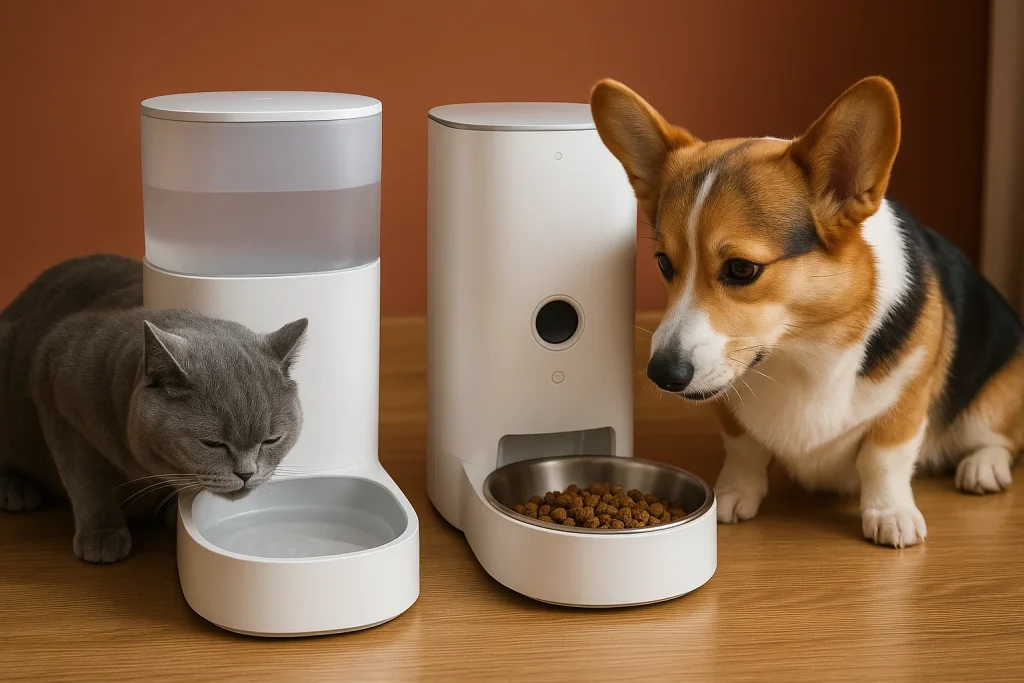
🐾 A Quiet Moment Before You Leave Home
There’s a small pause many pet owners feel right before stepping out the door.
You look back—your dog watching with soft eyes, your cat drifting between curiosity and indifference—and you hope they stay safe, calm, and maybe a little less lonely.
A pet camera can’t replace presence, but it can offer reassurance. A way to stay connected. A window into their day.
And choosing the right one matters more than the features on the box.
🌿 Why Pet Cameras Matter in a Pet-Centered Home
We turn to pet cameras not just for monitoring, but for comfort—ours and theirs.
A good setup lets you check in during long workdays. It helps you understand your pet’s rhythms: the naps, the play bursts, the “I just want to know you’re coming back” moments.
When selecting the best pet camera for 2025, it’s less about chasing specs and more about creating something supportive.
Something that fits your home, your routine, and your animal’s personality.
According to the American Veterinary Society of Animal Behavior (AVSAB), many pets feel more at ease when their environment stays predictable. A camera can support that predictability—quietly, in the background—without overwhelming them.
📸 Understanding Types of Pet Cameras
Not all cameras feel the same to your pet. Here are the common approaches, shaped more by everyday life than by technology language:
- Simple indoor pet cameras
These stay still, offering a calm, steady view. They suit pets who prefer minimal stimulation and consistent surroundings. - Rotating or tracking cameras
Helpful when you want to understand overall movement patterns, though some sensitive pets may find constant motion distracting. - Treat-dispensing or interactive cameras
Great for playful dogs or curious cats, but best used sparingly so the interaction doesn’t disrupt their resting rhythm. - Two-way audio cameras
A gentle tool when used with intention. Soft, familiar spoken cues can help certain pets regulate emotion—but sudden volume or unclear sound may startle them.
This small overview provides context as you explore any indoor pet camera guide or comparison chart.
🧭 How to Choose a Pet Camera That Fits Your Home
Below are considerations you can walk through slowly—more like tuning into your pet’s daily patterns than making a tech purchase.
- Field of view that matches your rooms
Wide angles for open layouts. Narrower ones for cozy apartments. It’s about seeing what matters rather than everything at once. - Night clarity for pets active after dark
Some animals wander at midnight. Soft infrared helps you understand that rhythm without being intrusive. - Sound that feels natural
Look for microphones and speakers that soften distortion. If you use two-way audio, gentle tone is key. - WiFi stability
A reliable connection supports any wifi pet monitor so you don’t miss important moments or stress signals. - Placement that feels instinctively right
Height matters. Too high and your pet feels distant; too low and the camera might become a toy. - Privacy settings you feel comfortable with
Auto-off modes, physical covers, or app-based controls let your home remain your home.
These questions help frame how to choose a pet camera that aligns with both the layout of your space and the emotional needs of the animal living in it.
🌼 A Gentle Safety Rhythm
Even the most thoughtfully chosen camera benefits from mindful use:
- Introduce the device slowly.
- Let your pet sniff or observe it before it’s mounted.
- Keep sound interactions minimal.
- Avoid fast camera movements if you use a rotating model.
- Check lighting so it doesn’t glare into your pet’s eyes.
These steps keep the camera from overwhelming sensitive animals and build trust over time.
❓ FAQ
Q: Do pets get stressed by cameras?
A: Some do, especially if the device moves or makes noise. Observe their reactions over a few days and adjust placement or features gently.
Q: Is two-way audio helpful?
A: Yes when used softly. Behavior consultants note that calm, familiar tones support emotional regulation, while loud or sudden sounds may confuse pets.
Q: Are treat-dispensing cameras recommended?
A: They work for playful pets, but moderation helps avoid overstimulation or forming expectations around constant interaction.
Q: Can I use a pet camera for separation-related behaviors?
A: It can help you observe patterns, but behavior challenges may require guidance from a CDBC or other trained professional.
Q: What’s the right number of cameras for one pet?
A: Usually one is enough unless your home has multiple floors or your pet roams frequently.
🌙 A Soft Closing
A pet camera isn’t simply a device—it’s another way of being present.
A small gesture that says: I’m thinking of you, even when I’m not home.
When chosen with care and used with awareness, it becomes part of the quiet relationship you’re building every day.