
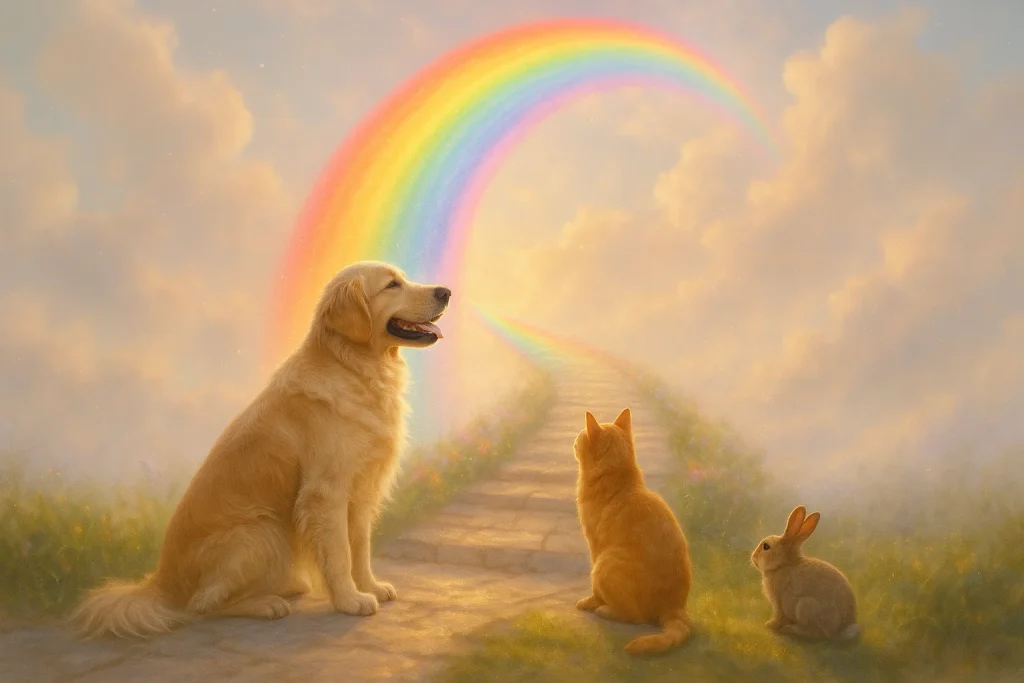
The Eternal Promise: Understanding the Rainbow Bridge Poem and Its Comfort
When a beloved pet passes away, many grieving families turn to the Rainbow Bridge poem for profound comfort. More than just words, it is a powerful vision of reunion, a place of peace, and a metaphor where pets wait joyfully for their humans until they can be together again. This enduring imagery transforms the unbearable finality of loss into hope, offering eternal love beyond the boundaries of life and death.
Where Did the Rainbow Bridge Poem Originate?
The poem is believed to have been written in the 1980s or early 1990s, though its original author remains anonymous.
It quickly spread through veterinary clinics, grief support groups, and the broader pet community worldwide. The text describes a lush, sunny meadow just beyond a shining bridge, where pets are instantly restored to health and vitality as they wait patiently for their human companions.
When Tom’s Labrador, Bella, died, his veterinarian handed him a copy of the poem. “Reading it made me feel like Bella wasn’t gone forever—just waiting in a better place,” Tom shared.
Is the Rainbow Bridge for All Pets?
Yes, the Rainbow Bridge is envisioned as a universal and inclusive place for all beloved companion animals.
Dogs, cats, rabbits, birds, and every creature that shared love with a human family are imagined to reunite, side by side. The vision is one of perfect companionship and peace, where every pet finds eternal joy.
Emily, who lost her two cats, Jasper and Lily, years apart, found deep peace in picturing them finally curled up together, reunited on the other side of the Bridge.
Is the Rainbow Bridge a Religious Concept?
No. The Rainbow Bridge is not tied to any single religion or faith.
Instead, it serves as a universal spiritual metaphor—blending comforting themes of heaven, reunion, and unconditional love. It resonates with people across all backgrounds because it speaks directly to the unique, powerful bond between humans and animals. It offers hope without requiring strict doctrine.
Why Is the Rainbow Bridge So Comforting for Pet Loss Grief?
The vision is simple yet profoundly healing, addressing the deepest fears of grieving owners:
- No More Pain: It assures that pets are instantly restored to health.
- Eternal Presence: It provides a certainty that the bond is not truly broken.
- Hope for Reunion: It transforms grief into gentle anticipation of a future meeting.
Sarah, who lost her Beagle Max, said: “Every time I imagine him running across the Rainbow Bridge, tail wagging, I feel less alone, turning my sadness into hope.”
Rainbow Bridge in Art and Pet Memorials
The powerful imagery of the poem has inspired countless memorials, helping families make the spiritual concept tangible.
- Art & Keepsakes: This includes Rainbow Bridge portraits, engraved urns, jewelry, and shadow boxes. Many families place artwork depicting their pet against a colorful bridge backdrop near urns or inside shadow boxes, keeping the vision visible every day.
- Digital Tributes: The poem and its imagery are often central to online memorials, offering a shareable, accessible tribute space.
How Is the Rainbow Bridge Used in Memorial Services?
The poem is often woven into rituals, transforming it into a concrete act of remembrance:
- Recitation: It is frequently recited during pet funerals, cremation ceremonies, or garden memorial gatherings.
- Printables: Families often keep a printed copy of the poem alongside a favorite photo.
- Ceremonial Use: Some use it as a focal point for lighting candles, placing flowers, or holding a small reading in a memorial garden.
By weaving the words with ritual, the Rainbow Bridge becomes more than poetry—it becomes a unifying practice of love and remembrance.
The Rainbow Bridge in Children’s Books
The concept is widely used to help children understand pet loss gently:
- Gentle Explanation: Illustrated books show pets happy and pain-free, waiting to reunite.
- Healing: This imagery helps children process their grief by giving them a positive focal point for their pet’s new state.
Anna read such a book to her 8-year-old after their cat Milo passed. “It made him cry and smile at the same time,” she said. “He believed Milo was waiting, and that softened the goodbye.”