
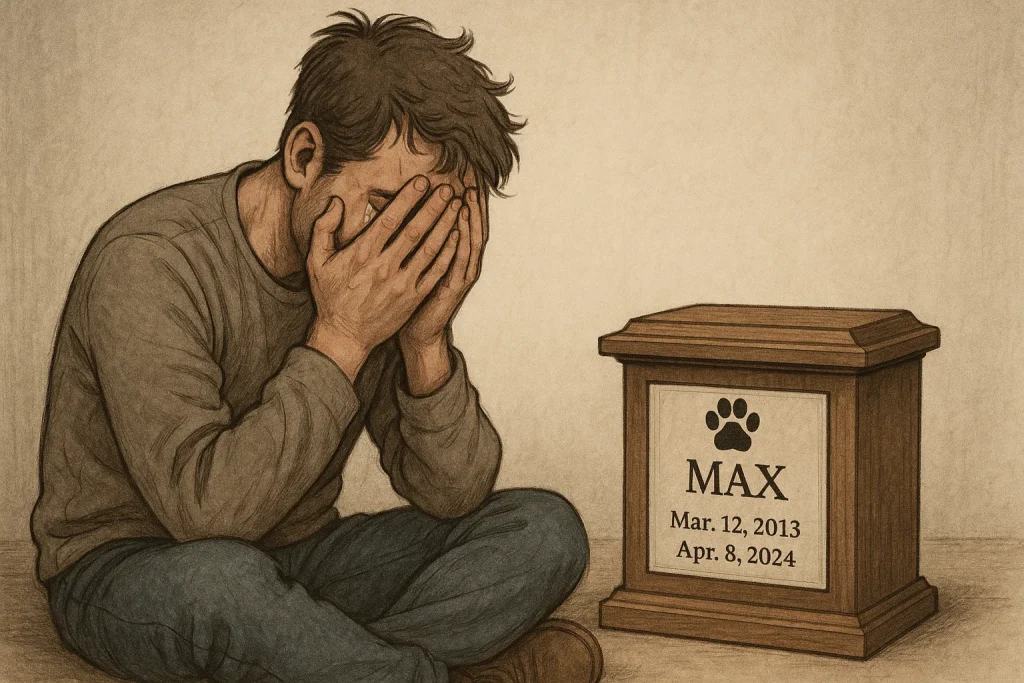
Raw and Real: Coping with Pet Grief and Why Dog Loss Hurts So Deeply
Losing a dog is truly unlike any other grief. It feels raw, overwhelming, and sometimes more devastating than the loss of people we expected would hurt more. Our dogs are family—they share our homes, our silent routines, and even our most vulnerable moods. Their sudden absence creates a massive, unbearable silence. This intense pet grief is not just about the moment of death, but about the profound bond, unwavering loyalty, and unconditional love that made them utterly irreplaceable.
1. The Weight of Love: Why Does Guilt Come Rushing in After Dog Loss?
Why does guilt feel like the cruelest part of dog loss grief?
Guilt is one of the most common and consuming emotions following dog loss. When Mark’s Beagle, Charlie, passed, he obsessively replayed every decision—wondering if he should have noticed subtle signs sooner or chosen a different treatment. This intense guilt stems from the depth of your love and responsibility. Because our dogs depend on us completely, we question if we did enough. The empowering truth is: the lifetime of care and boundless love you gave is irrefutable proof that you did more than enough.
👉 If overwhelming guilt persists, reach out to a certified pet grief counselor or support group.
2. Acknowledging the Void: Is It Normal to Grieve My Dog More Than a Human?
Why is grieving my dog sometimes harder than losing a distant relative?
Yes, it is entirely normal. My friend Sarah admitted she cried more for her Shepherd, Luna, than for a distant relative. The explanation lies in presence: dogs are constant, intimate companions—sleeping by our beds, greeting us with exploding joy every day, and standing by us without judgment. That is precisely why their absence creates such a profound, enormous void. Deep grief is not only normal—it is a powerful reflection of how central they were to your identity and your life.
👉 Join pet grief support communities online to normalize and validate the intensity of your feelings.
3. The Healing Journey: How Long Does Dog Loss Grief Truly Last?
Is there a set timeline for healing after my dog died?
No. Grief does not follow a clock or a fixed timeline. For some, the sharpest pain may soften in a few weeks; for others, the deep sorrow can linger for many months or years. After my Labrador, Max, died, I literally couldn’t bear to look at his leash for six months. Healing is deeply personal and non-linear. The fierce love you hold never fades, but the pain slowly and gently shifts—transforming into soft, cherished memories and overwhelming gratitude for the time you shared.
👉 If grief continues to severely disrupt daily life, seek guidance from a professional grief counselor.
4. Releasing the Pain: Why Can’t I Stop Crying After Dog Loss?
Is it really okay that I still cry uncontrollably over my dog’s passing?
Crying is your body’s natural, essential release valve for grief. It is not a sign of weakness—it is simply love pouring itself out when it has nowhere else to go. I remember sobbing months later when I found Max’s old, tattered toy under the couch. Grief comes in powerful, unpredictable waves, triggered by reminders both big and small. Your tears are a vital and honest part of the healing process and an active way to honor that beautiful, lasting bond.
👉 Allow yourself to cry—pet grief healing often starts with acknowledging the pain.
5. Finding Peace: Coping with the Guilt of Missing Their Final Moments
How do I overcome the immense guilt of not being there for my dog’s last breath?
One of the hardest burdens to carry is the guilt of not being present in a dog’s final moments. Emily, whose Spaniel Bella passed while she was at work, struggled with this for years. She finally found release by writing Bella a long, heartfelt letter, apologizing and recalling every adventure they shared. Creating rituals—writing, planting a memorial tree, or keeping a paw print keepsake—can help you actively release that guilt and replace it with remembrance. Remember, dogs do not measure love by one single moment, but by the lifetime of unwavering care you gave.
👉 Create a personal pet memorial ritual to turn guilt into meaningful remembrance.
6. Final Assurance: Did My Dog Know I Loved Them Before They Died?
Did my dog know how much I adored them in their final days?
Yes, emphatically, they did. Dogs read our hearts, our intentions, and our love better than anyone. Max, even in his quiet final days, still leaned his head on my lap whenever I whispered, “I love you.” They felt your love in the consistent way you fed them, played with them, comforted them, and stayed by their side. Even if you weren’t physically present for the very last breath, your dog carried the full depth of your unconditional love with them to the very end.
Final Thought
Coping with dog loss is raw, messy, and deeply personal. There is no right timeline, and no perfect way to say goodbye. Guilt, tears, and intense longing are completely natural—but so is the eventual healing. Over time, that sharp grief slowly transforms into enduring gratitude, and the love you shared becomes a beautiful, eternal part of your life story.