
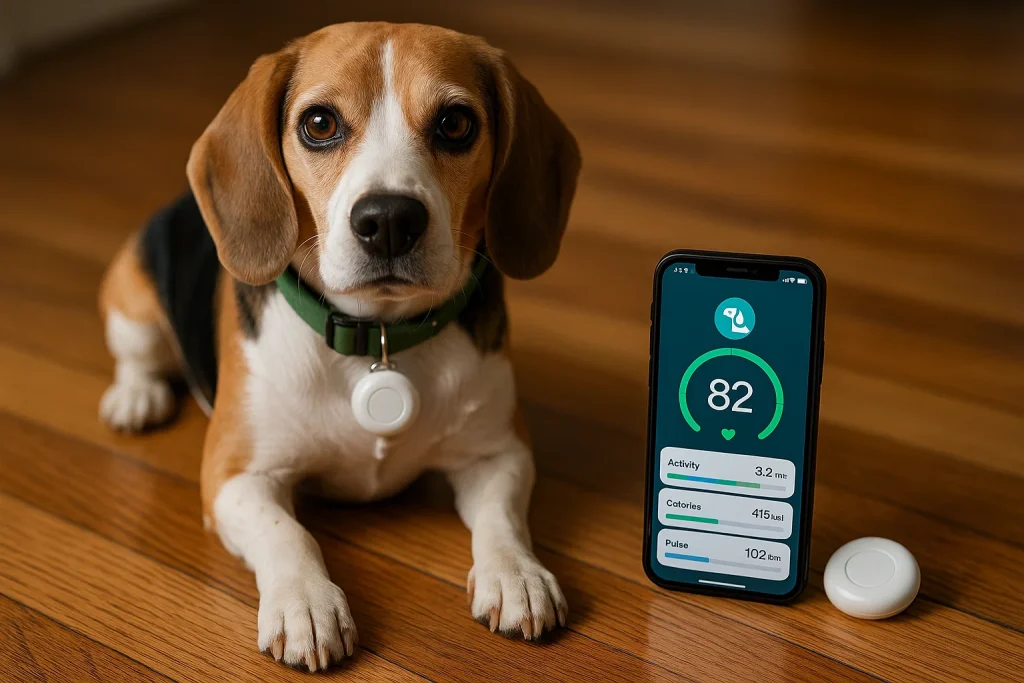
Complete Guide to Vitals, Activity, and Predictive Wellness
Modern pet health trackers are more than step counters—they’re predictive wellness companions, built with AI, sensors, and veterinary-grade analytics.
Worn as a collar, harness, or clip-on tag, these devices measure heart rate, temperature, sleep, movement, and even stress—translating raw data into early health insights.
Here’s what these AI-powered pet wearables actually measure—and why each metric matters for long-term well-being.
1. How Trackers Monitor Movement & Activity
At their foundation, pet health trackers use accelerometers to capture motion patterns that reveal fitness, rest, and energy balance.
-
Steps & Distance: Tracks overall mobility and calorie expenditure.
-
Play Duration: Reflects daily stimulation and energy bursts.
-
Rest Patterns: Differentiates between light naps and deep restorative sleep.
Example: A Whistle Health report might show your Labrador’s peak activity between 7–9 a.m.—the ideal time to plan walks or agility sessions.
2. How They Track Heart Rate and Breathing
High-end wearables like PetPace or FitBark Health+ measure heart-rate variability (HRV) and respiratory rhythm to evaluate cardiovascular and nervous system health.
-
Heart Rate (BPM): Indicates stress, anxiety, or early cardiac strain.
-
Respiration Rate: Flags fatigue, infection, or dehydration.
When Oliver, a rescue cat, showed irregular nighttime breathing, his tracker data led to an early asthma diagnosis. It’s remote health awareness—made possible through AI precision.
3. How Temperature Sensors Detect Health Changes
Infrared thermal monitors detect shifts in skin or surface temperature, helping owners identify fever, heatstroke, or cold exposure early.
-
Normal Range: 37.5°C–39.2°C (99.5°F–102.5°F).
-
Thermal Alerts: Trigger when readings move outside safe thresholds.
When Luna’s temperature spiked slightly overnight, her Whistle app sent an alert. A vet visit confirmed a mild ear infection—prevented before escalation.
4. How Trackers Analyze Sleep and Rest Cycles
Using motion and posture sensors, trackers distinguish real sleep from restless downtime—key for identifying anxiety or discomfort.
-
Sleep Duration: Monitors total rest hours and quality.
-
Disruptions: Detects pacing or frequent waking.
Fi Smart Collar data can even correlate poor sleep with humidity or household noise, guiding better environmental care.
5. How AI Detects Behavior and Stress Patterns
Through pattern recognition and HRV analytics, modern trackers can interpret mood-linked behaviors.
-
Scratching & Licking: Early allergy or irritation signal.
-
Vocalization Patterns: Detects excessive barking or meowing.
-
Stress Inference: Combines motion + HRV for cortisol-linked stress profiles.
Example: When a dog’s stress score rises, owners can reduce triggers—like loud noises or overstimulation—before anxiety worsens.
6. How GPS & Safety Tracking Keep Pets Protected
Nearly all advanced collars feature GPS location tracking and geofencing to combine safety with freedom.
-
Live GPS Tracking: View real-time movement via mobile app.
-
Safe Zone Alerts: Notifies owners if pets leave a preset perimeter.
Fi Series 3 and Tractive GPS offer sub-3-meter precision—ideal for outdoor cats and adventure dogs.
7. How Trackers Support Weight and Nutrition Management
By combining activity data with breed, size, and age, trackers estimate daily calorie expenditure to support healthy weight control.
-
Calorie Counter: Balances diet intake vs. energy output.
-
Weight Trends: Detects gradual gain or loss.
For aging pets or breeds prone to obesity, this creates a data-backed nutrition plan without constant vet check-ins.
8. How Data Connects to Veterinary Platforms
Modern trackers now sync directly with veterinary health software or cloud dashboards, creating a continuous record of vital trends.
Dr. Elena Cruz, a California-based vet, explains:“Wearable data fills the gaps between visits. I can spot baseline shifts before an owner ever sees a symptom.”
This integration turns reactive care into predictive health management—where prevention becomes the norm, not the exception.
Summary: Key Metrics Measured by Pet Health Trackers
| Metric Measured | Purpose & Health Indicator | Example Alert Threshold |
|---|---|---|
| Activity (Steps/Play) | Fitness, lethargy, calorie balance | Drop of >20% in daily baseline |
| Heart Rate / Respiration | Stress, cardiac or respiratory issue | Irregular HRV or high breathing rate |
| Temperature | Fever, heatstroke, hypothermia | Outside 37.5–39.2°C range |
| Sleep Quality | Pain, anxiety, rest quality | Frequent movement >1 hr/night |
| Behavior Patterns | Allergies, anxiety, distress | Excessive licking or vocalization |
The Bottom Line: Data That Cares Before It Warns
Pet health trackers measure far more than motion—they translate invisible signals into meaningful care.
Every data point builds a timeline of trust between pets, owners, and vets.
By choosing certified devices that combine vital tracking, GPS, and predictive analytics, you can detect health changes before they become problems.
Technology that listens before your pet can speak—that’s the future of pet wellness.