
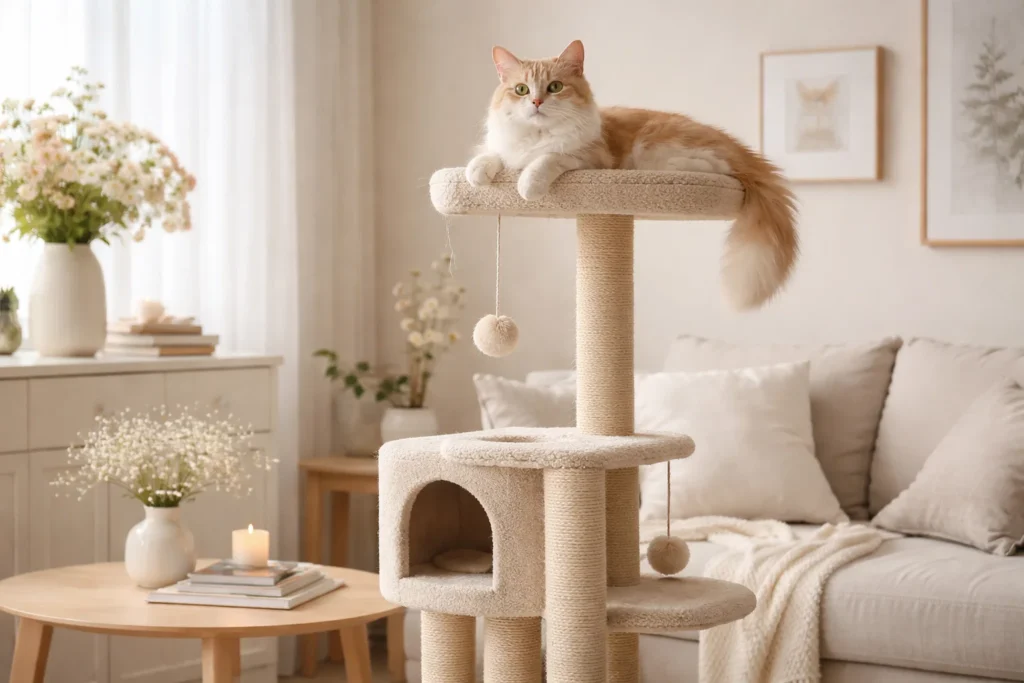
These Questions Usually Point to the Same Problem
If you’re here, you’re probably stuck on one of these questions:
Why won’t my cat use the new cat tree I just bought?
Why do so many cat trees start wobbling after a short time?
How do I know if I chose the wrong cat tree for my home?
These questions may sound different, but if you’ve been going back and forth between them, chances are you’re dealing with the same underlying issue.
Most people start out just wanting a cat tree that works — something their cat will actually use and that feels safe at home.
What they often end up with is a tree that gets ignored, feels unstable, or never quite fits their space.
It’s not that you’re overthinking.
And in most cases, it’s not the cat.
More often, the problem starts earlier — with how cat trees are designed, reviewed, and chosen for real living spaces.
This hub brings those questions together and helps you decide what actually matters next.
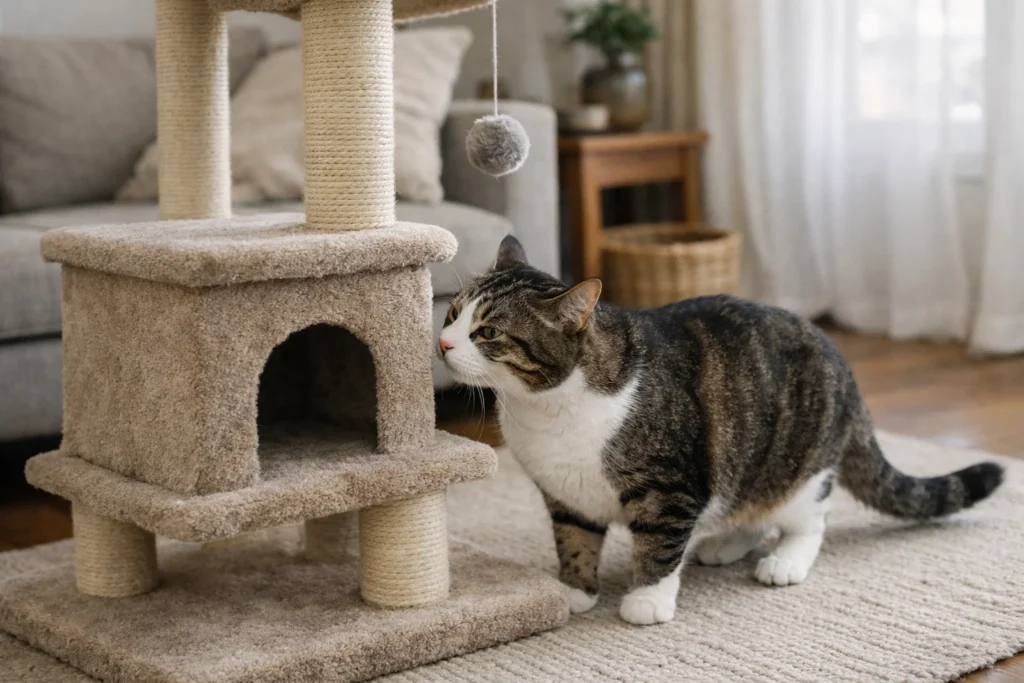
Why So Many “Best-Selling” Cat Trees Disappoint in Real Homes
High-selling cat trees often look convincing: tall, stylish, and backed by thousands of reviews.
But when you look closely at long-term feedback, the same patterns appear again and again:
-
Tall designs paired with narrow bases
-
Single support posts holding multiple platforms
-
Reviews that sound positive at first, then mention wobbling weeks later
These aren’t random defects. They’re predictable design shortcuts that only become obvious with daily use.
👉 For a detailed breakdown of these traps and how they show up in reviews, read the full checklist here →
2026 Cat Tree Scam Checklist: Why 80% of “Best Sellers” Are Traps
When a Cat Completely Ignores a New Cat Tree
When a cat walks past a brand-new cat tree, it’s easy to assume it’s a personality issue.
In reality, avoidance is usually caused by design mismatches:
-
Platforms that feel unstable
-
Step spacing that doesn’t match natural jumping behavior
-
Placement that doesn’t align with how cats observe their environment
Cats are very sensitive to what feels safe and useful.
👉 If you want a deeper explanation of the most common design mistakes behind this behavior, see the full guide here →
Why Your Cat Won’t Use a New Cat Tree: 3 Design Mistakes Most Homes Miss
The Most Common Cat Tree Problem We Found in Reviews: Wobbling
Across thousands of real reviews, one word appears more than any other: wobbly.
Even minor movement can:
-
Make cats hesitate mid-jump
-
Cause upper platforms to go unused
-
Increase long-term safety risks
This issue shows up most often in tall trees, single-post designs, and homes with larger cats.
👉 To see how often wobbling appears in reviews — and why it matters — read the full analysis here →
No More Wobble: The Most Common Cat Tree Problem We Found in Reviews
If Your Cat Tree Is Already Unstable, Don’t Panic
A wobbling cat tree doesn’t always need to be replaced immediately.
In many homes, instability comes from:
-
Installation that loosens over time
-
Uneven floors or carpet compression
-
Poor weight distribution rather than broken parts
The key is identifying what kind of wobble you’re dealing with before deciding what to do next.
👉 For step-by-step diagnosis and practical fixes, read the full guide here →
How to Make a Cat Tree More Stable? Simple Fixes That Actually Work
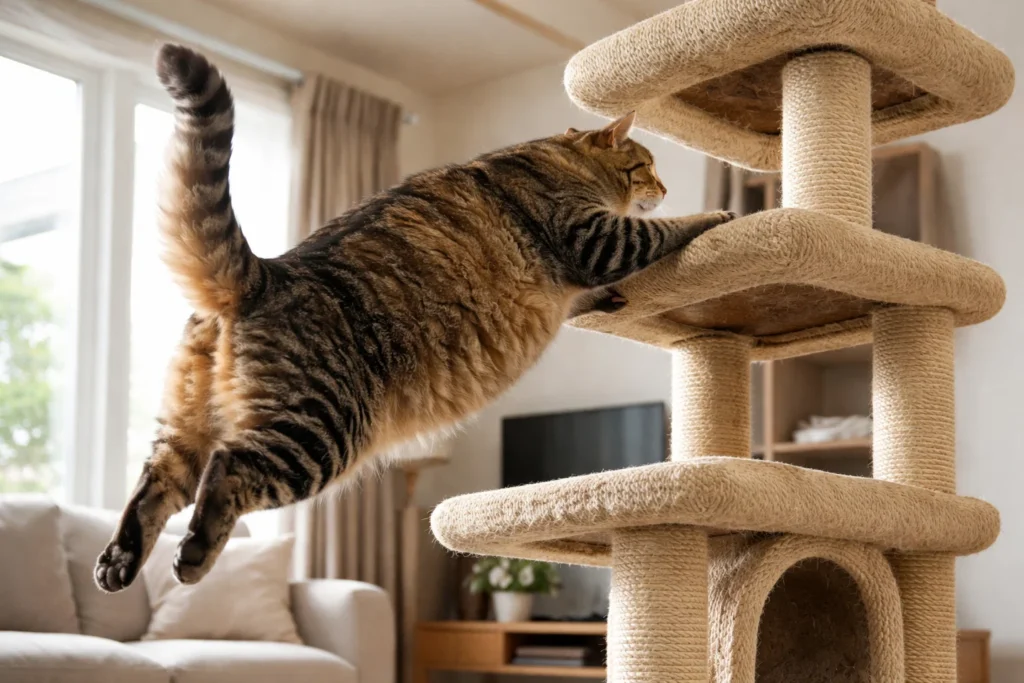
Why Big Cats and Extra-Large Cat Trees Raise the Risk
Big cats don’t just weigh more — they land with more force.
That added lateral movement puts extra stress on:
-
Narrow bases
-
Tall, top-heavy designs
-
Structures that rely on a single support post
Extra-large cat trees can actually increase risk if stability isn’t built into the design from the start.
👉 For big-cat risk factors and stability guidance, see these articles →
2026 Cat Tree Scam Checklist: Why 80% of “Best Sellers” Are Traps
How to Make a Cat Tree More Stable? Simple Fixes That Actually Work
Assembly Problems Often Show Up Too Late
Assembly is often treated as a minor inconvenience — until it affects stability.
Common review patterns include:
-
Instructions that don’t match the parts
-
Frequent re-tightening after a few days
-
Alignment issues that lead to long-term wobble
These problems are usually visible in reviews long before purchase.
👉 To learn how to spot assembly trouble in under 30 seconds, read this guide →
Will Assembling This Cat Tree Be a Disaster? Reviews Tell You in 30 Seconds
Choosing a Cat Tree for Apartment Living
Apartments introduce different constraints.
Limited floor space, shared walls, and layout flow matter more than sheer size.
In smaller homes, the wrong cat tree can feel intrusive or unstable, even if it’s highly rated.
👉 If you live in an apartment, this guide explains what to prioritize →
Are You Choosing the Right Cat Tree for Your Apartment? Start Here
A Simple Way to Decide What to Do Next
Most cat tree problems fall into one of three paths:
-
You haven’t bought yet → Learn how to avoid common traps
-
You bought one but your cat won’t use it → Check for design mismatches
-
Your cat tree is already unstable → Diagnose before replacing
Following the right path saves time, money, and stress.
Final Thought
Cat trees shouldn’t feel like a gamble.
Once you understand how design, stability, and real-world use connect, the right choice becomes much clearer.
👉 If you want a complete, real-world buying checklist, you can start here →
2026 Cat Tree Scam Checklist: Why 80% of “Best Sellers” Are Traps