
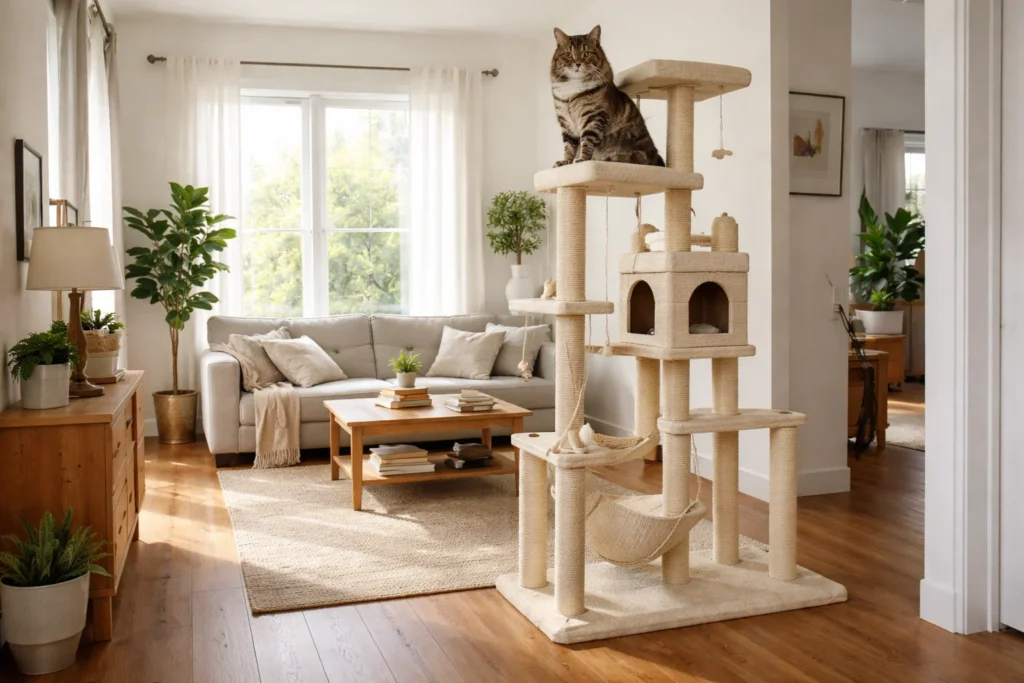
If you’ve ever searched for a cat tree for big cats, you’ve probably noticed the same pattern:
product pages claiming “heavy duty,” Reddit threads full of frustration, and videos showing cat trees wobbling the moment a large cat jumps.
Big cats don’t need bigger cat trees.
They need better-designed ones.
This guide breaks down why many cat trees fail large cats, what truly matters when choosing a cat tower for big cats, and how to recognize designs that actually work—before we ever talk about specific products.
Why Choosing the Right Cat Tree for Big Cats Actually Matters
A cat tree isn’t decoration.
For a large cat, it’s a daily landing zone, resting place, and observation post.
Choosing the wrong one doesn’t just waste money—it changes how (or whether) your cat uses it at all. Many “unused” cat trees aren’t ignored because cats dislike them, but because they don’t feel safe or comfortable using them.
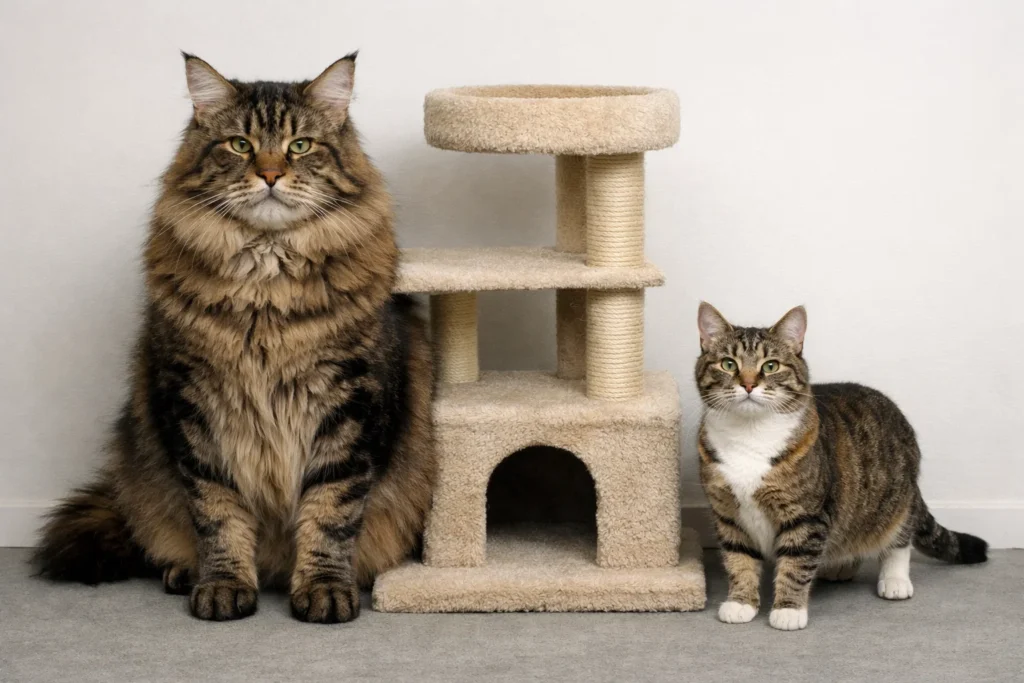
Big Cats Interact With Cat Trees Differently
Large cats don’t just weigh more—they move differently.
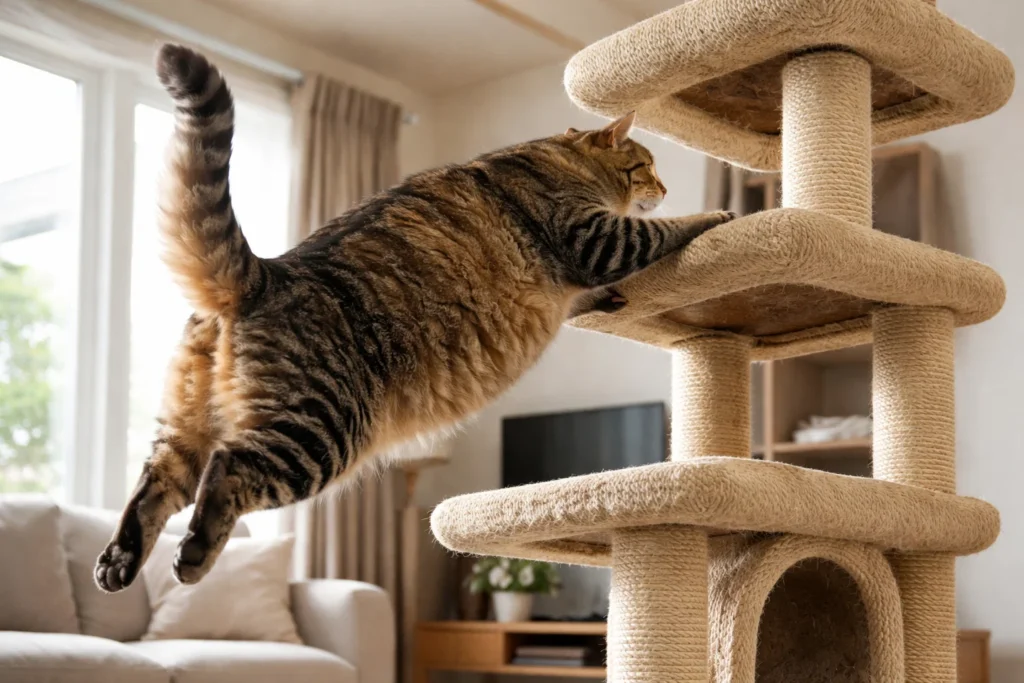
Their jumps generate greater impact when landing
Their weight shifts more dramatically when turning or stretching
They need more space to reposition and rest comfortably
A structure designed for average-sized cats often can’t handle these real-world forces.
What Happens When a Cat Tree Isn’t Designed for Big Cats
When a large cat tree isn’t truly built for size and strength, problems appear quickly:
Instability leads to avoidance
One wobble is often enough for a big cat to stop trusting it.
Poor support causes gradual failure
Posts loosen, platforms tilt, and joints weaken over time.
Limited space reduces comfort
Cats may climb but won’t stay—defeating the purpose of vertical space.
Why “Labeled for Big Cats” Isn’t Enough
Many products are marketed as the best cat tree for big cats, but labels don’t reflect real use.
Weight ratings rarely account for movement, impact, or uneven loading.
Design—not marketing—is what determines whether a cat tree actually works.
The First Priority: Stability Is Non-Negotiable
Before height, features, or appearance, stability comes first.
A cat tree that sways, rocks, or flexes under movement will never earn a big cat’s trust—no matter how tall or expensive it is.
Why Stability Matters More Than Height
Tall structures amplify motion.
Without a wide, well-supported base, height becomes a liability rather than a benefit—especially for large cats jumping down from above.
Base, Weight & Structure
When evaluating a cat tree for big cats, look beyond numbers:
A wide footprint reduces leverage and tipping
Multi-point support distributes weight more evenly
Rigid joints matter more than lightweight materials
A stable structure absorbs movement instead of echoing it.
The Second Priority: Platforms Big Cats Can Actually Use
Stability allows access—but platforms determine whether cats stay.
Big cats don’t just perch; they stretch, turn, and settle.
Multiple Platforms vs One Tall Column
Multiple platforms give large cats options:
Places to pause mid-climb
Weight distribution across levels
Freedom to choose where to rest
Single-column designs concentrate stress and limit usability.
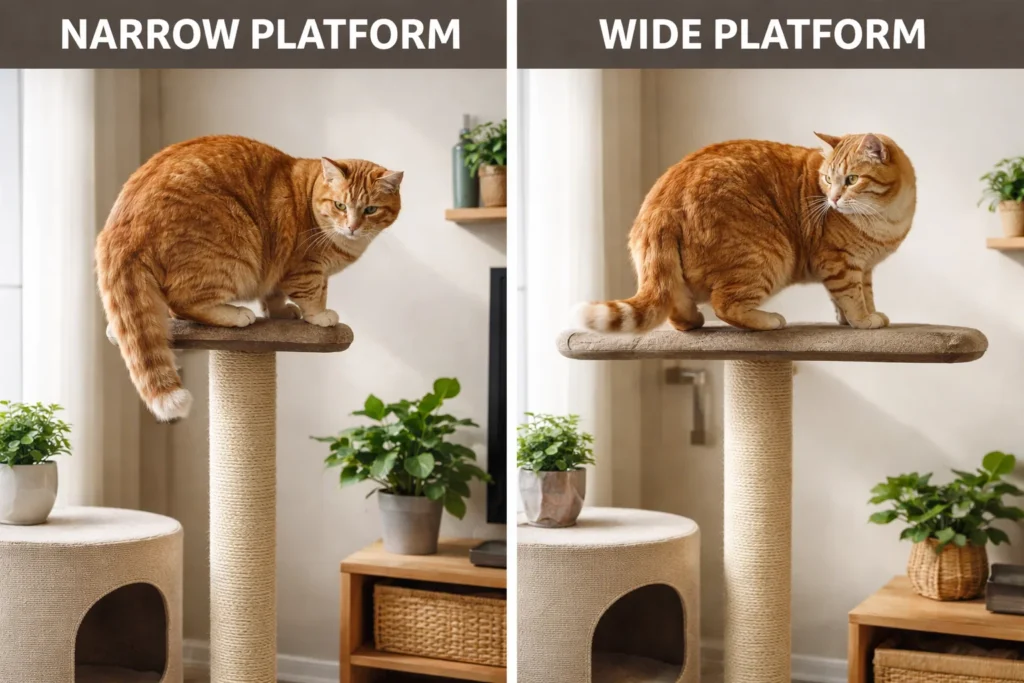
Platform Size vs Usable Space
A platform can look large but still feel cramped.
Usable space means:
Room to turn without stepping off
Space to lie down fully
Natural front-paw placement when resting
These details are often missing from standard designs.
Hammocks: Why Big Cats Love Them (When Done Right)
Hammocks are a major advantage when properly built.
For big cats, a good hammock provides:
Gentle support with a low center of gravity
A secure, wrapped resting position
Reduced joint pressure during rest
Poorly attached or under-rated hammocks, however, can become weak points.
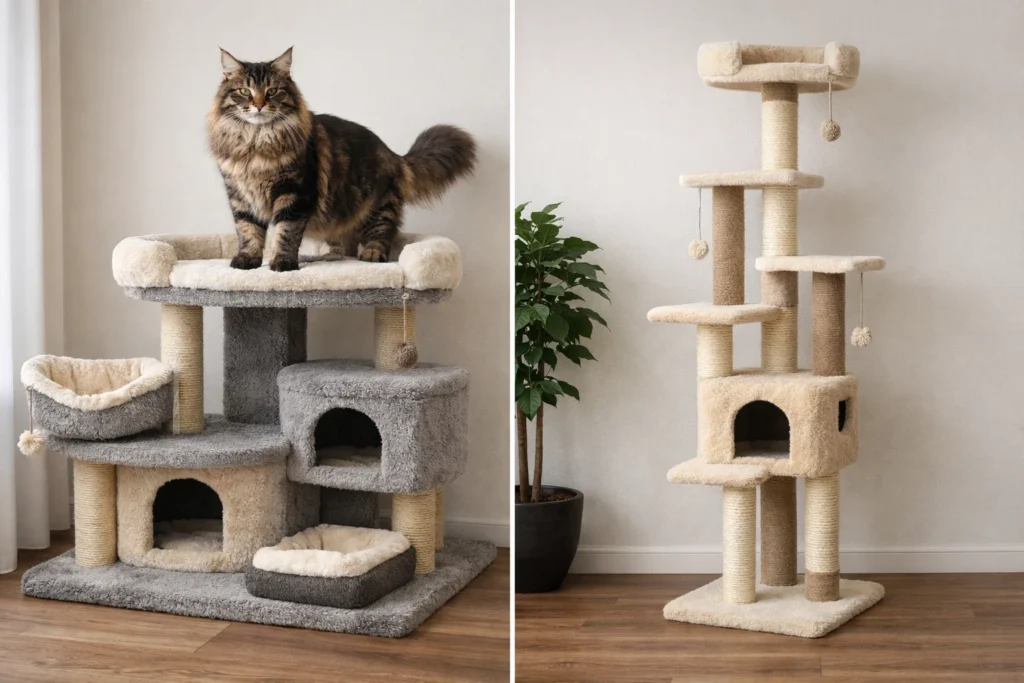
The Third Priority: Engagement Without Instability
Interaction increases usage—but only when it doesn’t compromise balance.
Built-In Toys That Don’t Compromise Balance
For big cats, engagement should be:
Firmly anchored
Close to the structure
Free from excessive swing or pull
Unstable toys can undo an otherwise solid design.
Why Engagement Matters More for Indoor Big Cats
Large indoor cats often conserve energy.
Well-designed interaction encourages movement without requiring risky jumps, helping maintain physical and mental health.
So, What Actually Works for Big Cats?
A cat tree that truly works for large cats combines:
Reliable stability
Spacious, supportive platforms and hammocks
Engagement that doesn’t introduce new instability
Only designs meeting all three are worth considering.
Final Thoughts: A Good Cat Tree Earns a Big Cat’s Trust
For big cats, the best cat tree isn’t the tallest or flashiest—it’s the one they trust enough to use every day.
Stability leads to comfort.
Comfort leads to use.
And use is what makes a cat tree worth owning.