
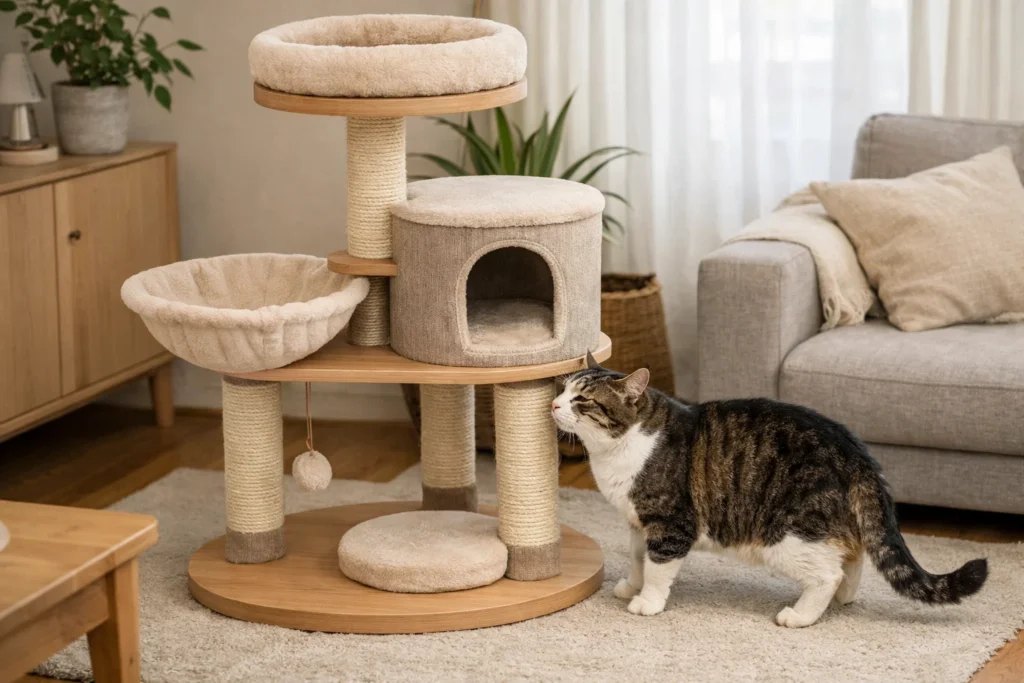
You bought a cat tree. It looks fine. It fits your space.
So why does your cat walk past it?
Is your cat being picky?
Or is something quietly telling them “this isn’t safe”?
When cats ignore a new cat tree, it’s usually not about time or training.
It’s about design signals humans don’t notice.
Let’s break down the three most common mistakes.
1️⃣ The Platform Is Too Small to Feel Safe
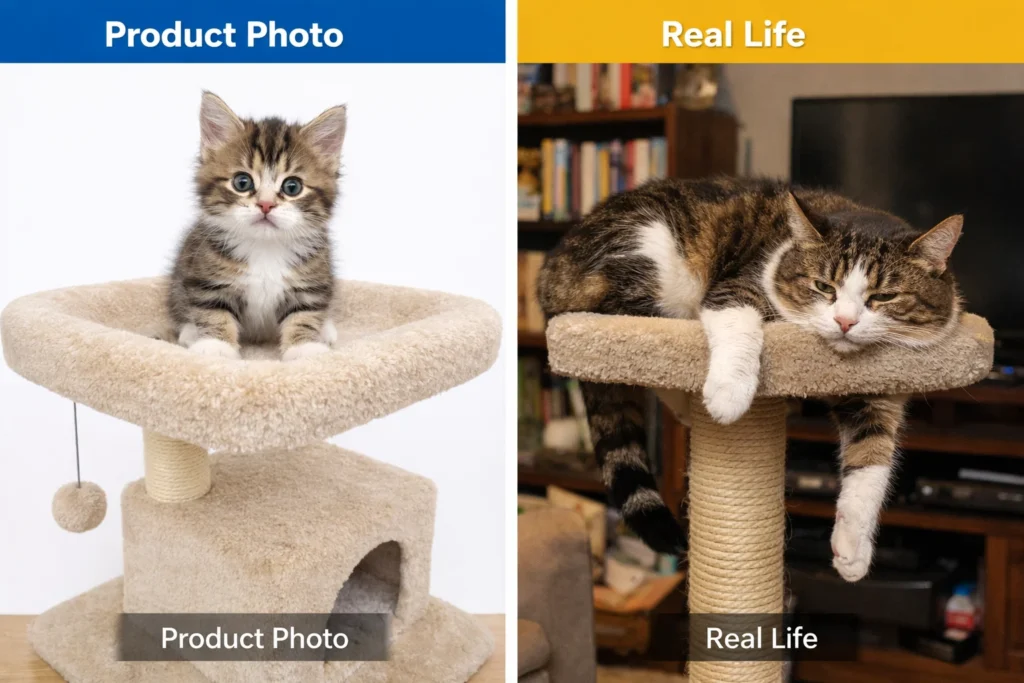
❓Quick question: Can your cat fully turn around and stretch on the platform?
Most cat trees look spacious in product photos.
Wide-angle shots and kittens hide the real scale.
In daily use, cats need room to:
-
turn their body
-
adjust position
-
stretch before resting
If the platform feels tight, cats don’t relax — they leave.
That’s why low-star reviews repeat phrases like:
“too small,” “my cat doesn’t fit,” “won’t use it.”
Many cats try once… then never return.
2️⃣ The Jump Path Breaks Confidence
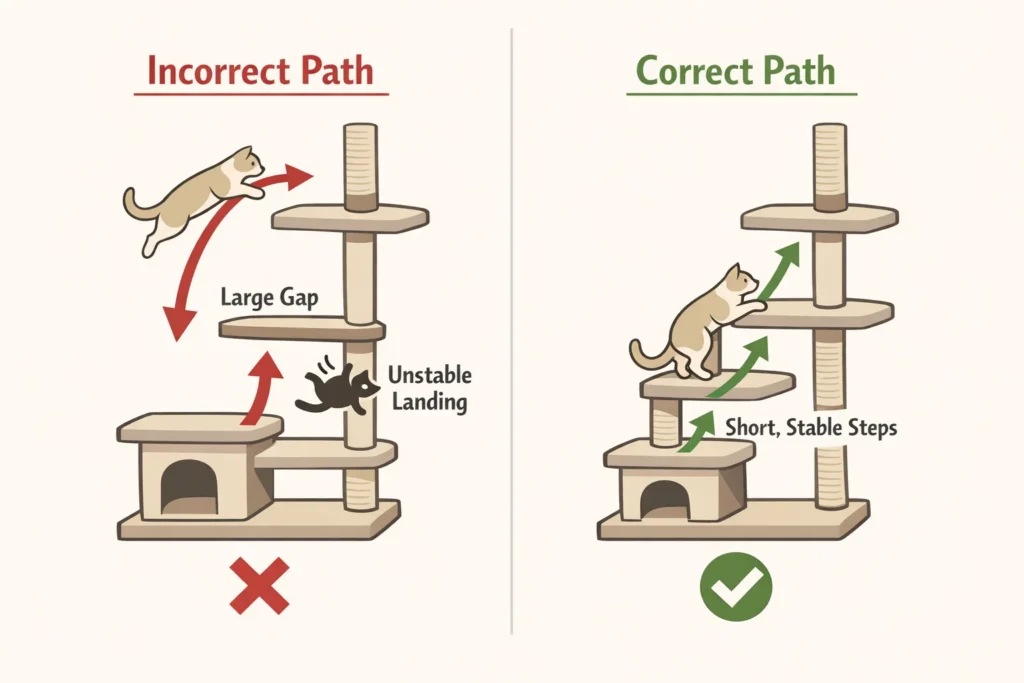
❓Before jumping, cats ask one thing: “Where do I go next?”
Cats don’t think in single jumps.
They plan movement as a sequence.
When platforms are:
-
too far apart
-
unevenly placed
-
poorly supported
cats hesitate — or avoid the tree entirely.
Even worse?
A slight wobble after landing.
The tree doesn’t need to fall over.
One shaky landing is enough to erase trust.
3️⃣ Smell & Materials Trigger Avoidance
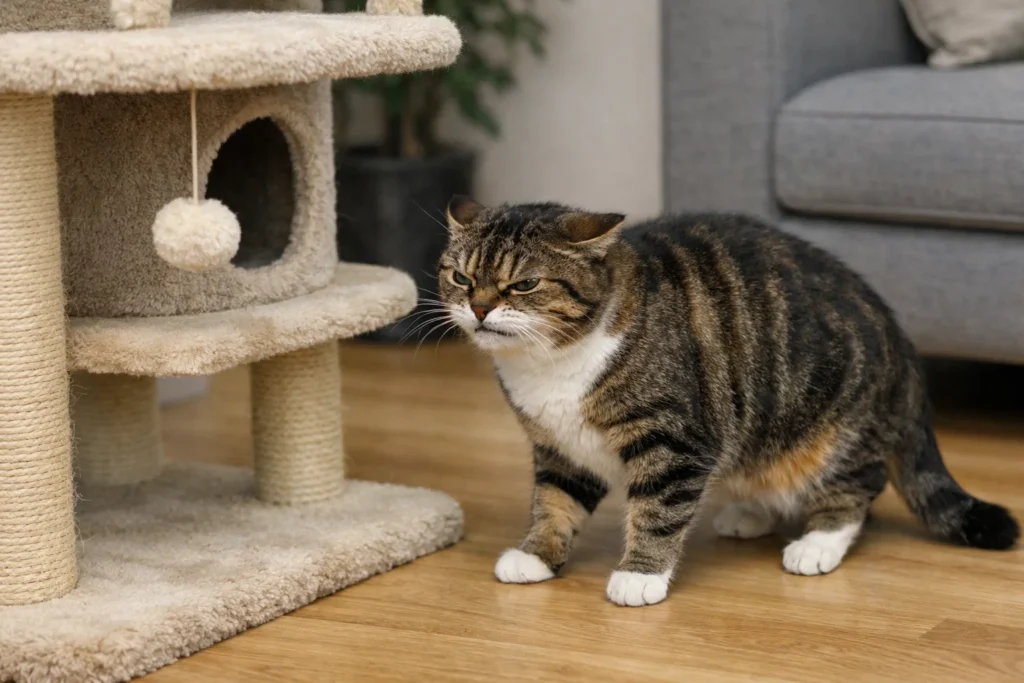
❓Did your cat sniff the tree… and walk away?
That’s not disinterest.
That’s rejection.
Cats are extremely sensitive to smell.
Strong glue, synthetic fabric, or chemical odors are common in budget designs — especially noticeable in small apartments.
Low-star reviews often mention:
“chemical smell,” “strong odor,” “my cat won’t go near it.”
Over time, cheap materials also:
-
compress under repeated weight
-
wear down at contact points
-
loosen at joints
Cats don’t complain.
They simply stop using it.
Is Your Cat Adjusting — or Actively Avoiding?
❓ Ask yourself: Is your cat curious… or cautious?
Adjustment looks like:
-
sniffing
-
sitting nearby
-
watching before climbing
Avoidance looks like:
-
walking around it
-
jumping off immediately
-
never resting on it
Avoidance is feedback — not attitude.
Quick Reality Check (30 Seconds)
Before blaming your cat, pause and ask:
-
Can my cat fully stretch on the main platform?
-
Does the tree stay solid when weight shifts?
-
Are the jump distances natural, not forced?
-
Does it smell neutral after unpacking?
If you hesitate on more than one —
your cat probably does too.
Thinking About Replacing It?
If you want a clear framework for spotting unstable designs, misleading dimensions, and “best-seller traps” before buying again, we’ve broken those patterns down step by step in a separate checklist.
👉 2026 Cat Tree Scam Checklist: Why 80% of “Best Sellers” Are Traps
That guide helps you filter cat trees before your cat has to reject another one.
Sometimes the issue isn’t the cat.
It’s the design.